
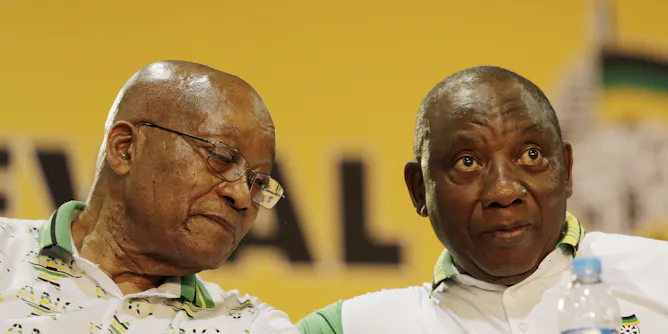
Steps are being taken to lay charges and seize assets of people and companies allegedly involved in corruption in South Africa.
Articles on State capture
Displaying 181 - 200 of 281 articles
The shake up at South Africa’s power utility, Eskom, sends a good signal about where Cyril Ramaphosa is taking the country.
Too often developments in one country are seen in isolation. In southern Africa events in one affect others in the region.

Failure by South Africa’s prosecuting authority to pursue those identified in the ‘Gupta e-mails’ points to dereliction of its duty.
After doing nothing for a long time to bring the Gupta family to book in South Africa, the country’s prosecuting authority has finally started to act.
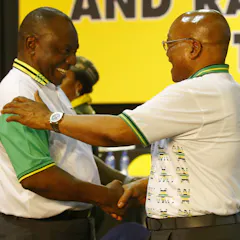
President Jacob Zuma’s camp is pushing to have him replaced by an interim leader as an excuse to prolong his disastrous rule for their own benefit.
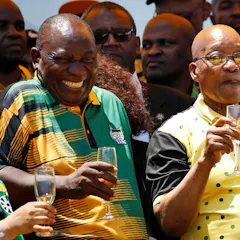
Cyril Ramaphosa seems to be on the way to uniting a fractious ANC. But he’s got a rough road to travel before he can claim any victories.

The study of Cyril Ramaphosa, South Africa’s deputy president and new head of its governing party, is generating a great deal of heat, and not much light.
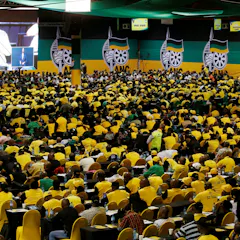
A closer look at the resolution of South Africa’s ruling party, the ANC, show that it won’t undertake a radical economic transformation agenda as suggested by media reports.
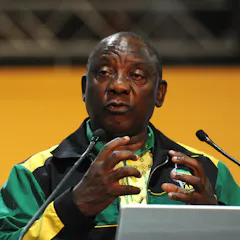
Free university education and land redistribution without compensation have far-reaching implications for South Africa’s economy, and requires exceptional leadership.
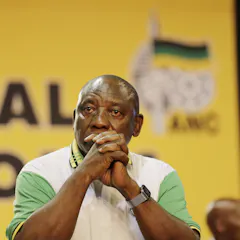
Cyril Ramaphosa is likely to emphasise stability - in government and the ANC. Given his history he is likely to want to stabilise the economy rather than pursue radical interventions.
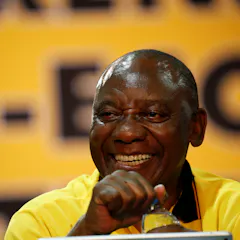
South Africa’s ruling ANC has a new leader - Cyril Ramaphosa. But this doesn’t mean that the country is out of the woods. Political instability remains a real possibility.
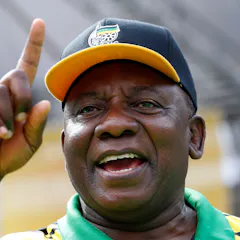
The ANC’s elective conference has very important implications for South Africa’s future. Whoever leads determines the kind of leader the country will get, and what policy trajectory will be taken.
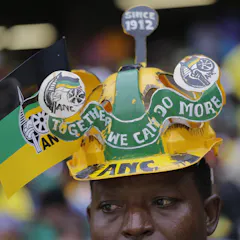
The ANC’s elective conference is important for the party and South Africa. This is because the person chosen to lead the governing party since 1994, has gone on to become president.
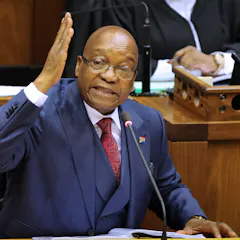
The imposition of the fee free higher education proposal on South Africa’s National Treasury without due consideration represents an escalation of the state capture led by President Jacob Zuma.
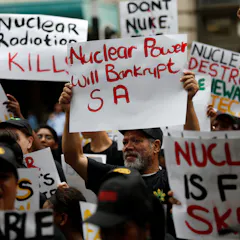
South African President Jacob Zuma’s efforts to promote his unpopular nuclear project are weakening him politically but he still seems keen to pursue it.
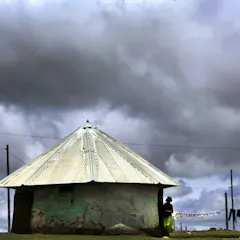
A different form of state capture is underway in South Africa’s rural areas where traditional leaders are selling off people’s land to miners. But communities are fighting back.
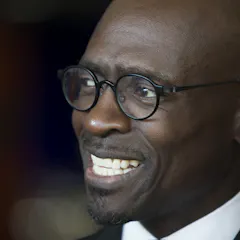
South Africa’s finance minister Malusi Gigaba failed to impress when presenting the eagerly awaited 2017 medium term budget.

Factions within South Africa’s ANC nostalgically point to the example of Oliver Reginald Tambo whose seen as an exemplar of integrity, personifying an ideal leader who served the party selflessly.
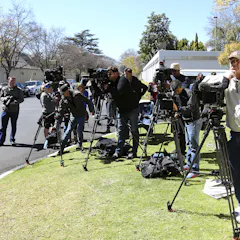
Forty years after the apartheid regime clamped down on the free press, South Africa’s media continues to face threats, albeit in more subtle forms than in the past.
Top contributors
-

Professor of Political Studies, University of Johannesburg
-
Professor of Sociology, University of the Witwatersrand
-
Emeritus Associate Professor in Public Law, UCT. Visiting Adjunct Professor, WITS School of Governance; Director, Africa Programme, University of Cambridge Institute for Sustainability Leadership, University of Cambridge
-
Professor of Public Affairs, Tshwane University of Technology
-
Political Scientist, University of the Western Cape
-
Professor in Political Science, University of South Africa
-
Professor of Urban Governance, University of the Witwatersrand
-
Visiting Professor and Professor Emeritus, University of the Witwatersrand
-
Professor of Physics, University of Johannesburg
-
Senior Research Associate, University of Johannesburg
-
Visiting Professor at the Business School, University of the Witwatersrand
-
Associate Professor in Public Law, University of Cape Town
-
Professor and Chair, Department of Journalism, Stellenbosch University
-
Associate professor, University of Cape Town
-
Professor Emeritus of Public Law, University of Cape Town