
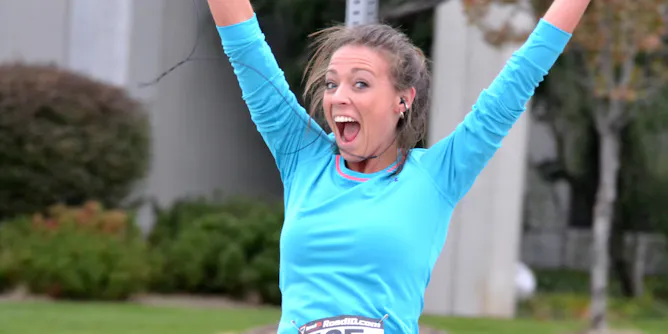
A new study is tapping into a phenomenon most of us have heard about and some of us might claim to have experienced at some point – “runner’s high”. In doing so, this study touches on something fundamentally…
Articles on Sport science
Displaying 141 - 156 of 156 articles
Tomorrow evening in Sydney, the ball will be bounced, marking the start of the first match in the 2012 AFL season. For the 18 clubs taking the field this year, it marks the culmination of months of gruelling…
With the Australian Open into its final few days, we’re starting to see the best tennis players in the world come to the fore. And to be the best in the world, you need a well-rounded game, including a…
Australia’s summer of tennis is a great opportunity to see the world’s best players up close, hitting hard and serving big. Many elite players hit first serves at over 200km/h with great precision and…
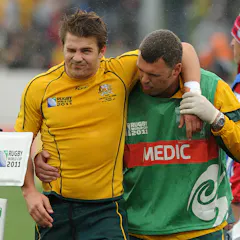
RUGBY WORLD CUP – The Cup has already taken its toll on many players – finalists New Zealand have lost star player, Dan Carter and Australia goes into its battle for third place against Wales four men…
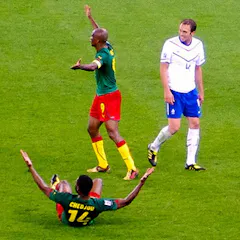
The year is 1990. For 85 grueling minutes, Italian crowds have watched West Germany battle Argentina in the World Cup Final. The score is tied, 0-0. The collective breath is held. Suddenly, the Germans…
When athletes are consistently playing well, sports commentators describe them as being “hot” or “on fire.” Scientists have…
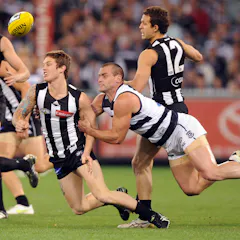
Anyone with a passing interest in Australian football will know the AFL Grand Final is unlike any other game of the season. There’s more hype, more expectation, more emotional investment from players and…
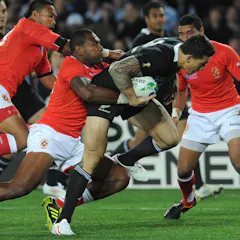
RUGBY WORLD CUP – In the latest of The Conversation’s series on the Rugby World Cup, former Wallabies player, James Holbeck and Professor of Sport Science at Victoria University, Damian Farrow, discuss…
You might have heard about athletes and other sportspeople absconding to high-altitude locations for training. Indeed altitude training has become the training-method-du-jour for sporting codes around…
Following the 18th stage of the 2011 Tour de France last night, the top six riders are within less than four minutes of one another: Cadel Evans, Andy Schleck, Frank Schleck, Ivan Basso, Damian Cunego…
This is the second in a two-part series about the science of Le Tour de France. Part one is here. After 1,916 kilometres of the 2011 Tour de France we’re starting to see some of the favourites make their…
This weekend, approximately 200 of the world’s best cyclists will begin competing in one of the most challenging sporting events in the world: Le Tour de France. Le Tour is widely regarded as the most…
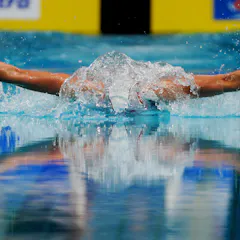
For Olympic swimmers, the blink of an eye can be the difference between first and forgotten. Everyone wants an edge, which is why elite athletes train relentlessly and why coaches push them hard. Alongside…
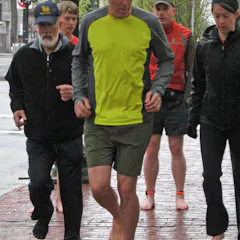
There’s a growing interest in barefoot running, especially in relation to running long distances. Research articles, opinion pieces, and websites have argued both for and against the efficacy of running…
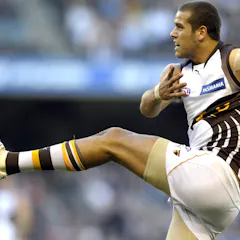
When the AFL has a weekend of inaccurate goal-kicking, media attention invariably turns to why set-shot goal-kicking hasn’t improved while other areas of footy have. As a footy fan, I have an interest…
Top contributors
-

Lecturer in Exercise Science, Adelaide University
-
Assistant Professor, Victoria University
-
Professor of Sports Science, Institute of Sport, Exercise and Active Living (ISEAL), Victoria University
-
Deputy vice-chancellor (Research), Edith Cowan University
-
Lecturer & Movement Scientist / PhD Sports Biomechanics, Flinders University
-
Research officer, Victoria University
-
Lecturer, Faculty of Business, Sport and Enterprise, Southampton Solent University
-
NHMRC Career Development Fellow, The University of Melbourne
-
Professor of Social Inclusion - UTS Business School - Co-Lead UTS Disability Research Network - Australian Centre for Olympic and Sport Studies - Centre for Sport, Business and Society, University of Technology Sydney
-
Lecturer of Psychology, Bangor University
-
Senior Lecturer Sport Science, School of Biological Sciences, University of Essex
-
Honorary Professor and Research Fellow, Victoria University
-
Associate Professor in Exercise and Sport Physiology, Director of Research Operations at the Institute of Sport, Exercise and Active Living (ISEAL), Victoria University
-
Associate Professor of Sports Technology, Bournemouth University
-
Associate professor, Edith Cowan University