
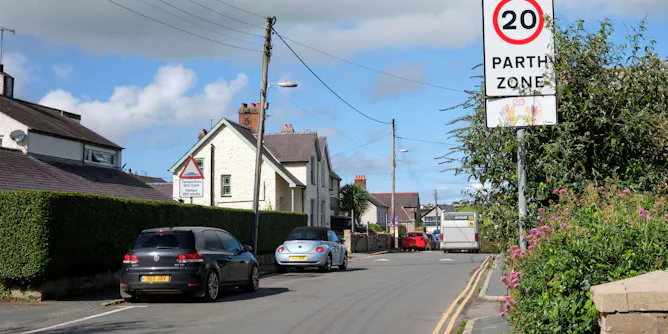
Political parties are lining up to talk about where they stand on the 20mph urban speed limit in the Welsh election campaign.
Articles on Speed limits
Displaying 1 - 20 of 23 articles

The cost of ‘network disruption’ due to accidents is more than normal estimates suggest, casting doubt on the logic of raising speed limits to boost productivity.

In the wake of recent deaths involving e-bikes and e-scooters, an overhaul of safety regulations covering them is urgently needed.
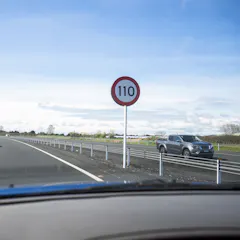
Documents show the government is going against expert advice and strong economic evidence by insisting higher speed limits will improve productivity.

Colliding with ships is a top cause of whale deaths. A new study maps the areas of highest risk, showing where proven strategies such as speed limits and new shipping routes can reduce the toll.

Higher speed limits are coming. But the case against them isn’t based on road safety alone – claims of increased economic efficiency are not supported by the evidence, either.

The death toll on Australian roads in July was almost a third higher than the five-year average. The 12-month toll was the highest since 2012. A lower speed limit will save lives.
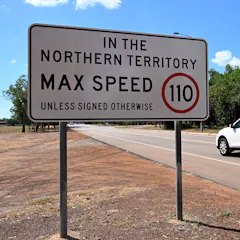
Would copying other states and dropping the default limit by just ten kilometres on country roads in WA and NT make a difference? And how might it be enforced?

The government plans to increase speed limits, despite research showing the benefits of going slow. With submissions on the proposals closing next week, several important factors should guide policy

The number of deaths on Australian roads has been increasing steadily year after year. It’s unacceptable not to act on the evidence of what works to boost road safety.
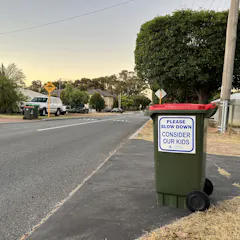
Most drivers admit to speeding and it’s causing an increasing number of deaths on our roads. Using intelligent speed assist technology can reverse this deadly trend.

The Welsh government wants to make residential roads safer and quieter but not everybody agrees with dropping the speed limit from 30mph to 20mph.
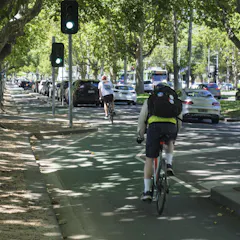
Early in the pandemic, when there was much less traffic on the roads, people took to their bikes. But since then, fewer people are cycling, with rates now lower than in 2011.
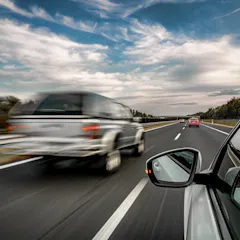
Speed limits are coming down to improve road safety. Expanding the policy to target high-carbon emission vehicles would be a simple and effective climate strategy.
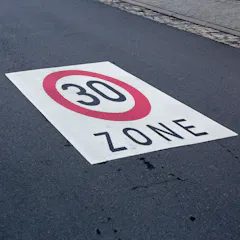
Despite claims that lowering speed limits will harm the economy, evidence suggests journey times are hardly affected. And beyond reducing the road toll, there are health and climate benefits, too.

Our findings suggest many people believe they are regularly exposed to pro-speeding content online or via friends, and this might increase their risk of speeding in the real world.
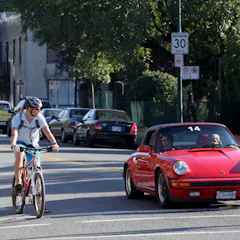
Cities around the world are reducing traffic speeds and improving access to local services and activities by public transport, cycling and walking. They are now reaping the many ‘slow city’ benefits.
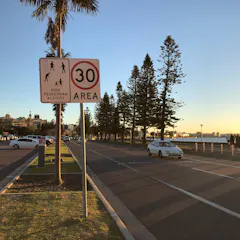
The push for 30km/h speed limits is not about revenue-raising or anti-cars. Even a seemingly small decrease from 40km/h to 30km/h makes a huge difference to the safety and liveability of local streets.

Cars that keep your speed within the limit may seem like a good idea, but the prospect of introducing the technology raises some tricky questions.
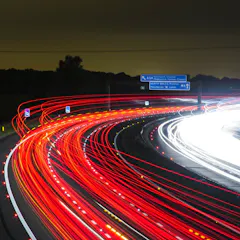
UK government minister Liz Truss says upping the motorway speed limit will increase productivity. Let’s look at the facts.
Top contributors
-

Adjunct Research Fellow, School of Human Sciences, The University of Western Australia
-
Senior Lecturer in Urban Planning, University of Auckland, Waipapa Taumata Rau
-
Professor of Human Geography, University of Canterbury
-
Professor of Psychology, Aberystwyth University
-
PhD researcher, Centre for Emotional Health, Macquarie University
-
Research Professor, University of the Sunshine Coast
-
Reader/Associate Professor, School of Medicine, Dentistry and Biomedical Sciences, Queen's University Belfast
-
PhD Candidate, School of Population Health, UNSW
-
Senior Lecturer in Psychology, Director of Undergraduate Studies in Psychology, Macquarie University
-
Urban Studies Research Scholar, University of Westminster, and Adjunct Lecturer, UNSW
-
Associate Professor and Head of Sustainable Mobility and Safety Research, Monash University
-
Associate Professor and Deputy Director, Western Australian Centre for Road Safety Research, The University of Western Australia
-
Honorary Research Fellow, University of Staffordshire
-
Professor of Human Geography, Aberystwyth University
-
Work Based Learning Advisor, University of Strathclyde