

Science and technology research has become so complicated and expensive that a gap has grown between the experiments scientists would like to do and what they have the means to do.
Articles on Solutions Journalism
Displaying 81 - 99 of 99 articles

The outlook can be bleak for people with ASD who have difficulty navigating the stressful work world. A trial project in Connecticut sought to find a new way to help them become truly independent.

Long-term drought and water shortages in many parts of the U.S. are spurring interest in ways to reuse graywater – the water that drains from sources such as showers, bathtubs and washing machines.
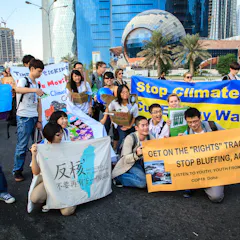
How can diverse societies agree on strategies for tackling complex problems? Lawrence Susskind and Ella Kim of MIT explain how role-playing games can help people learn to collaborate.

Unlike CEOs, mayors are enthusiastic imitators and intimate allies, rather than fierce competitors. On World Cities Day, how US mayors are looking abroad for inspiration to solve problems

In the 1920s, refugees were allowed unrestricted passage to countries that needed workers. There’s a lesson here.

Universities across the country are increasingly buying into the idea of sustainability science as an academic discipline. There are 118 such programs today. What’s the point?

Agroecological techniques that mimic nature – the antithesis of GMOs and high-cost fertilizers – have made farmers in developing countries more resilient to extreme weather.

There are plenty of strategies to reduce tobacco use – especially in young people – that don’t go as far as a total sales ban.

The Endangered Species Act may stave off extinction for the Delta smelt in California, but will it help this threatened fish – or any other at-risk species – recover and thrive again?
For language learners, the two-way immersion program has shown high success rates. What makes the program so effective?

Police in Lowell, Massachusetts and Memphis, Tennessee are using a new approach designed to help them build trust while enforcing the law.

Female faculty are far more likely to be seen as less smart than their male counterparts in student evaluations. How damaging are such comments?

Want kids to improve fluency in English language? Try dance and drama as teaching tools.
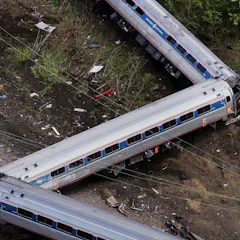
How does positive train control – safety technology that could have prevented this week’s deadly Amtrak derailment – work and why is it still not on US rails?

With the emergence of online technologies, the visually impaired can no longer depend on braille alone for their learning needs. App developers are stepping up to the challenge.

Research project combines digital technologies with farms of wave generators to bring plentiful and reliable ocean power closer to commercialization.

One academic’s experience on how Wikipedia can help students become better writers, better researchers and even better thinkers.

Rather than impose regulations to limit carbon emissions, policies should focus on innovation and systems change through social sciences.
Top contributors
-

Assistant Professor, University of the Fraser Valley, School of Communication, University of The Fraser Valley
-
Part-Time Professor of Economics, The New School
-
Professor of Geography and Senior Research Associate in the Rock Ethics Institute, Penn State
-
Professor of Management, University of North Carolina – Greensboro
-
Associate Dean for Clinical Affairs and Professor of Pharmacy and Medicine, University of Florida
-
Daniel Patrick Moynihan Senior Lecturer in Public Policy and Public Finance, Harvard Kennedy School
-
Postdoctoral Fellow, Energy Systems Transformation (EST) Research Group, The University of Texas at Austin
-
Associate Professor of the Practice, Bush School of Government & Public Service, Texas A&M University
-
Professor and Shapiro Chair of Public Policy and Public Administration, Trachtenberg School, George Washington University
-
Associate Professor of Public Policy and Women's Studies, University of Michigan
-
Assistant Professor of Child and Adolescent Development, San José State University
-
Senior Research Fellow, Melbourne School of Psychological Sciences, The University of Melbourne
-
Director of the Transnational Environmental Law Clinic; Assistant Professor of Law, Wayne State University
-
Eugene H. Fram Chair in Applied Critical Thinking; Principal of the Collaboratory for Resiliency & Recovery @ RIT & Professor of Civil Engineering Technology, Environmental Management and Safety, Rochester Institute of Technology
-
Assistant Director, Center for Access to Justice, Georgia State University