

The internet makes it easier for discarded stuff to land in someone else’s home instead of the dump.
Articles on Solutions Journalism
Displaying 21 - 40 of 99 articles

In the ‘World Climate’ simulation, people play delegates to UN climate negotiations and work to strike an agreement that meets global climate goals. Playing it has made thousands want to take action.
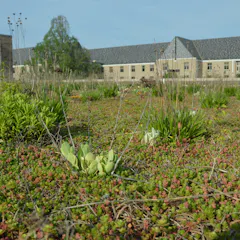
Taking this step may improve the quality of life for vulnerable people and reduce the amount of air conditioning they use, making their neighborhoods less prone to power outages.

Does it make sense to compare the percentage of black Americans shot by police to the percentage of black Americans in the population? A new analysis suggests a different way of looking at the data.

As EVs make more inroads, giving tenants somewhere to plug in their cars could become a selling point.

Testing new industrial chemicals is essential for public health and the environment. But animal testing is costly, and too many chemicals are left untested. A new AI tool may solve the problem.

Stereotypes may discourage girls from pursuing STEM careers, but research suggests several ways that parents and teachers can turn things around.

Energy that otherwise would go to waste might someday power industrial-scale condensation.

Without secure records of property ownership, many poor people around the world have trouble improving their economic situations. Several countries are already trying blockchain-based land registries.
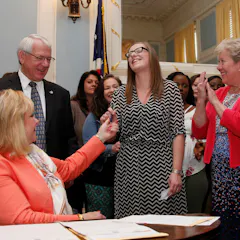
These partnerships between investors, governments and nonprofits are a new way to pay for programs and services that help people in need and address intractable problems like mass incarceration.
Thinking about philanthropy in a more complex way may help donors do more good.
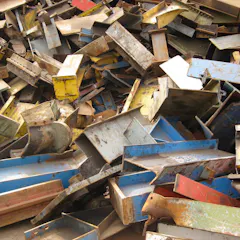
If the US were to stop dumping these valuable metals in landfills and to cease exporting them as cheap scrap, its imports could fall, and there would be less of these metals being made from scratch.
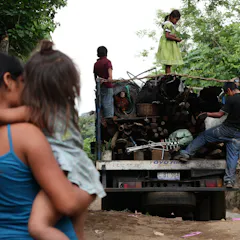
As a pediatrician, I’m not letting State Department warnings stop me from leading surgical missions.
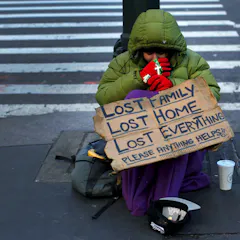
Solving homelessness doesn’t just mean finding someone a physical home. A program run in New Haven, Connecticut, focuses on helping people see themselves as members of their communities – as citizens.

Nestle pays the state a pittance in exchange for its water at a time when public awareness of water issues is rising.

It will be hard to adjust. Considering what happened with the onset of car travel and web surfing, society can’t just wing it.

A scholar of digital trust evaluates Facebook’s current efforts and proposes some improvements the company could make.
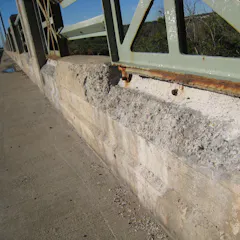
Adding a bit of fungus to the initial ingredient list might be one way to endow concrete with the ability to fill in any bits of damage that occur, without the need for human intervention.

The people leading nonprofits are much less diverse than the communities they serve and there’s no reason to expect that to change soon.
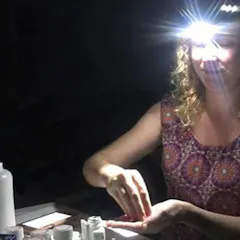
It’s hard but feasible to make a difference, as long as you work with the locals and don’t become a ‘disaster tourist.’
Top contributors
-

Assistant Professor, University of the Fraser Valley, School of Communication, University of The Fraser Valley
-
Part-Time Professor of Economics, The New School
-
Professor of Geography and Senior Research Associate in the Rock Ethics Institute, Penn State
-
Professor of Management, University of North Carolina – Greensboro
-
Associate Dean for Clinical Affairs and Professor of Pharmacy and Medicine, University of Florida
-
Daniel Patrick Moynihan Senior Lecturer in Public Policy and Public Finance, Harvard Kennedy School
-
Postdoctoral Fellow, Energy Systems Transformation (EST) Research Group, The University of Texas at Austin
-
Associate Professor of the Practice, Bush School of Government & Public Service, Texas A&M University
-
Professor and Shapiro Chair of Public Policy and Public Administration, Trachtenberg School, George Washington University
-
Associate Professor of Public Policy and Women's Studies, University of Michigan
-
Assistant Professor of Child and Adolescent Development, San José State University
-
Senior Research Fellow, Melbourne School of Psychological Sciences, The University of Melbourne
-
Director of the Transnational Environmental Law Clinic; Assistant Professor of Law, Wayne State University
-
Eugene H. Fram Chair in Applied Critical Thinking; Principal of the Collaboratory for Resiliency & Recovery @ RIT & Professor of Civil Engineering Technology, Environmental Management and Safety, Rochester Institute of Technology
-
Assistant Director, Center for Access to Justice, Georgia State University