

Solar geoengineering experiments are being funded, but researchers disagree over what they can tell us – and whether they should happen at all.
Articles on solar radiation management
Displaying 1 - 20 of 21 articles

This issue divides climate academics more than almost any other.

The UK becomes the first country to put serious public money into solar geoengineering.

Trump has long been a climate-sceptic. But he’s close to tech figures who like big technological solutions to global problems.

The risks of solar geoengineering will be magnified if critics are ignored and researchers are allowed to self-regulate.

The second of two episodes on geoengineering from The Conversation Weekly podcast examines the case against solar radiation modification.

In the first of two episodes on geoengineering, The Conversation Weekly examines the case for repairing the climate with technological interventions.

Some geoengineering techniques are better understood than others. The US is investing in capturing carbon dioxide from the air, but ideas to block the Sun’s rays are raising big concerns.

Injecting reflective particles into the atmosphere won’t immediately cool the entire planet. A new study shows how parts of the US, China and Europe might still see temperatures rising a decade later.

Nations may soon be desperate enough about global warming to consider deliberately engineering the world’s climate.

The realities of climate change look bleak, but is relying on a climate engineering project like solar radiation management the answer?

Earth is fast approaching the red lines that scientists have urged temperatures cannot cross if we have any hope of avoiding catastrophic climate change. Here are the emergency measures we need.

A disaster fantasy raises questions about tinkering with Earth’s climate. With real-life scientists exploring geoengineering, what conversations should we be having now around these technologies?
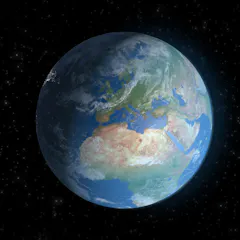
The prospect of attempting to engineer the world’s climate has become a lot more real since the Paris Agreement.

Solar radiation management might be able to reduce some of the risks of global warming while countries get their emissions under control.
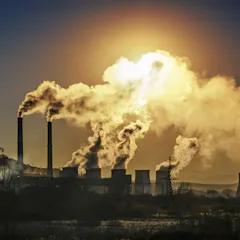
It’s increasingly likely that at some point, the world’s nations will need to broach the fraught discussion of geoengineering. The UN climate accord was a natural forum to do it.

Yes, we blunt the effects of climate change by getting off fossil fuels. But countries’ most ambitious targets imply use of climate engineering schemes – and that discussion should be done in public.
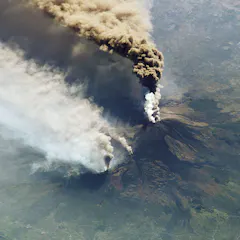
Blocking the sun by injecting tiny particles in the atmosphere – called solar geoengineering – can lower the Earth’s temperature but has some real costs. Economists run the numbers.
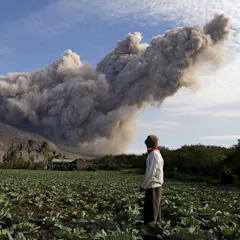
Though climate engineering has lots of problems we need to do more than simply cut emissions.

A rare but dramatic solar storm could have a damaging effect on aircraft systems crucial for safe flight. New technology can help us avoid serious consequences.
Top contributors
-

Professor of Engineering Dynamics and Vibration, University of Cambridge
-
Director, Centre for Climate Repair, University of Cambridge
-
Host, The Conversation Weekly Podcast, The Conversation
-
Presidential Fellow in Environment, University of Manchester
-
Fellow, University of Bristol
-
Professor of Political Theory, University of Reading
-
Professor of Volcanoes and Climate, University of Bristol
-
Professor in Oceanography and Public Engagement, Utrecht University
-
Professor, Addis Ababa University
-
Assistant Professor and Director of the Global Environmental Politics program in the School of International Service, American University School of International Service
-
Kirkland & Ellis Professor of Law, Northwestern University
-
Managing Director, Forum for Climate Engineering Assessment, American University School of International Service
-
Associate Professor of Economics, Georgia State University
-
Associate Professor of Geology, University of Richmond
-
Lecturer in Energy Law and Geopolitics, UCL