

Solar geoengineering experiments are being funded, but researchers disagree over what they can tell us – and whether they should happen at all.
Articles on Solar geoengineering
Displaying 1 - 20 of 25 articles

A communications researcher lays out the dynamics of conspiracy theory belief and why they gain traction in times of anxiety and uncertainty.
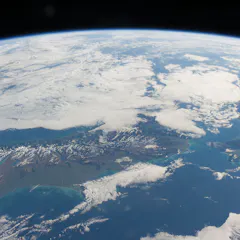
Any legislation of climate actions needs to be based on scientific evidence and informed decisions.

This issue divides climate academics more than almost any other.

The risks of solar geoengineering will be magnified if critics are ignored and researchers are allowed to self-regulate.

The second of two episodes on geoengineering from The Conversation Weekly podcast examines the case against solar radiation modification.

The big question: Would climate engineering like sending reflective particles into the stratosphere or brightening clouds help reduce the national security risks of climate change or make them worse?

A UN meeting this week considered a motion on a suite of technologies known as ‘solar radiation modification’, but no consensus could be reached on the controversial topic.

Releasing reflective particles into the upper atmosphere would help us tackle climate change – but it’s not without risk.
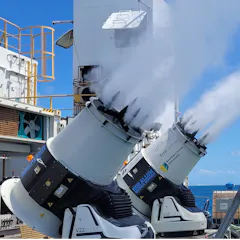
Australian is experimenting with marine cloud brightening to cool and shade the Great Barrier Reef. Here’s how it works.
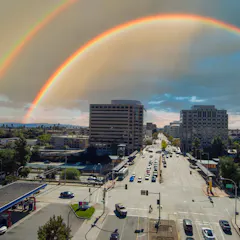
A new report explores options for managing the period after global warming exceeds 1.5°C. This is called ‘climate overshoot’, because we’re pushing past the safe zone into dangerous climate change.
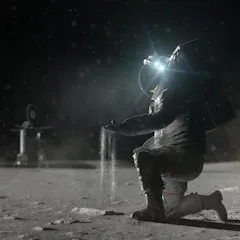
An elaborate scheme to shade Earth with millions of tonnes of Moon dust floating in space is unlikely to get off the ground.

Injecting reflective particles into the atmosphere won’t immediately cool the entire planet. A new study shows how parts of the US, China and Europe might still see temperatures rising a decade later.

Here are two possible forms of regional geoengineering.

Solar geoengineering could temporarily address the worst impacts of global warming.

The risks of using aerosols to reflect sunlight and cool the planet include creating extreme weather and worsening catastrophes.

An engineered climate recovery needs to be taken seriously — in addition to cutting emissions.

Solar geoengineering could theoretically cool the Earth to slow global warming, and it has been controversial. Still, countries should research its risks and benefits.

Is it time to take drastic steps to modify Earth’s climate to avoid catastrophic warming? A panel of experts says the idea deserves study.

Artificially dimming the sun, by injecting reflective particles into the upper atmosphere, could reduce the risk of Day Zero level droughts in Cape Town by more than 90% in the future.
Top contributors
-

Director, Centre for Climate Repair, University of Cambridge
-
PhD Scholar in Climate Governance, Australian National University
-
Professor of Global Environmental Governance, Wageningen University
-
Professor and Scott Presidential Chair in Environmental Science and Engineering, Colorado State University
-
Ph.D. Candidate, Environmental Science, Policy, and Management, University of California, Berkeley
-
Presidential Fellow in Environment, University of Manchester
-
Assistant Professor and Director of the Global Environmental Politics program in the School of International Service, American University School of International Service
-
University of Cape Town
-
Associate Professor of Economics, Georgia State University
-
Assistant Professor, Department of Atmospheric Science, Colorado State University
-
Research Chair, African Climate and Development Initiative, University of Cape Town
-
Senior Research Fellow in Climate Change Risks, University of Cape Town
-
Assistant Professor of Earth and Atmospheric Sciences, Indiana University
-
Associate Professor of Maritime Security and Governance, US Naval War College
-
Lecturer in Earth Sciences, University of Chicago