

Providing people with clean drinking water and sanitation is less expensive than grid electrification and it could improve more lives.
Articles on Solar PV
Displaying 61 - 80 of 124 articles

The first commercial-scale installation of rooftop solar cells, printed with specialised inks, is a step towards an energy future in which solar power can be stuck to any roof or structure.
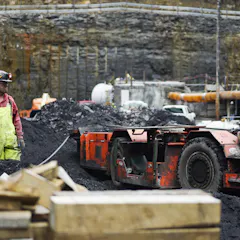
The Trump administration’s Affordable Clean Energy Plan would help the declining coal industry, but a study shows many coal workers could transition to a new industry – solar – and earn more money.
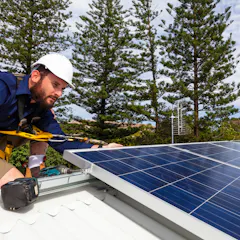
Silicon is cheap and a good semiconductor, but it’s bulky and rigid. Using organic polymers as semiconductors could yield solar panels with the physical characteristics of plastics.
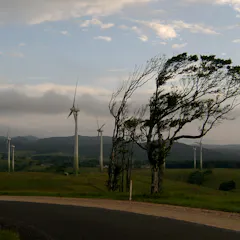
There are calls from the backbench and elsewhere for the federal government to safeguard the future of coal. But do those calls make economic sense? A look at Queensland’s energy landscape suggests not.
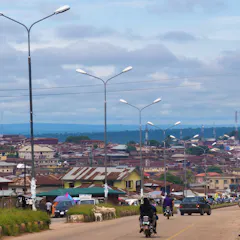
Nigeria can make some changes to harness its energy resources and lower its carbon footprint while providing power to its people.
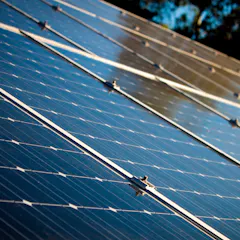
Households that are most likely to go solar are those that can afford solar panels, but aren’t so rich that they don’t have to worry about their electricity bill at all, says a survey of 8,000 homes.
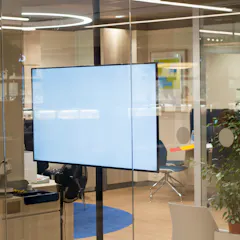
Organic semiconductors could make possible energy-generating windows that double as movie screens or computer displays.
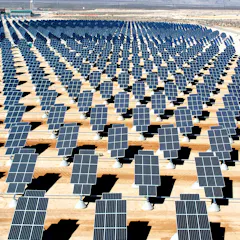
Solar photovoltaics and wind power are on track to supplant fossil-fuel-based electricity generation by the 2030s. The only thing holding back the renewable revolution is politics.
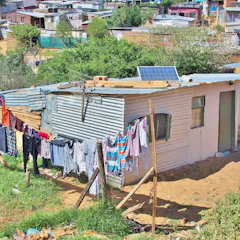
Innovation in small-scale solar systems and mobile money systems is giving people in sub-Saharan Africa access to electricity at a lower cost than diesel or kerosene.

To understand what happened to our love of giant radioactive kettles, take a look at cultural theory.
Solar windows would need to trap enough light to generate power, while letting through enough to keep buildings light. Thankfully, newly developed semitransparent cells offer to do just that.
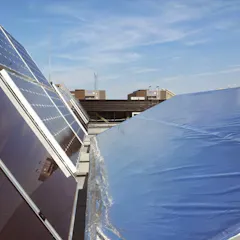
Raising the cost of solar panels coming to the US could rekindle interest in a simple but potentially significant technology: solar reflectors.
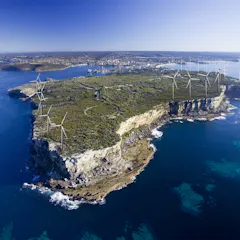
Sun, wind, waste biomass, geothermal, tides and waves: all these energy sources in Sydney’s backyard add up to a zero-carbon energy solution for the city.
New modelling suggests that Australia could use renewable energy to hit its 2030 emissions reduction targets, without it costing any more overall than maintaining the status quo.
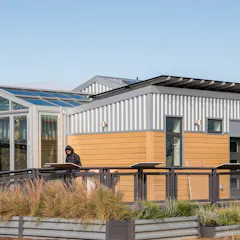
Energy Secretary Rick Perry says the US needs to subsidize nuclear and coal power plants to keep the grid stable. But this policy would raise energy costs and could drive consumers off-grid instead.
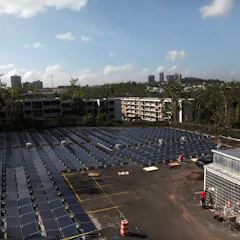
Yes, Puerto Rico and any other storm-vulnerable location could benefit from on-site solar and battery backup, but it’s unrealistic to say these microgrids are enough to power the island.
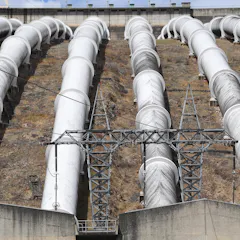
Electricity storage is vital to the stability of a renewable energy grid. The world’s favourite form of storage is pumped hydro – and researchers have located thousands of candidate sites.
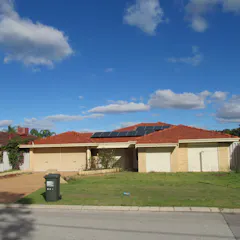
Western Australia has huge amounts of sunshine and wind, yet only 7% of its energy comes from renewables. What’s more, most households in the poorest suburbs are still locked out of the solar panel boom.
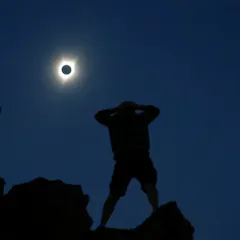
The solar eclipse offered electricity network operators a “live drill” in how to cope with fluctuating output from renewable energy. They passed with flying colours.
Top contributors
-

Professor of Engineering, Australian National University
-
Research Fellow, ANU College of Engineering and Computer Science, Australian National University
-
Senior Research Fellow in Renewable Energy, Australian National University
-
John M. Thompson Chair in Information Technology and Innovation and Professor, Western University
-
Chief economist, CSIRO energy, CSIRO
-
Phd Candidate, School of Engineering, Australian National University
-
Reader in Energy Policy, University of Aberdeen
-
Emeritus professor, Australian National University
-
Joint director, Collaboration on Energy and Environmental Markets, and Professor, School of Electrical Engineering and Telecommunications, UNSW
-
Professor of Energy and Environmental Economics and International Affairs, Penn State
-
Honorary Associate Professor, UNSW
-
Postdoctoral Researcher in Photovoltaic Engineering, University of Oxford
-
Assoc Prof. Renewable Energy, Monash University
-
Professor of Sustainability, Curtin University
-
Senior Research Fellow, Collaboration on Energy and Environmental Markets, UNSW