
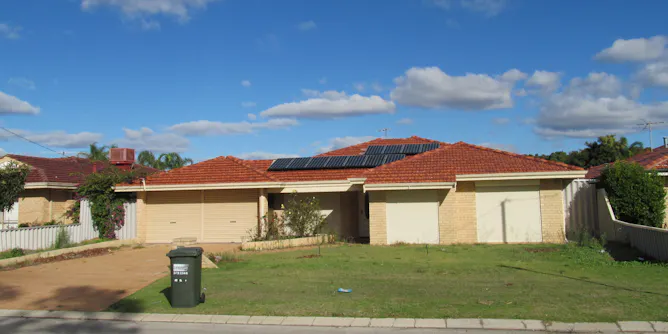
Western Australia has huge amounts of sunshine and wind, yet only 7% of its energy comes from renewables. What’s more, most households in the poorest suburbs are still locked out of the solar panel boom.
Articles on Solar panels
Displaying 81 - 100 of 122 articles
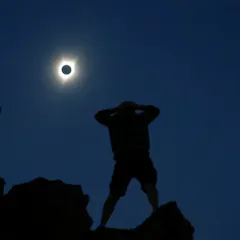
The solar eclipse offered electricity network operators a “live drill” in how to cope with fluctuating output from renewable energy. They passed with flying colours.
A report released this week by the Australian Council of Social Service has pointed out that many vulnerable households cannot access rooftop solar and efficient appliances, describing the issue as a serious…
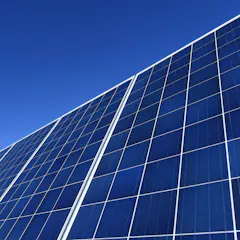
Solar PV and wind energy have overtaken coal as the leading sources of new electricity generation worldwide, with falling prices and new storage technologies making clean energy ever more attainable.

Apartment-dwellers risk being left behind in the rooftop solar boom. But some projects are showing how apartments can join the transition to a distributed renewable energy future.
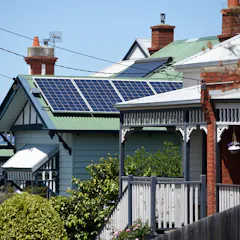
A new report predicts a boom in household solar and batteries as Australia’s electricity networks move to a more sustainable footing, with some states poised for a 500% boost in rooftop solar.
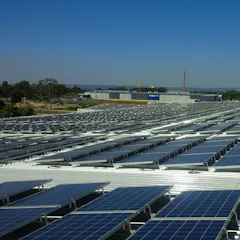
Despite its name, the National Electricity Market doesn’t reach WA. But those charged with guiding the eastern states’ energy transition should look west once in a while.
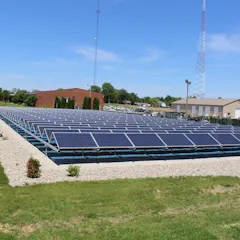
Without help, lower-income people could miss out on the clean energy revolution – hence the arrival of community projects aiming to boost access to solar panels, batteries and other green technology.
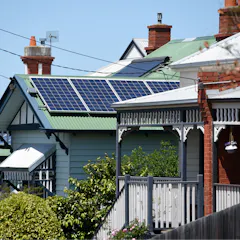
Managing voltage on the electricity network has always been an issue. But solar panels have the potential to make the situation better, not worse as some have feared.
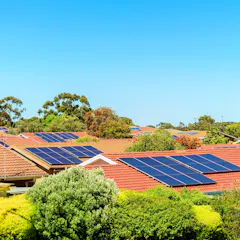
Now that our rooftop solar industry has matured, we need to reconsider the purpose of feed-in tariffs and align them with our goals for the electricity system in the future.
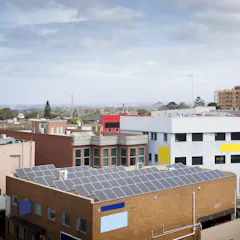
The need to urgently reduce greenhouse gas emissions is a major challenge to cheap electricity.
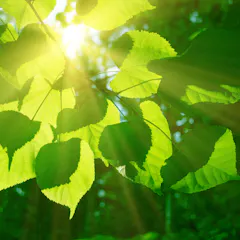
Individual light-harvesting protein complexes have a remarkable ability. Light, which is normally effectively harvested, is also used to finely control how much of it should be harvested.
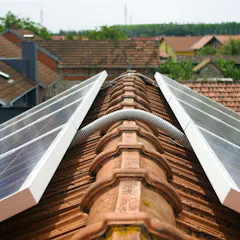
The governing body for our energy market has just missed a major opportunity to modernise our electricity networks.
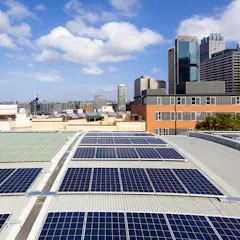
Many households in New South Wales, South Australia and Victoria will lose their subsidies for solar power this year.
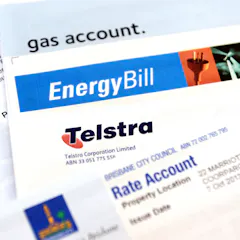
It’s not just about finding money for things like solar panels – poorer households can also find it harder to gain access to reliable information about the green energy options they do have.

There are loads of things you can do to cut your energy bills - and many don’t involve stumping up any cash up-front at all.
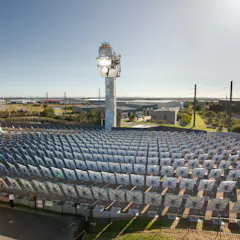
The Coalition has asked CSIRO to develop a “roadmap” towards commercialised clean energy. It’s a good idea as long as the plan is clear, and there’s enough money behind it.
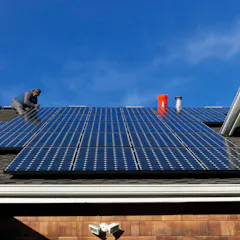
When will residential solar be cheaper than the cost of power from the grid? This point of ‘grid parity’ is a moving target but moving closer in a number of places.

Energy Minister Josh Frydenberg told Q&A that Australia has the highest number of solar panels on people’s roofs per capita anywhere in the world. Is that right?
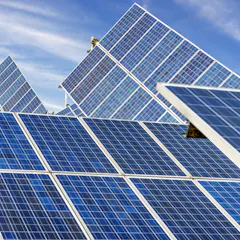
Prime Minister Malcolm Turnbull has announced a new “Clean Energy Innovation Fund”. But will it generate much-needed investment in the sector?
Top contributors
-

Senior Industry Fellow, Environment and Planning, RMIT University
-
John M. Thompson Chair in Information Technology and Innovation and Professor, Western University
-
Professor of Engineering, Australian National University
-
Professor of Sustainability, Curtin University
-
Postdoctoral Researcher in Photovoltaic Engineering, University of Oxford
-
Research Director, Institute for Sustainable Futures, University of Technology Sydney
-
Research Fellow, Stephenson Institute for Renewable Energy, University of Liverpool
-
Senior Research Associate, Renewable Energy & Energy Systems Analyst, UNSW
-
Associate Professor in the Collaboration on Energy and Environmental Markets and the School of Photovoltaic and Renewable Energy Engineering, UNSW
-
Chief economist, CSIRO energy, CSIRO
-
Associate Professor of Solar Engineering, Australian National University
-
University of Southern Queensland
-
Energy Researcher, Curtin University
-
Research Fellow, Curtin University
-
CEO, UNSW Energy Institute, UNSW