
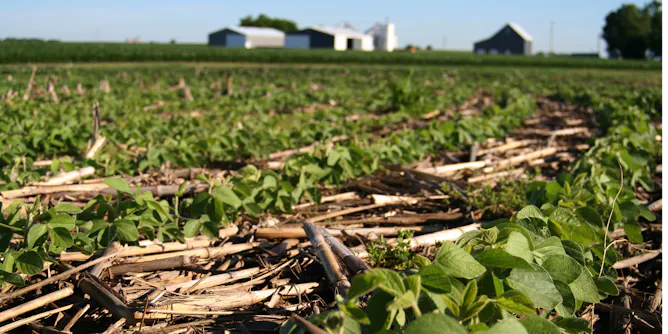
Policymakers want to pay farmers for storing carbon in soil, but there are no uniform rules yet for measuring, reporting or verifying the results. Four scholars offer some ground rules.
Articles on Soil
Displaying 101 - 120 of 195 articles
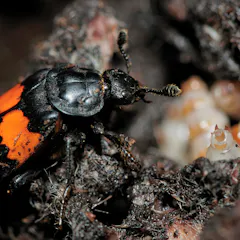
Carrion beetles help stabilise the biology of the soil they live in.
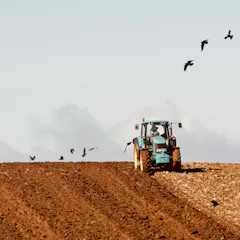
Soil underpins Australia’s economy – yet since Europeans arrived, the natural asset has steadily been degraded. A new national plan aims to change that.
Invisible to the eye, the microbial life in the air around us can vary depending on our environment.
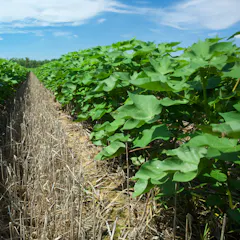
Drilling instead of tilling the soil to plant seeds could help the ground store more carbon.
Scientists need to know how much we can rely on the land to offset our emissions.
We may think of plants as passive life forms, but they can cooperate, share resources, send one another warnings, and distance themselves from their communities when survival depends on it.
A stable ecosystem of organic matter is the key to improving agricultural yields in the surrounding farmland and fighting climate change.
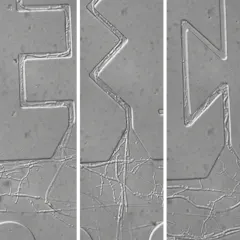
Using tiny ‘soil chips’, researchers have observed the forgaging strategies of fungi at a microscopic scale for the first time.
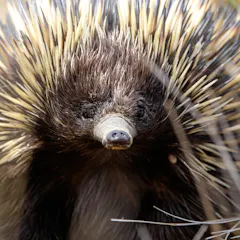
Excavator, farmer, matchmaker: echidnas provide a host of benefits to nature. So let’s harness the potential.
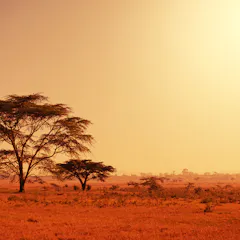
Large areas targeted for forest restoration in Africa are covered by savanna and grassland, which provide important ecosystem services that would be lost should they be converted to forests.
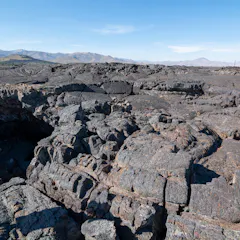
To avoid global warming on a catastrophic scale, nations need to reduce emissions and find ways to pull carbon from the air. One promising solution: spreading rock dust on farm fields.
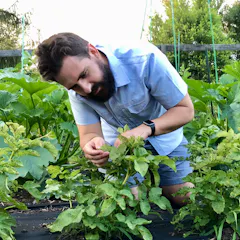
The COVID-19 pandemic has boosted interest in home gardening. Three scientists who garden explain some basic methods for controlling common insects and microbes that can spoil your crop.
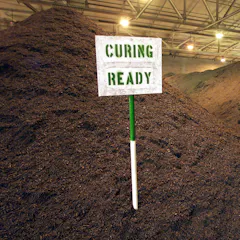
Turning food scraps and yard trimmings into compost improves soil, making it easier for people to grow their own food. City composting programs spread those benefits more widely.
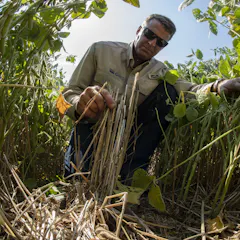
There’s growing interest in making the US food system more resilient and flexible, but soil – the origin of nearly everything we eat – is often left out of the picture.
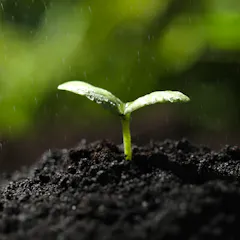
That smell you detect after it rains is part of a chemical language between bacteria and animals.

The drought has pushed many trees to the brink, and whole stands are now dying. The ecological consequences are huge.
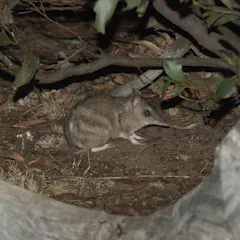
These Aussie diggers boost the health of our soils. But up until recently, we didn’t know just how much soil they can turn over (hint: it’s a lot).
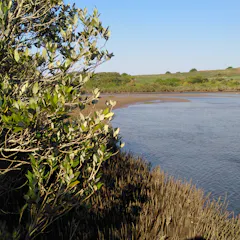
Scientists are building up a picture of how much carbon can be taken out of the atmosphere and stored in coastal ecosystems.
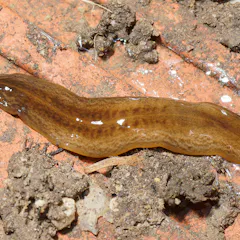
The predatory flatworm Obama nungara travelled in potted plants from Argentina to Europe, where it’s distrupting soil ecosystems. Now, citizen-scientists are helping map their distribution.
Top contributors
-

Soil Scientist, Australian Centre for International Agricultural Research
-
Emeritus Professor of Soil Science/Principal consultant, Lancaster University
-
Professor of Earth and Space Sciences, University of Washington
-
Chair Professor in Sustainability, Lancaster University
-
Reader in Ecology, University of Lancashire
-
Professor of Digital Agriculture & Soil Science; Director, Sydney Institute of Agriculture, University of Sydney
-
Associate Professor, Department of Entomology; African-American Studies, University of Illinois Urbana-Champaign
-
Professor of Dryland Ecology, UNSW
-
Professor in Soil-Landscape Modelling, University of Sydney
-
Associate Professor in Biology, Flinders University
-
Ecologist and Researcher, Flinders University
-
Professor of Earth Sciences and Executive Director, Environmental Resilience Institute, Indiana University
-
Associate Professor of Mycology and Plant Pathology, West Virginia University
-
CGIAR
-
Associate Professor, Monash University