

Higher levels of income inequality in youth are associated with increased ‘deaths of despair’ in young Canadians.
Articles on Social services
Displaying 21 - 40 of 67 articles

Non-profits provide critical services and social support for communities. They also provide settings where vital forms of social capital are produced.
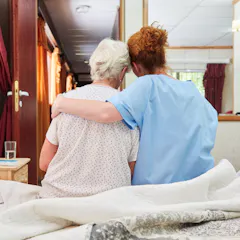
Bill C-7 has created ethical tensions between MAID providers and palliative care, between transparency and patient privacy, and between offering a dignified death rather than a dignified life.

Andrea Magalhaes hasn’t demanded vengeance since her son was murdered — she’s called for expanding the social safety net to address the root causes of crime. Public officials should listen to her.

Family court proceedings place a huge strain on survivors and their families. Here’s what you need to know.

Preliminary research suggests cultural and social services retain or attract employees hard hit by plant closures in other communities. Preserving them may help cities withstand future crises.

Romani children across Europe are overrepresented in institutional care. Research shows widely held prejudical views and structural inequality is to blame.

Government agencies are setting up new websites and phone hotlines to provide information. But those might not be the best ways to engage with people who need help the most.

Tight funding and COVID-related limits on face-to-face contact have forced academics to find other ways to expose students to the real-life work they are preparing them for.
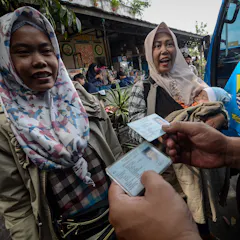
Poverty, vulnerability and discrimination are barriers many Indonesians face in acquiring identity documents.
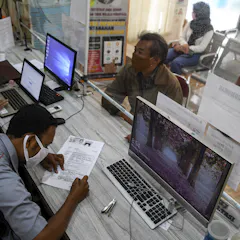
Indonesia’s system of identity document ownership is rife with systemic problems.

Why are teenagers still being let down?

Rocks exposes the realities of social care, where children feel left out of decisions that shape their lives.

Food pantries, the providers of services to the homeless and similar organizations now face enormous challenges.

The MyGov website ground to a halt this week as thousands of people tried to access welfare support. As a result, long queues popped up at Centrelink offices across the country.

Women and children remain vulnerable to harm even after intimate violence has occurred. Coordinating a community’s response can help avoid educational, employment, social, housing and legal problems.

Children’s voices are being omitted from their care records, with devastating effect.

Many cities have no standard method for counting the number of people who live in their cars. This means that their issues are often overlooked in policies designed to help the homeless.

It’s the people most dependent on social services, who are least able to easily transition into the digital age.

Children growing up in Northern Ireland are far less likely to be in foster or residential care than those in England, Scotland or Wales.
Top contributors
-

Professor, Digital Sociology and Social Policy, The University of Queensland
-
Associate Professor of Nonprofit Studies, George Mason University
-
Director, PUSKAPA
-
Head of Research, PUSKAPA
-
Adjunct Associate Professor, School of Human Serivces and Social Work, Griffith University
-
Senior Lecturer, Department of Social Work, Royal Holloway, University of London
-
Associate professor, University of Johannesburg
-
Professor of Public Administration, Binghamton University, State University of New York
-
Professor of Social Work, University of Sheffield
-
PhD candidate, HighWire Centre for Doctoral Training, Lancaster University
-
Professor, Head of Department of Management, UTS Business School, University of Technology Sydney
-
Assistant Professor, Rutgers University - Newark
-
Senior lecturer, Cardiff University
-
Associate professor, UNSW
-
Head of School, Social Sciences, UNSW