

Differences in beliefs may not be what drives people apart. A belief that someone else is wrong may be the stronger force.
Articles on Social media habits
Displaying all articles

Many parents will use strategies to minimise potential privacy risks, such as by blurring their children’s faces in online posts. But is that enough?

Group chats can be places of joy, solidarity and refuge. But they can also be a huge time-suck, and create feelings of anxiety and worry.

It’s a surprisingly difficult question to answer – which makes sense when you consider what this long-term research would involve.
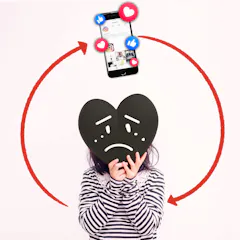
How you feel and how you use social media both affect each other – but one impacts the other more.

We can waste an awful lot of time on social media because of the engaging, even addictive, nature of platforms like Tiktok. But teachers are now exploiting these qualities for learning languages.

Social media does have some redeeming features – and its utility will depend on how you use it. But for many of us, the reward no longer outweighs the harms.

Gen X is leading the way in kicking the social media habit. And concerns about an overall ‘internet addiction’ seem overblown.

People often worry about whether they may be addicted to digital devices, but addiction to a substance is far different from the habitual behavior that typically underlies digital usage.
Top contributors
-

Research Fellow in Digital Childhoods, Deakin University
-
Professor, Academy of Geography, Sociology and International Studies, Hong Kong Baptist University
-
Head Tutor in Political Science; Tutor in Italian studies and Linguistics, The University of Melbourne
-
Research Fellow, Deakin University
-
Senior Lecturer in Psychology, Deakin University
-
Postdoctoral research fellow, California Institute of Technology
-
Associate Professor, School of Behavioural, Cognitive and Social Sciences, University of New England
-
Emerita Provost Professor of Psychology and Business, USC Dornsife College of Letters, Arts and Sciences
-
Sexologist & Lecturer and Research Fellow in Communications & Culture, Edith Cowan University
-
Associate Research Fellow, Faculty of Arts and Education/School of Education, Deakin University
-
Senior Lecturer, Communication, Edith Cowan University
-
Professor of Economics and Psychology, Carnegie Mellon University
-
Assistant Professor of Psychology, University of Michigan