

Laughter is so fundamental that animals like chimps, rats and dogs share the ability with humans. But in people it serves more serious social functions than just letting others know you’re having fun.
Articles on Social connection
Displaying 21 - 40 of 44 articles
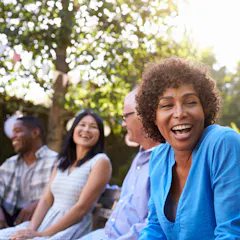
People who are lonely lead sicker and shorter lives. Just like the guidelines for food and exercise, public health guidelines for social connection can help us all live happier and healthier lives.

Is winning about mental toughness? How about coping with social isolation? Or will it be the one who’s in awe of a sunset?

An overreliance on medication as the first-line treatment for depression can lead some people to be labeled with treatment-resistant depression when there are other viable alternatives for relief.

Aging is a major risk factor for many chronic diseases. Figuring out what influences longevity and how to identify rapid agers could lead to healthier and longer lives for more people.

Public health measures in response to the COVID-19 pandemic meant that many people experienced social isolation. But the pandemic didn’t invent loneliness, and its impacts on our health are growing.

Loneliness and social isolation are some of the strongest predictors of poor health. But many studies informing Canada’s new alcohol guidelines don’t consider social connection at all.

Two new studies highlight the importance of social connection in the workplace and illustrate why working from home may not be the optimal workplace arrangement.

A comparison of 42 urban areas in New Zealand with 500 towns and cities in the US shows how much better local urban design has to be if we’re serious about reducing reliance on cars.

Psychology researchers know what kinds of behavior enhance feelings of social connection.
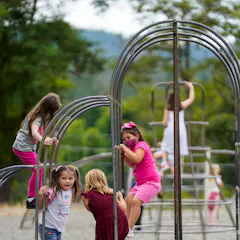
The physical activity and social connection that take place at recess help children be more engaged once back in the classroom.
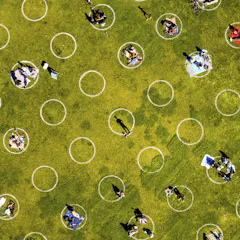
The social restrictions of the COVID-19 pandemic have illustrated how important human connections are to health.

TV programmes with certain themes can help boost our mood.

In the age of masks, improve your interactions by using all aspects of human communication.

The psychology behind a sense of togetherness during the pandemic.

People have changed over time, growing ever more distant and isolated from others – while at the same time finding new ways and technologies that let individuals connect and feel with others.
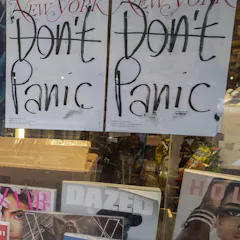
With so much sadness and loss from COVID-19, some of us may feel selfish if we complain about relative inconveniences. But because humans are creatures of habit, changes are hard.
Look out for your elderly parents, family members, friends and neighbors. It could save their lives.
Physically isolating yourself can feel psychologically isolating too. But there are ways to maintain connections in these crazy coronavirus times.

We found refugees with insecure visas had poorer mental health than refugees with secure visas. But social interaction with the wider community seems to help.
Top contributors
-

Assistant Professor in Health Sciences, Simon Fraser University
-
Senior Research Fellow, Matilda Centre for Research in Mental Health and Substance Use, University of Sydney
-
Senior Research Fellow, The University of Queensland
-
Principal Research Fellow, Melbourne Institute of Applied Economic and Social Research, The University of Melbourne
-
Professor in Psychology, University of Auckland, Waipapa Taumata Rau
-
Senior Research Fellow, Black Dog Institute, UNSW
-
Professor and Clinical Psychologist, Australian National University
-
PhD student in iSpace Lab, Simon Fraser University
-
Senior Lecturer in the School of Psychology, University of Lincoln
-
Associate Professor of Marketing, Tasmanian School of Business and Economics, University of Tasmania
-
Instructor of Communication and Head Coach, MSU Speech & Debate Team, Mississippi State University
-
Clinical Assistant Professor of Psychiatry and Neurology, University of Michigan
-
Academic in History and Communications, University of Southern Queensland
-
Associate Professor, Social & Behavioural Health Sciences, Dalla Lana School of Public Health, University of Toronto
-
PhD Candidate, University of Auckland, Waipapa Taumata Rau