
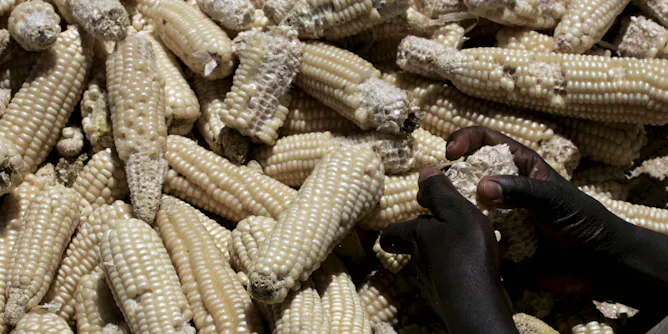
Understanding the political economy around maize production puts into context debates on key interventions in the value chain.
Articles on Smallholder farming
Displaying 41 - 54 of 54 articles

There have been some positive strides made in getting smallholders involved in digital agriculture in Africa
Ethiopia’s teff plant is gluten-free and demand is growing. The country needs to upgrade its harvesting to reap the rewards.

Medium-scale farms are an important driver of agricultural and rural transformation in much of Africa.
The $4 billion that foundations are pledging to spend within five years amounts to less than 1 percent of what businesses and governments spend on global warming every year.
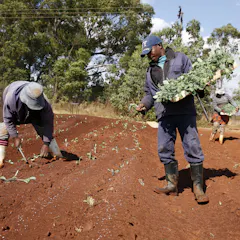
South Africa’s smallholder farmers face major obstacles but being in groups can help them.
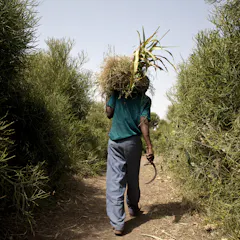
Africa’s declaration to boost agriculture on the continent has seem some progress but a lot still needs to be done.
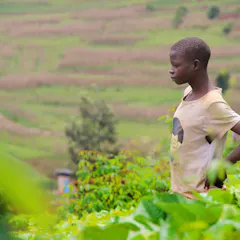
Findings from several scientific studies show the real impact of Rwanda’s agricultural policies and the challenges it faces.
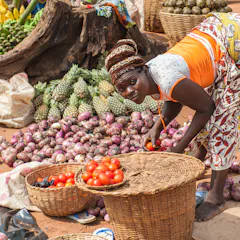
In Benin the differences between male and female farmers are their specific gender productive and reproductive roles, norms and identity.
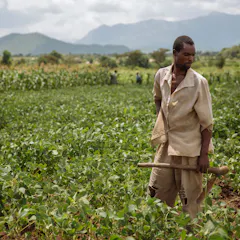
There are questionable methods being used which distort our understanding of the number of smallholder farmers that embrace new technologies.
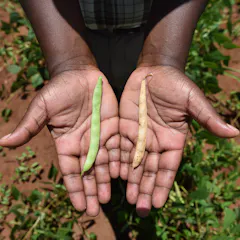
The development community has overlooked the ethical dilemmas associated with raising one individual above others through farmer-to-farmer systems.

Drought is a problem in South Africa and it affects farmers. As a result, farmers and government are working together to develop strategies.
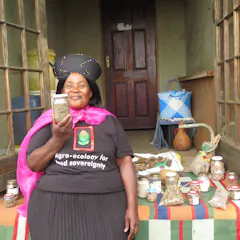
Since 2000, the growth of the commercial seed market has almost tripled. More than 63% of the world’s commercial seed is now owned by six corporations.
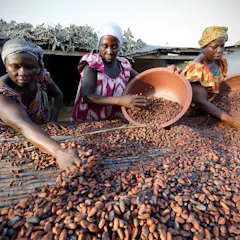
There’s been uneven progress, but African agriculture has shown remarkable improvement compared to 15 years ago
Top contributors
-

Senior Lecturer at Oyo State College of Agriculture and Technology, Igboora, Nigeria and Extraordinary Senior Lecturer at Indigenous Knowledge Systems Centre, North-West University, Mafikeng, South Africa, North-West University
-
Senior Economist, Center for International Forestry Research – World Agroforestry (CIFOR-ICRAF)
-
Academic and agricultural scientist, Adelaide University
-
PHD Student, Geography, Environment and Geomatics/Arrell Food Institute, University of Guelph
-
Ass. Professor, University of Maryland Eastern Shore; North-West University
-
DeWitt Wallace Professor of Geography, Director of Food, Agriculture & Society Program, Macalester College
-
Honorary Lecturer, Bangor University
-
PhD Candidate, Geography, Environment & Geomatics, University of Guelph
-
Research Fellow, Tegemeo Institute, Egerton University
-
Director of the Arrell Food Institute and Professor in the Dept. of Geography, Environment and Geomatics, University of Guelph
-
Agricultural Innovation Scientist, Adelaide University
-
MSU Foundation Professor, Agricultural, Food and Resource Economics, Michigan State University
-
Associate Professor, Department of Entomology; African-American Studies, University of Illinois Urbana-Champaign
-
Research Program Manager for the Cropping Systems and Economics (CSE) program, Australian Centre for International Agricultural Research
-
Visiting professor, Strathmore University