

Can a new database of 3D bone scans help solve the mystery of the elusive ngudlukanta?
Articles on Skeletons
Displaying all articles

The physical damage caused by their unusual working positions can be seen on the scribes’ skeletons.
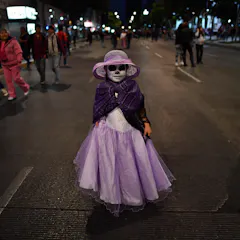
An obscure Mexican engraver named José Guadalupe Posada created the satirical skull in the early 1900s and sold it for a penny. But after he died, it took on a life of its own.
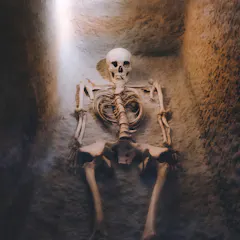
Burial land is running low in certain parts of the world. It’s about time we started to consider the environmental cost of our final resting place.

Derided as ‘toys for the rich,’ the specimens being bought and sold raise broader questions about the relationship between science and capitalism.
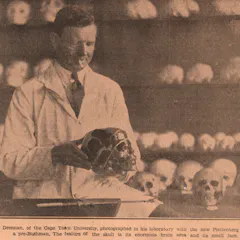
Scientists themselves seemed to be unaware that their lack of comment on the absurdity of apartheid was a statement in itself.

Hard and strong, or bendy and flexible? A cartilaginous skeleton provides advantages in the ocean, but wouldn’t stand up to life on land.
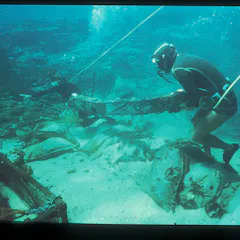
We’re searching for ways to use recovered bones and teeth to better understand time spent in the sea, and the overall journey of the mortal remains.

This tool can identify cause of death by fatal lightning strike in skeletonised remains.
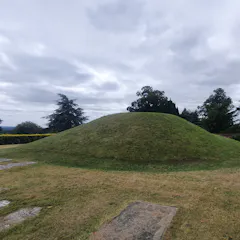
New analysis of Anglo-Saxon skulls suggests that being an Anglo-Saxon was a matter of language and culture, and not genetics.
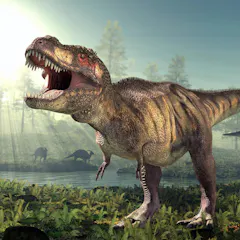
Using the incredible wealth of fossil data and a modern ecological theory, researchers estimated population density for the extinct apex predator.
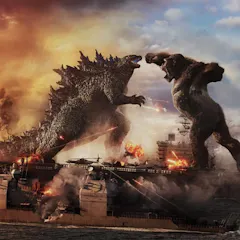
Hollywood loves a good monster battle, and where better to turn for inspiration than the animal kingdom? Traits from real animals can provide clues about the fighting prowess of Kong and Godzilla.
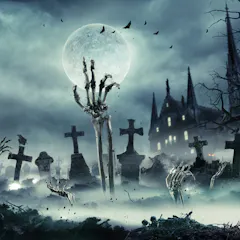
Nutrients and energy contained within dead animals are repurposed and repackaged into living, breathing insects.
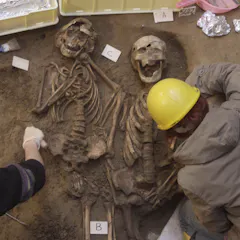
People have lived with infectious disease throughout the millennia, with culture and biology influencing each other. Archaeologists decode the stories told by bones and what accompanies them.
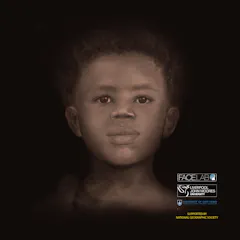
Through science, art and technology, we are able to reconstruct the faces of the dead based on their remains. The researcher who did this work for descendants in Sutherland explains the process.

When the University of Cape Town discovered skeletons in its archive that had been unethically obtained and used, they set about restoring justice to the bones and the community they came from.
Top contributors
-

Adjunct Lecturer in Forensic Sciences, Murdoch University
-
Associate Professor of Forensic Science, Murdoch University
-
Chair professor, Archaeology, University of Sydney
-
Research Associate in Paleontology, University of California, Berkeley
-
Professor at School of Art and Design, Liverpool John Moores University
-
Postdoctoral researcher in Egyptology, Charles University
-
Executive Dean of the College of Arts, Sciences & Education and Professor of Biological Sciences, Florida International University
-
Associate Professor of History, Brown University
-
Assistant Professor, Faculty of Agriculture, Dalhousie University
-
PIO, Florida International University
-
Senior Lecturer, University of the Witwatersrand
-
Professor of Archaeology, Durham University
-
Professor of Biological Anthropology, University of Cape Town
-
Visual/forensic artist, PhD researcher, Liverpool John Moores University
-
Vertebrate Paleontologist, Rutgers University