
Time to stop trying to make disruptive technology businesses like Uber tow the line, and instead create the right conditions for all businesses to embrace innovation.
Articles on Sharing economy
Displaying 41 - 60 of 62 articles

Labor’s sharing economy guidelines should help make for a more nuanced debate about the collaborative economy.
Whatever happens to Uber’s legal status in Australia, it’s likely consumers will be the eventual winners.

Two visions of the ‘new economy’, one based on environmental and social justice values, the other on disruptive technologies, are coming together to challenge the status quo.

The economist Frédéric Bastiat didn’t experience the “sharing economy,” but he knew the ludicrousness of wailing against a “foreign technology.”

The most radical reinvention of work since the rise of industrialization is upon us, as more of us drift toward app-enabled self-employment.

Democratising the sharing economy might reduce profits but it would probably benefit people and the environment more.

As our ever-increasing use of services like Uber, Lyft and AirBnB show, it’s safe to trust other Americans. Time for hitchhking to make a comeback.

Australians are used to casual work, but there’s not yet any evidence the gig economy is taking off.

Some theorists suggest that such platforms are making our world more efficient by natural selection. The reality is a little more complicated.
While some find it hard to imagine life after capitalism, the digitally connected people of the world have begun embracing a new set of ethical concerns requiring new types of economies.
The sharing economy could bring about the end of capitalism: that’s the provocative claim made by economic journalist Paul Mason. But research indicates that it actually has many possible futures.

The exponential change in the role of management means more and more management tasks are likely to be taken away.
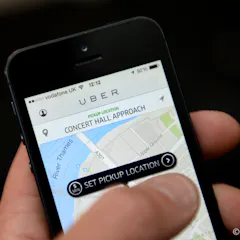
California case highlights the potential negative impact of technological progress.
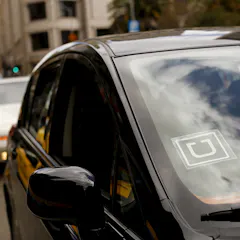
A California commission ruled that an Uber driver is an employee, not a contractor, but the decision will do little to resolve the murky legal issue.

A ruling by the Californian Labor Commission that Uber drivers are employees, not individual contractors, might have much wider implications for the ride-sharing group.

With the momentum of the sharing economy growing, we’re only just starting to come to grips with what it means for the future of work.

With a few tweaks to planning or land title laws, co-housing could help to reduce the costs of buying, owning and renting a home.
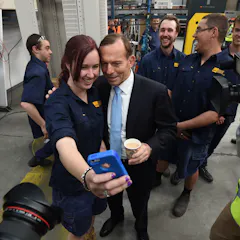
The same forces of disruption that are changing industries and economies around the world are now having a discernible effect on Australian politics – and that’s bad news for the major parties.

Regulations pushed by incumbent businesses to protect their turf only end up stifling growth and hurting consumers.
Top contributors
-

Associate Professor UTS Centre for Business and Social Innovation, University of Technology Sydney
-
Research Fellow, University of Manchester
-
Associate Professor of Marketing, RMIT University
-
Professor of Economics, University of Canberra
-
Professor of Marketing, The University of Melbourne
-
Affiliate Researcher, Work and Organisational Studies, University of Sydney
-
Distinguished Professor of Law and Sidney Reitman Scholar, Rutgers University - Newark
-
Professor in Innovation and Impact, UNSW
-
Curtin University
-
Associate Professor of Business, Boston University
-
Dean of Programs, EM Lyon Business School
-
Clinical Professor of Supply Chain & Information Systems , Penn State
-
Director of X-Lab and Palmer Chair in Telecommunications, Penn State
-
M.S. Candidate, Community and Regional Planning, The University of Texas at Austin
-
Professor of Law, UNSW