

Bribery involves offering money to a particular person, but Trump did not make his $5,000 offer to any single voter or set of voters.
Articles on Dividends
Displaying 1 - 20 of 24 articles

This reporting season, take the earnings figure with a grain of salt when the CEO has outsized influence.

Why it’s time to reconsider an idea that was popular with economists during the great depression.

Five major banks are now in the crosshairs of the French financial prosecutor’s office. Of what are they accused? Here’s the lowdown.

The retailer has spent nearly $12 billion buying back its own stock since 2005, money that could have been used to invest in its business.

Incentives, like shareholder credits for corporate taxes paid, mean that shareholders want their corporations to pay taxes.

Rather than imposing a straight fine, taking away franking credits would ensure shareholders feel more pain when companies misbehave.
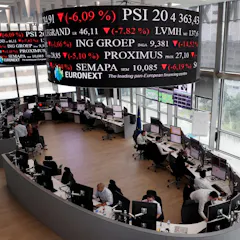
Financial theory shows that the dividend is economically neutral, although it helps to reassure the shareholder psychologically.

Wages are going backwards, loans are in arrears, companies are being kept alive by government support and an exemption from insolvency rules, yet still they are paying out dividends.

Westpac and the ANZ have suspended dividends payments. The National Australia Bank has slashed them. The peculiarities of our tax system explain why retirees hate this more than they should.

APRA is allowing the big four banks to coordinate in a way that might otherwise be illegal.

Directors’ obsession with maximising shareholder value has sucked the liquidity out of companies, making them brittle in the face of crises.

Employee-owned businesses benefit from boosted productivity, profitability, and staff morale. So why are they so rare?

Businesses who pay dividends to shareholders with tax credits attached pay more tax, new research finds.

Scrapping cash refunds on dividends could make the tax system fairer. But super funds could invest less in Australian companies.

Shareholders appear to achieve greater returns from corporations which are less aggressive tax planners and pay a greater percentage of tax, according to a new pilot study.

Rather than lifting investment, Australian businesses have chosen to return cash to shareholders in the form of record dividends and share buybacks.

Arguments about reducing the tax burden of companies tend to get associated with rabid neoliberals. Here’s why they needn’t be.
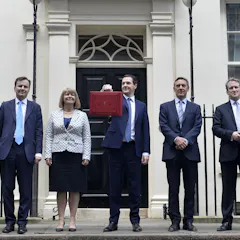
Why stop at 17%?

BHP’s board has navigated well through mining’s highs and lows and still passed the shareholder value test.
Top contributors
-

Lecturer in Accounting, Edinburgh Napier University
-
Lecturer in Social Procurement, The University of Melbourne
-
Sessional Lecturer, PhD (Management) Candidate, School of Management, RMIT University
-
Emeritus Professor of Finance, The University of Melbourne
-
Vice Chancellor's Fellow at Victoria University and Adjunct Professor of Economics, Victoria University
-
Professor of Taxation, QUT Business School, and ARC Future Fellow, Queensland University of Technology
-
Program Director, Housing and Economic Security, Grattan Institute
-
Chief executive officer, Grattan Institute
-
Professor, Finance, The University of Western Australia
-
Principal Fellow, Melbourne Business School
-
Senior Lecturer, UNSW
-
Lecturer, QUT Business School, Queensland University of Technology
-
Scientia Professor of Economics, UNSW
-
Professor of Innovation & Knowledge Exchange, University of Oxford
-
Professor of Finance, Lancaster University