
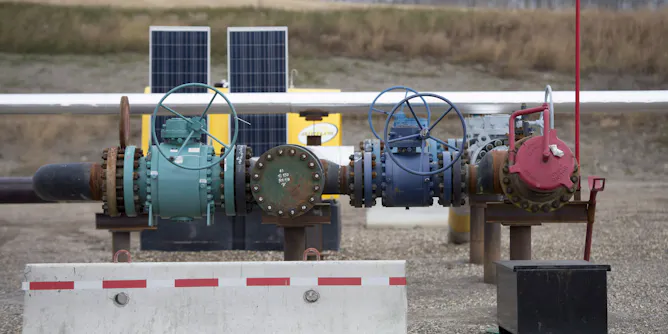
Setback regulations remain the only lever that affords some protection to those bearing the greatest health risks of shale gas development in their neighbourhoods.
Articles on Shale gas
Displaying 1 - 20 of 63 articles
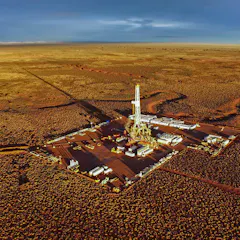
In May, the Northern Territory government greenlit the mammoth Beetaloo Basin fracking project. But they did so based on a report with optimistic projections on offsets and emissions.
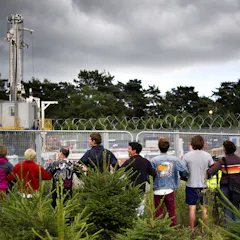
Fracking in the UK has a difficult history – economic theory suggests that whether fracking should occur is a simple case of consent and compensation.
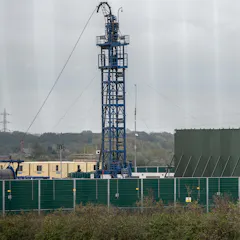
Britain was once sat on huge gas reserves, but most of it leaked away long ago.

Why recent calls for the UK to resuscitate shale gas exploration are for the birds.
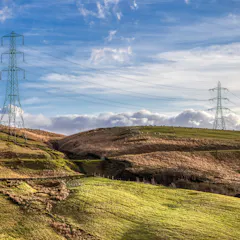
Energy prices might be global, but domestic policy still counts.
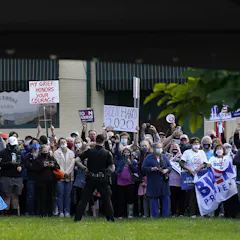
Some speculated that voters in Pennsylvania, Ohio, Colorado and Texas would vote against Joe Biden because of his plans to phase out fossil fuels.
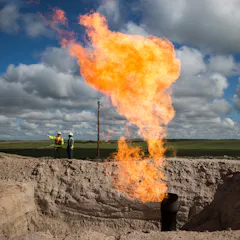
Flaring, or burning, waste gas from energy production has sharply increased over the past decade. It wastes usable fuel, pollutes the air, and helps drive climate change.
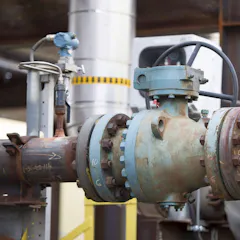
Fracking in northeastern British Columbia has left behind tens of thousands of wells. Some of these are leaking — and could threaten the environment and the public’s health.
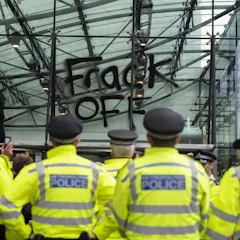
A permanent fracking ban is needed to end the farce and shift resources into carbon capture and storage.

The fossil fuel industry plans to compensate for declining demand for gasoline by flooding the world with more plastic.
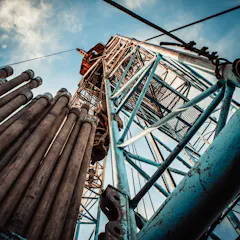
New research uses a different technique to give a much lower estimate.
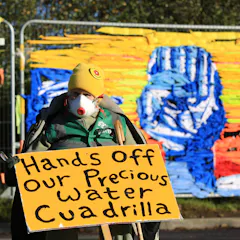
A researcher looking at the social impacts of shale gas developments, explains why there’s much more to the Blackpool tremors than just ground movements.
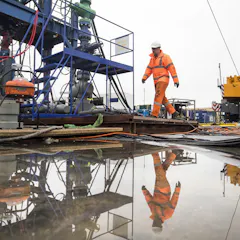
Although fracking has been given the green light it’s still not known how common felt earthquakes may become and if communities are willing to accept them

Big oil and gas companies spent far more fighting this ballot initiative than the measure’s supporters did.
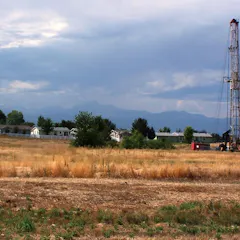
Landowners told researchers that they lacked the knowledge, time and money to advocate for themselves, their financial interests and their property in negotiations over drilling leases.
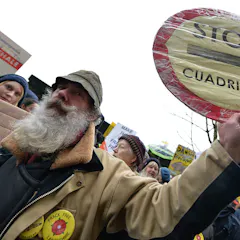
Governments and energy firms will find it hard to generate the necessary public acceptance for such a controversial technology.
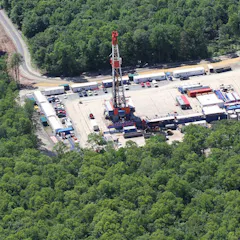
Shale gas exploitation in the US has helped cut is greenhouse gas emissions by 11%. A study explores what would happen if this were expanded globally, and the findings challenge conventional wisdom.
It is extremely important to monitor local seismic activity before fracking starts to avoid causing harm.

A vulnerability map could help assess the risks associated with fracking and groundwater which around 300 towns depend on in South Africa’s Karoo.
Top contributors
-

Senior Lecturer in Radioactive Waste Disposal and Remediation, University of Birmingham
-
Professor of Global Energy, Warwick Business School, University of Warwick
-
Associate Professor in the Centre for Environmental Management, University of the Free State
-
Associate Professor of Sociology; Co-Founder, Center for Environmental Justice at CSU, Colorado State University
-
Associate Professor of Sociology, Colorado State University
-
Departmental Visitor, Centre for Arab and Islamic Studies, Australian National University
-
Pro-Vice Chancellor: Global and Sustainability, Newcastle University
-
Acting Director of the Global Change Institute (GCI), University of the Witwatersrand, University of the Witwatersrand
-
Professor of Geoenergy, Carbon Capture and Storage, Durham University
-
Program Manager for Unconventional Resources, Australian School of Petroleum, Adelaide University
-
Professor Emeritus, Faculty of Health Sciences, Simon Fraser University
-
Lecturer in International Studies, University of Washington
-
Professor, Co-Director, Centre for Energy Law, University of Aberdeen
-
Professor in Regeneration & Sustainable Development, University of Salford
-
Professor of Geochemistry and Petrology, University of the Witwatersrand