

Although the connection between the Canadian far right and the pro-Reza Pahlavi movement is weaker than in Europe, growing diaspora violence shows it’s now taking root in Canada.
Articles on Shah of Iran
Displaying all articles

Each year, millions of Shiite Muslims walk to Karbala to honor Husayn, the prophet’s grandson, whose death continues to shape their faith.
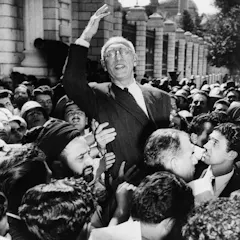
Many Americans only know the history of anger and tension with Iran. But an archaeologist who has spent 45 years focusing on Iran says it is worth recalling the time when the countries were friends.
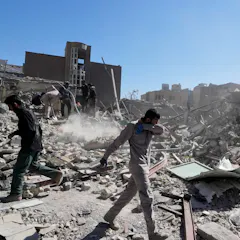
A covert US campaign in the mid-20th century helped steer Iran toward the intense anti-American sentiment that has distinguished its government policy for decades.
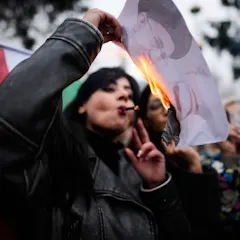
Iran faces a double erasure: violence imposed by a ‘necropolitical’ state and the revival of patriarchal alternatives that promise change while sidelining women.
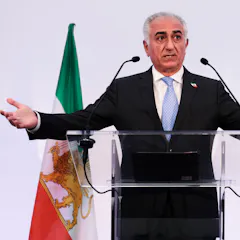
A scholar of modern Iran looks at Reza Pahlavi, son of the last shah of Iran, and examines what he believes and why his profile has been elevated during the recent anti-government protests.

The demands of Iran’s ethnic minorities differ from many of those in Tehran, and they have reason to fear the return of the Pahlavi monarchy.

Negotiations are possible between the US and Iran, but they will neither be easy nor likely to produce more than limited outcomes.
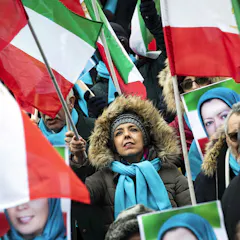
Iran is highly fragmented and doesn’t have a long tradition of democracy or a unified opposition movement. So what happens if the supreme leader is toppled?
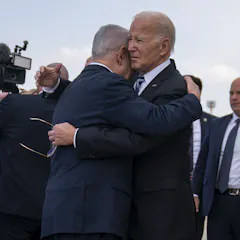
The current war in Gaza is an argument in favour of a multipolar world, one in which the U.S. has less influence and other powers can act as countervailing forces.
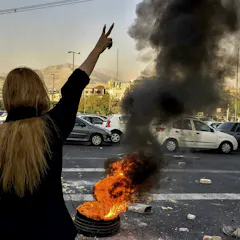
The veil as a symbol of oppression has once again moved to center stage in Iran, but it’s important to know about the history of veiling – and mandatory unveiling.
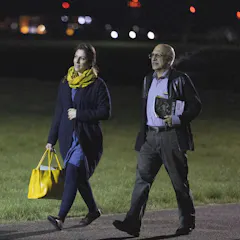
National archive documents raise questions about how definitive British efforts to prevent arms transfers to Iran really were after the revolution that toppled the Shah.
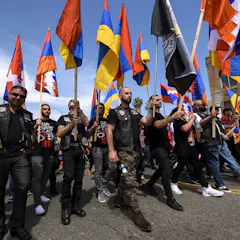
As Armenian Genocide Remembrance Day is marked around the globe, a historian examines the little-known players in the long-running fight in the US Congress to pass a bill acknowledging the Genocide.
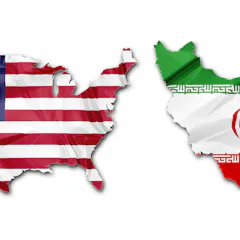
Some of the major events in US-Iran relations highlight the differences between the nations’ views, but others presented real opportunities for reconciliation.
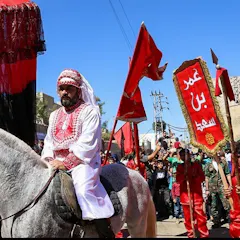
For Muslims, Ashura marks the martyrdom of the Prophet Muhammed’s grandson Hussain.
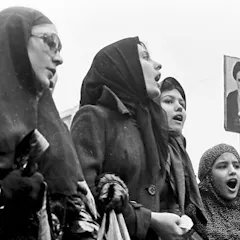
Hostility to Iran’s revolution from both the West and in the region is as virulent now as it was in February 1979.
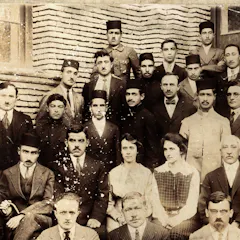
There was a time when Iran and America were friends. Americans founded schools there, helped Iran handle financial crises and trained the country’s first generation of doctors. Could that happen again?
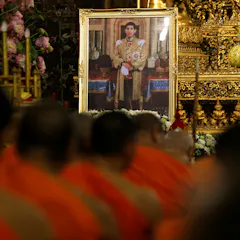
It would be short-sighted to believe that a more far-reaching transformation than a royal succession might not also be in store for the Kingdom of Thailand.
Top contributors
-

Professor of Practice in International Relations, USC Dornsife College of Letters, Arts and Sciences
-
Professor of Ancient Near Eastern Archaeology and History, New York University
-
Associate Professor of Comparative Literature and Middle Eastern/South Asian Studies, University of California, Davis
-
Ph.D. Researcher, International Security and Foreign Policy, Virginia Tech
-
Professor of International Relations and Political Science, St. Thomas University (Canada)
-
Lecturer, Leiden University
-
Assistant Professor of HIstory, University of Maryland, Baltimore County
-
Visiting Research Fellow, King's College London
-
Associate Professor of Politics and International Relations, Florida International University
-
Professor of the Practice of Political Science and International Relations, USC Dornsife College of Letters, Arts and Sciences
-
PhD Candidate, Feminist and Gender Studies, L’Université d’Ottawa/University of Ottawa
-
Associate Professor of Religious Studies, Florida International University
-
Emeritus Professor of Middle Eastern Studies, Australian National University; The University of Western Australia; Victoria University
-
PhD Student in History, Queen's University, Ontario
-
Professor of International Relations, Lancaster University