

Each year, millions of Shiite Muslims walk to Karbala to honor Husayn, the prophet’s grandson, whose death continues to shape their faith.
Articles on Iranian revolution
Displaying 1 - 20 of 47 articles
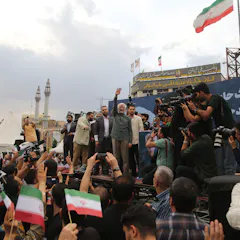
In Iran, the ‘hardliners’ are a politically powerful group who follow the strict principles of the 1979 revolution.
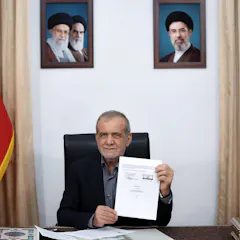
The deal between US and Iran is the sign of a fast-changing world order.
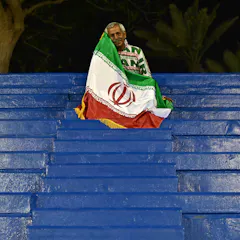
Iran’s team faces a hostile reception from the US government and some of its brethren in the diaspora. Yet others hope the event will trump politics — for now.

An archaeologist examines the cultural obliteration Iran has incurred as a result of strikes in the US-Israel-Iran conflict. How can such damage be compensated and which global organisations can the country turn to?
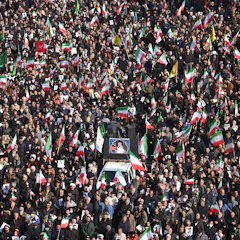
Although the supreme leader assumes the majority of power, Iran’s regime consists of a network of governing bodies.

Left-wing radicalism dominated the 1970s – until the 1979 Iranian Revolution became a catalyst for ‘a new and different energy’.
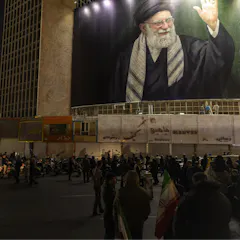
Khamenei was a deeply polarizing figure in Iran – perceived by some as a martyr and others as an oppressor.
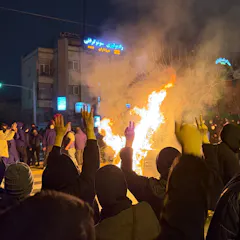
Mass protests are not new to Iran – they have a long and violent history.
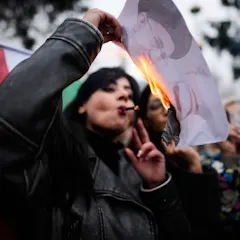
Iran faces a double erasure: violence imposed by a ‘necropolitical’ state and the revival of patriarchal alternatives that promise change while sidelining women.
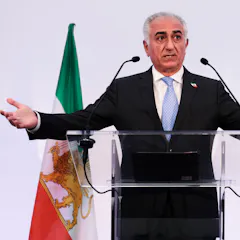
A scholar of modern Iran looks at Reza Pahlavi, son of the last shah of Iran, and examines what he believes and why his profile has been elevated during the recent anti-government protests.
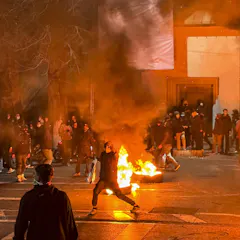
Information is still getting out despite an almost total internet blackout, especially with the help of diaspora groups. That poses a big problem for the government.
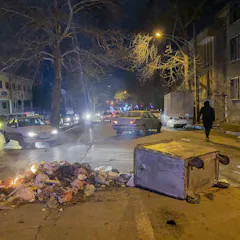
Angered not just by social crises, Iranians are asking fundamental questions about the costs and sacrifices demanded by the Islamic Republic’s ruling ideology.
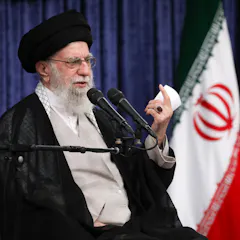
Following the 12-day conflict with Israel, Tehran is confronting a lot of difficult issues that could determine the future of its current system of government.
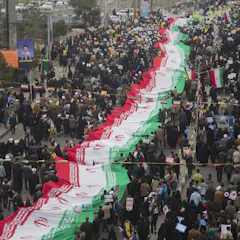
Time and time again, foreign powers have meddled in Iranian politics.
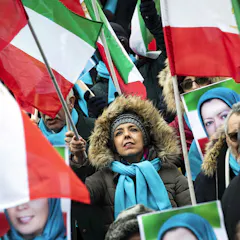
Iran is highly fragmented and doesn’t have a long tradition of democracy or a unified opposition movement. So what happens if the supreme leader is toppled?
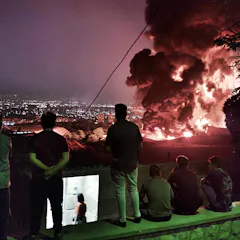
Some major events in the history of US-Iran relations highlight differences between the countries’ views, but others have presented real opportunities for reconciliation.
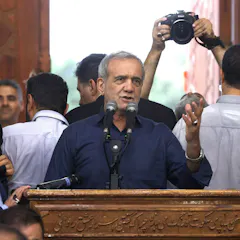
Masoud Pezeshkian wants to reopen dialogue with the west and improve rights for women. The regime may even allow him to do some of that.
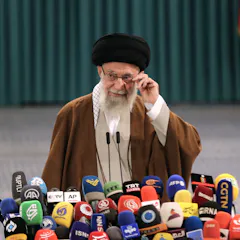
The sudden death of Iran’s president, Ebrahim Raisi, has also sparked much speculation about the identity of the country’s next supreme leader.
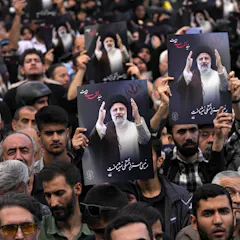
The late President Ebrahim Raisi was supposedly being groomed to succeed an aging Ali Khamenei. The succession is a complex process, more dependent on politics than religion.
Top contributors
-

Associate Professor of Politics and International Relations, Florida International University
-
Senior Lecturer in Sociology, University of Manchester
-
Graduate Teaching Associate, School of Politics and Global Studies, Arizona State University
-
Professor in Global Thought and Comparative Philosophies, Inaugural Co-Director of Centre for AI Futures, SOAS, University of London
-
Professor of Islamic Studies, Head of School, The Centre for Islamic Studies and Civilisation, Charles Sturt University
-
Professor of Anthropology, Emerita, Concordia University
-
Professor of History and Jewish Studies, Vanderbilt University
-
Senior Lecturer, School of Social Sciences, Nottingham Trent University
-
Reader in International Development, University of Westminster
-
Associate Professor of International Relations and Women's, Gender, and Sexuality Studies, Stanford University
-
Doctoral researcher, Feminist and Gender Studies, L’Université d’Ottawa/University of Ottawa
-
Associate Professor of Art & Design, UMass Lowell
-
Associate Professor of Political Science, UMass Lowell
-
Professor of International Relations and Political Science, St. Thomas University (Canada)
-
Assistant Professor of Modern Languages, University of Central Florida