

Hard bargaining still needs to happen before the country has a definitive sense of how executive accountability will be enforced under a unity government.
Articles on Separation of powers
Displaying 21 - 40 of 67 articles

A widely anticipated Supreme Court ruling will sharply limit federal agencies’ power to interpret the laws that they execute and decide how best to carry them out.

An important but controversial legal doctrine, known as Chevron deference, is at issue in two fishing cases. The outcome could affect many sectors across the nation.
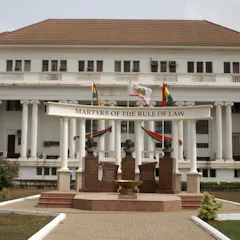
Ghana’s flawed democracy has failed to establish mechanisms to effectively control corruption.

The culture of impunity that has lingered since the presidency of Jacob Zuma has to give way to a new era of integrity and accountability.
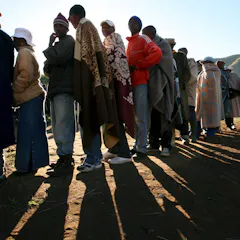
Despite their pretensions to support reforms, it is clear that successive governments are not interested in the reform.
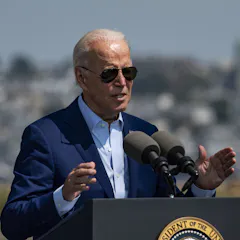
President Joe Biden has pledged sweeping action on climate change but struggled to deliver it. A legal scholar explains why a national emergency declaration should be a last resort.

On the eve of public hearings held by Congress’ January 6 investigative committee, a former oversight staffer for the House of Representatives explains what such hearings aim to accomplish.

A strong, courageous and dedicated Chief Justice will provide the leadership desperately needed to turn the administration of justice around.
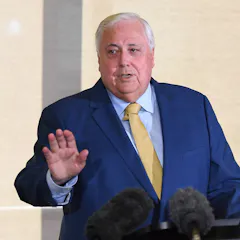
The court said WA’s new law to prevent Palmer from collecting damages against the state was not unconstitutional. Here’s why.
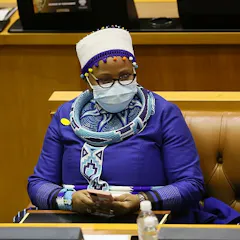
The ANC’s choice of parliamentary Speaker reflects poorly on the party leadership and contrasts starkly with President Cyril Ramaphosa’s commitment to uncorrupt governance.
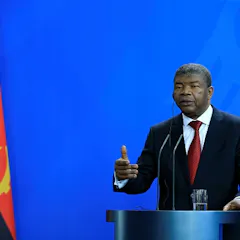
The Angolan political elite lost an extraordinary opportunity to improve significantly the country’s constitution.
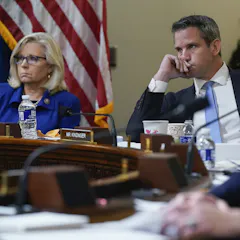
GOP Rep. Liz Cheney says the American people “deserve the full and open testimony of every person with knowledge of the planning and preparation for Jan. 6.” Will they get it?

The actions of the chief justice undermine the independence, impartiality and competence of the judiciary, which erodes public confidence in the courts.

The appointment of judges has hitherto been an obscure and oftentimes clandestine affair. This has produced incompetent judges and led to claims that the judiciary is beholden to the executive.

The judicial process in South Africa is hugely contested. This places an exaggerated burden on the courts to act with maximum independence and impartiality.
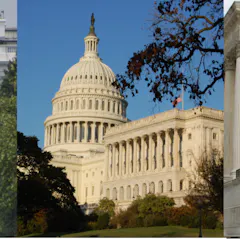
When presidents have tried to address pressing issues through executive action, members of Congress are quick to ask the courts to step in.
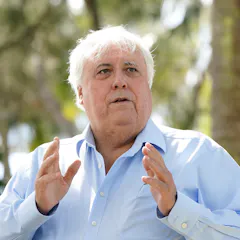
By trying to circumvent the courts, the government is undermining both the rule of law and separation of powers. There is also collateral damage to the rule of law.
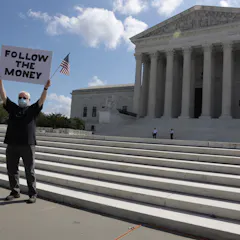
In cases testing the limits of presidential power, the Supreme Court ruled the president has no special protections that exempt him from complying with subpoenas from Congress or state grand juries.
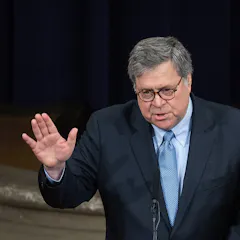
Could defiance of court orders at the highest level undermine the Constitution’s authority in the eyes of American citizens?
Top contributors
-

Professor Emeritus of Public Law, University of Cape Town
-
Professor of Law, University of the Witwatersrand
-
Head of Department, Public and Environmental Law Department, University of Limpopo
-
Distinguished Fellow in Law and Government, Dickinson Law, Penn State
-
Associate Professor of American History and Politics, University of East Anglia
-
Professor of Law, University of California, Berkeley
-
Professor of Law, University of Kansas
-
Professor of Sociology and Social Policy, University of Sydney
-
Research Specialist, the Miller Center, University of Virginia
-
Professor Political Science and Director of McCourtney Institute for Democracy, Penn State
-
Professor of Law, University of Technology Sydney
-
ARC DECRA Fellow, Australian National University
-
Professor of Political Science, Penn State
-
Professor of Law, UNSW Law School, UNSW
-
Senior Lecturer in Criminology and Social Policy, The University of Queensland