

Loud classrooms are a key cause of distress for autistic children.
Articles on Sensory processing
Displaying all articles

Sensory modulation disorder (SMD) can cause a “traffic jam” of information in children’s brains, and make them act out.

‘Body swapping’ may help people get a clearer idea of what their own bodies are really like.

Some devices simply block sound. Others cancel out noises using sound engineering. There is positive, but limited, research that suggests they might be useful for autistic or ADHD people.

It is important to study clothing items to pinpoint the triggers for sensory over-stimulation.

Quiet hour is a strategy aimed at making retail spaces more inclusive for people who struggle with sensory overload, but they’re not the only ones who welcome a pause in the assault on their senses.
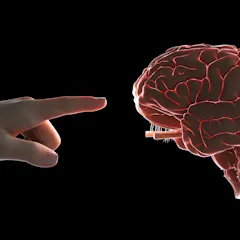
When designing neuroprosthetic devices for users to control with their thoughts, engineers must take into account the sensory information brains collect from the environment and how it gets processed.

Dogs process the sensory world very differently than humans, but love in a way that is entirely familiar.

How does your brain deal with the ambiguous and variable visual information your eyes collect? Neuroscientists think it bets on what’s the most likely version of reality.
Top contributors
-

Technical Officer, Deakin University
-
PhD, School of Psychological Sciences, The University of Melbourne
-
Neurological Surgery Resident, University of California, San Francisco
-
Adjunct Senior Lecturer, Justice and Society, UniSA, Adelaide University
-
Associate Professor of Psychology, Transylvania University
-
Lecturer, University of Pretoria
-
Hwang Endowed Professor of Computer Science and Engineering and Director of the Center for Neurotechnology, University of Washington
-
Senior Lecturer in Occupational Therapy, University of Pretoria
-
Associate Dean and Associate Professor in Social Sciences, University of Canberra
-
Senior Research Fellow, Mater Research Institute, The University of Queensland
-
Lecturer in Psychology, University of Bath
-
Terapeuta Ocupacional y Fisioterapeuta. Docente e investigadora en el Grado de Fisioterapia de la Universidad San Jorge. Miembro del grupo de investigación iPhysio., Universidad San Jorge