
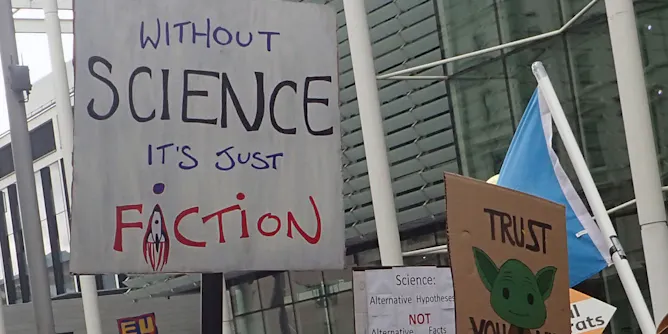
Science works through a process of revision. As consumers, we must learn how to evaluate how mature evidence is, and always remain flexible to new findings.
Articles on Scientific expertise
Displaying all articles

Expertise comes with training, experience and accreditation. And expert consensus is the best guide modern democracies have for making decisions about complicated challenges.

Critical thinking means seeking out new information – especially facts that might run contrary to what you believe – and being willing to change your mind. And it’s a teachable skill.

How much weight would you put on a scientist’s expertise versus the opinion of a random stranger? People on either end of the political spectrum decide differently what seems true.
Top contributors
-

Associate Professor of Marketing, California State Polytechnic University, Pomona
-
Assistant Professor of Psychology, Eureka College
-
PhD student in Social Psychology, University of Southern California
-
Professor of Psychology, Biological Sciences and Environmental Studies, USC Dornsife College of Letters, Arts and Sciences
-
Research Scientist, MIT Libraries, Massachusetts Institute of Technology (MIT)
-
Professor of Sociology, University of Maryland
-
Professor, Jarislowsky-Deutsch Chair in Economic & Financial Policy, and Director of the John Deutsch Institute for the Study of Economic Policy, Department of Economics, Queen's University, Ontario