

Practical work is essential for science education. But health measures compromise their traditional organization. Here are some game-changing solutions.
Articles on Scientific experiments
Displaying 21 - 40 of 47 articles

As the Harvey Weinstein trials start, a psychology scholar explains why jurors may be biased on the question of consent. While the situations examined in these studies are not equivalent to sexual assault, they illustrate a pervasive psychological bias.
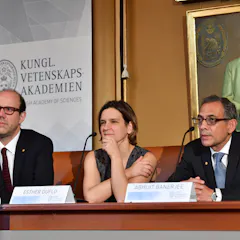
Randomised trials in development have attracted criticiism over ethical issues and questions about being effective for policy.

The 2019 Nobel Prize in economics recognises the contribution of practical experimental work to development, but the value of putting diagnosis before treatment shouldn’t be lost.
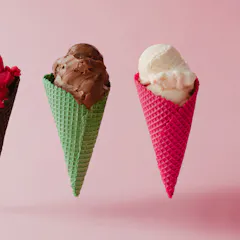
New research on consumer behavior shows that we tend to match some types of choices the people around us make, but not others.
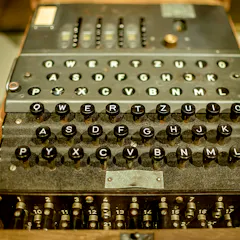
Computer capabilities have boosted our decryption technology to great heights. How will the future compare to a past, one in which codes were thought to be a means of communicating after death?

Chimpanzees, like humans, possess working memory abilities. They’re able to perform similar to seven-year-old children.
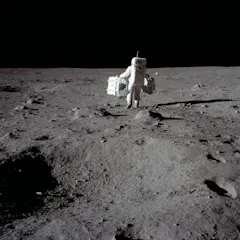
The first humans to land on the Moon, and the team that got them there, get all the glory. But what about the people who laid the foundation for this effort by mapping the Moon? Who were they?
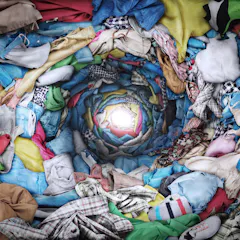
Dirt blindness is used by some to excuse men for spending a third as much time as women cleaning. A new study shows it’s a myth.

Heisenberg’s famous Uncertainty Principle is put to the test to see if things really are uncertain in the quantum world.
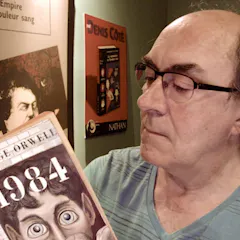
In the year 1984, there was self-congratulatory coverage that the dystopia of the novel had not been realized. However, an expert argues that the technologies described in the novel are here and watching us.

Biohacking for cures: what you need to know.
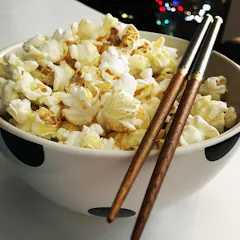
Things and experiences that once seemed so enjoyable usually grow dull over time, something known as hedonic adaptation. Chopsticks offer one way to get some of that pleasure back.

The mindset, tools and techniques of designers can make us better leaders. Here’s how.
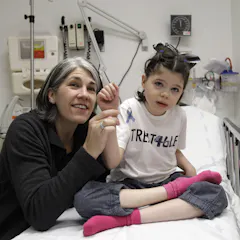
Congress has sent a bill to the White House. It gives terminally-ill patients more false hope than chances for a cure.

Easy experiments that show the Earth is round.
According to new research, the way you respond could determine whether or not you’ll repeat the same mistake in the future.

Slaves were involved in medical experimentation in the 1700s – both as sources of knowledge and as nonconsenting participants.
Doctors are taught how to treat skin cancer – but not necessarily how to empathise with those who have it.

Why do one big experiment when you can do millions of tiny ones?
Top contributors
-

Professor of Marketing, The Ohio State University
-
Senior Lecturer in Physics, Nottingham Trent University
-
W. J. Van Duse Associate Professor, Marketing, Simon Fraser University
-
Assistant Professor in International Education and Development (Education), School of Education and Social Work, University of Sussex
-
Professor of Sociology and Founding Director of The Future of Work Lab, Podcast at MissPerceived, The University of Melbourne
-
Professor of Science Communication and Chemistry, University of Hull
-
Enseignant-chercheur, Université de Bordeaux
-
Distinguished Professor of Physics, La Trobe University
-
Assistant Professor, Department of Biology; Canada Research Chair Tier 2 in Global Change Biology, Concordia University
-
Senior Lecturer, Physics, La Trobe University
-
Senior Lecturer in Philosophy, University of Auckland, Waipapa Taumata Rau
-
Psychotherapist and Senior Lecturer in Psychology, The Open University; Independent Social Research Foundation
-
Senior Lecturer -- Economics, University of Cape Town
-
Professor of Pediatrics and Cellular and Molecular Medicine, University of California, San Diego
-
Research Fellow in Microfluidics, Living Systems Institute, University of Exeter