

Broader goals like building trust, fostering excitement about science and influencing policy decisions don’t necessarily just fall into place when researchers focus only on describing their work.
Articles on Science literacy
Displaying 21 - 33 of 33 articles

Nobel Prize-winning science is almost by definition arcane and complex. While these esoteric fields have their moment in the spotlight, does it matter if the rest of us understand?
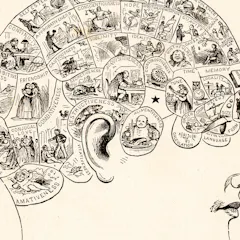
The pseudoscience, conspiracy theory and woo spreading across the world wreaks havoc on those that buy into it.

Just having a national curriculum for science doesn’t solve all of our problems.

We view school science as largely a practical subject, but pupils must understand the language of science – which is often very different from every day language – if they are to excel.

Universities may be facing a crisis of relevance but a growing number of academics are tackling this issue head on.
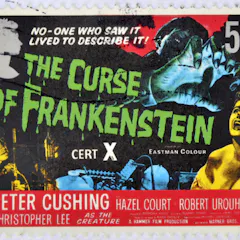
Critics of controversial science like GMOs and cloning often invoke the myth of Frankenstein to highlight the dangers of new technology. But these critics may overlook the moral of Shelley’s story.
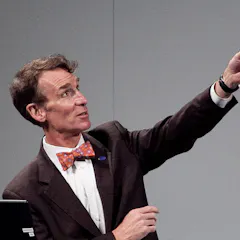
Making science ‘sexy’ leads us to keep looking in the wrong place for the things science could do for us.
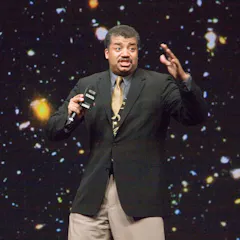
A bill before congress would create a science laureate position akin to the poet laureate for poetry. But some science stars are already essentially doing the job now.
Most science communication appeals to those who already love science. It’s harder, but important, to reach out to the disengaged too.
There is a wealth of science communication going on, but it’s still not enough.

Our nation’s future depends on the quality of its thinking and its leaders. As such, science must be at the core of our national discourse.

Science isn’t important only to scientists or those who profess an interest in it. Whether you find fascinating every new discovery reported or you stopped taking science in school as soon as you could…
Top contributors
-

Associate Professor of Advertising and Public Relations, The University of Texas at Austin
-
Professor of Advanced Technology Transitions, Arizona State University
-
Professor of Public Relations, Michigan State University
-
Senior Research Fellow, Melbourne School of Psychological Sciences, The University of Melbourne
-
Professor of Life Sciences Communication, University of Wisconsin-Madison
-
Assistant Professor of Religion, James Madison University
-
Assistant Professor of Marketing, University of Oregon
-
Ph.D. Candidate in Cognitive Science, University of California, San Diego
-
Assistant Professor of Public Relations, Northern Illinois University
-
Visiting Fellow, Australian National University
-
Professor of Social Psychology in Society, University of Cambridge
-
Honorary Associate, School of Physics, University of Sydney
-
Director of the Division of Cancer Biology and Tissue Engineering at the School of Dental Medicine, Tufts University
-
Director Emerita of the Alan Alda Center for Communicating Science, Stony Brook University (The State University of New York)
-
Professor of Physics and Astronomy, USC Dornsife College of Letters, Arts and Sciences