
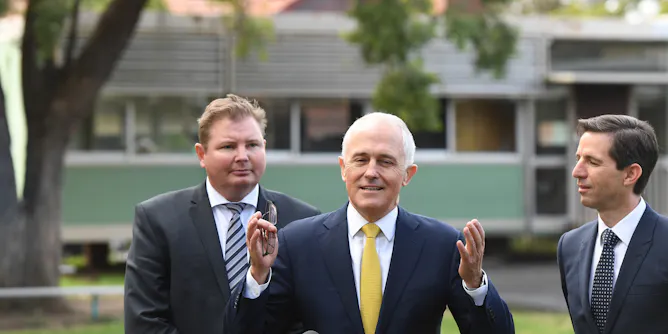
Schooling expert Dr Glenn Savage answers your questions on recent changes to school funding.
Articles on School policy
Displaying 21 - 40 of 76 articles

For the first time, Education Minister Simon Birmingham has proposed a credible plan to deliver needs-based funding.
There is no evidence to suggest that vouchers are simpler, fairer and more transparent than current funding models.

Fear of repercussions and the feeling of not being taken seriously are two reasons why children who are bullied don’t seek help from teachers.
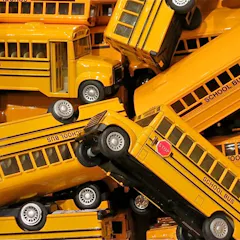
Every year, school districts across the U.S. try to plan out a bus schedule that works for all students while keeping costs and emissions low. Our mathematical models can help.

Schools need to have a formal policy in place for how to deal with heatwaves effectively and keep children cool and well.
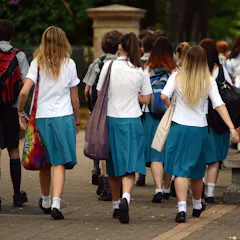
For the first time since 1911, students in NSW can now complete Year 12 without having read a novel or poetry.

Fragmentation, inconsistency and a lack of accountability between alternative education providers means not all young people get access to a good education.

Tanya Plibersek, shadow minister for education, told reporters recently that Australia is slightly below average when it comes to international funding for our schools. Is that right?

Public schools are spaces in which equality can either be supported or weakened.
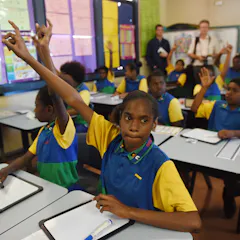
Teachers – get to really know your kids, their families, their community and its history, and what’s going on at home. While school policies are important, relationships are the real keys to success.

Focusing on the opportunity to learn gap removes the emphasis from locating “the problem” in the person, and turns our attention to the differences in access to educational resources.
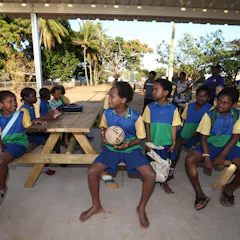
Redesigning staffing policies will attract and retain high-quality teachers in the schools that need them most.
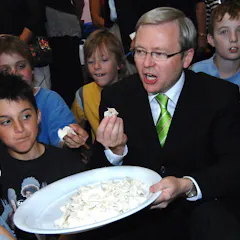
17% of the Australian population is now of various Asian backgrounds. School curriculum around Asia-Australia relations needs updating to reflect demograpic changes.
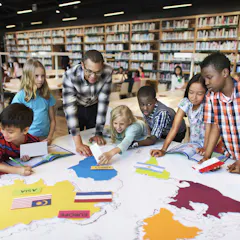
Our current way of assessing students doesn’t let them see the progress they are making over extended periods of time.
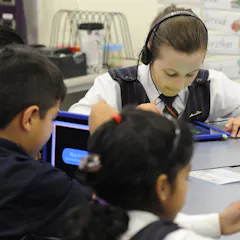
Our enemy is complacency – blaming the post-codes, fixing the students not the system, and arguing for more resources to continue what is not working.

Despite significant reform agendas over the past decade, no real progress in outcomes has been achieved.

We take a closer look at some of the common claims made this year to see if there is any truth to them.

While spending has grown for preschools, schools and universities, vocational education misses out.

The latest round of NAPLAN results show Australia’s school systems are not good at reducing the influence of a student’s background on their academic achievement.
Top contributors
-

Professor of Education Futures, The University of Melbourne
-
School Education Program Director, Grattan Institute
-
Honorary Senior Fellow, The University of Melbourne
-
Policy Analyst, Mitchell Institute, Victoria University
-
Professor, School of Education, University of Southern Queensland
-
Deputy Program Director, School Education, Grattan Institute
-
Senior Lecturer, Education Policy and Leadership, The University of Melbourne
-
Associate Professor of Education, Charles Sturt University
-
Research Fellow, The University of Melbourne
-
Vice Chancellor, Sheffield Hallam University
-
Dean, Werklund School of Education, University of Calgary, University of Calgary
-
Professor, Leadership and School Transformation, School of Education, University of Newcastle, University of Newcastle
-
Professor of Indigenous Education, The University of Melbourne
-
Associate professor, The University of Melbourne
-
Professor, Disability and Community Inclusion, Flinders University