
As a tree scientist who works with urban trees, I can assure you some large, old trees are well worth leaving alone, even you find them annoying sometimes.
Articles on Scams
Displaying 81 - 100 of 117 articles

The scambaiting community aims to disrupt online scammers – but some of their activity is ethically troubling.

As winter draws in, Australians don’t just have to prepare for tax time — they must also be on the watch for scams.

Crude text scams, sent en masse, only have to work a handful of times to make criminals significant sums of cash.

There are thousands of fraudulent websites waiting to scam potential pet owners.

Fraudulent sites are easy to set up and it’s easy to get fooled, according to a psychologist who has advice on how to check out online merchants.

The plague of unsolicited automated phone calls isn’t abating. By studying robocalls, scholars at the Robocall Observatory are developing ways to help shut them down.

While some online services such as banking do warrant using your true information, many sites shouldn’t require the same level of disclosure. Here’s how to protect yourself in such cases.

There have been scores of scams reported in Australia since the bushfires started in September. This is why fraudsters take advantage of those in need.

Cryptocurrency fraudsters have swindled their victims out of hundreds of millions – even billions – of dollars. What do they do to earn people’s trust and then take their money?
As curious social animals, humans are more trusting of people than we should be – especially when we’re dealing with people over the phone, email or via SMS, in the absence of body language.

Governments can help citizens protect their own cybersecurity by providing practical advice and meaningful support.
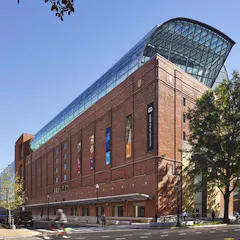
The highly controversial Bible Museum in Washington, D.C., has just announced the withdrawal of five manuscripts deemed counterfeit. Where did these fragments come from and how did they get there?
There is a science to the art of the scam. If you can spot the fraudster’s ‘tells’, you can avoid becoming a victim.
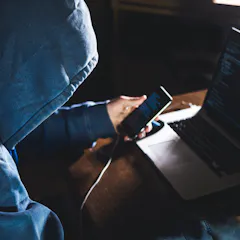
Australians have lost more than $76 million to fraud so far this year. These are the tactics that online offenders use to dupe their victims.
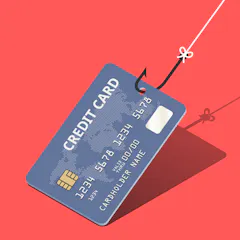
A number of factors – from our eagerness to place trust in people to our overconfidence in our own intelligence – make us easy prey.

Scam emails and phone calls are on the rise as it becomes ever easier to orchestrate fraud from anywhere in the world. New research sheds light on what makes some of us more susceptible than others.

The amount of money lost to fraud in Australia continues to rise, and scammers are developing new ways to target victims. It’s a warning to all to be on the lookout for anything suspicious.

If you understand how one scam works, you’ll be less likely to fall for similarly attractive traps.

Why do people continue to send money when caught in any online romance scam? Researchers are now finding the techniques these fraudsters use are similar to those in domestic violence cases.
Top contributors
-

Associate Dean (Learning & Teaching) Faculty of Creative Industries, Education and Social Justice, Queensland University of Technology
-
Professor of Cyber Security Practice, Edith Cowan University
-
Associate Professor in Cyber Security, Adelaide University
-
Professor of Security and Fraud, University of Portsmouth
-
PhD Candidate in Technology Facilitated Modern Slavery, Ca' Foscari University of Venice
-
Host, The Conversation Weekly Podcast, The Conversation
-
Professor of Psychology, Scripps College
-
Lecturer, Chinese Studies, The University of Melbourne
-
Honorary Senior Fellow, The University of Melbourne
-
Vice Chancellor's Fellow in Digital Innovation and Wellbeing, University of Bristol
-
Criminologist (Cybercrime), University of Surrey
-
Professor, Research Centre for Business in Society, Coventry University
-
Professor of Law (consumer protections and credit law), The University of Melbourne
-
Research Fellow, Deakin Cyber Research and Innovation Centre, Deakin University
-
Associate Professor of Information Systems, Curtin University