
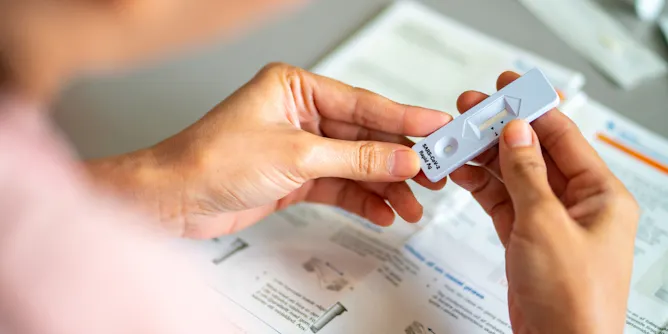
Some results of independent testing of rapid antigen tests available in Australia have been made public. Here’s what the data tell us.
Articles on SARS-CoV-2
Displaying 61 - 80 of 605 articles
Researchers are revisiting old drugs and designing new ones to prevent and treat COVID.

Here’s what needs to happen next for our health systems to cope with the latest COVID wave.
The evidence so far suggests this wave could be a shorter and smaller version of the Omicron BA.5 wave.
Two new omicron variants seem to be waiting in the wings to usurp BA.5. Here’s what we know about BQ.1 and XBB.
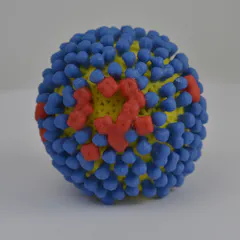
Flu and COVID-19 are expected to make headway during the current respiratory virus season. The best way to stay healthy is vaccination in conjunction with personal protective measures.
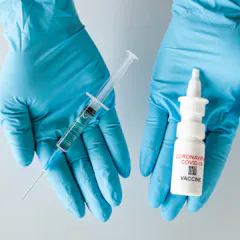
These types of vaccines could offer certain advantages over conventional COVID shots. But we need more data to show us they’re effective.
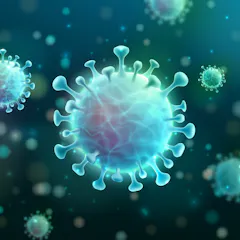
There are so many forms of the virus, it’s hard to keep up. Here’s what to expect next as the virus mutates and recombines.
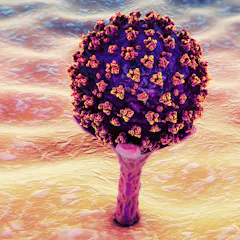
Two new omicron subvariants, BQ.1 and BQ.1.1 could lead to another COVID surge. Here’s what we know so far.
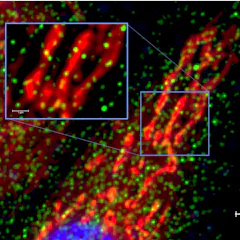
COVID-19 causes lung injury and lowers oxygen levels in patients because the SARS-CoV-2 virus attacks cells’ mitochondria. This attack is a throwback to a primitive war between viruses and bacteria.
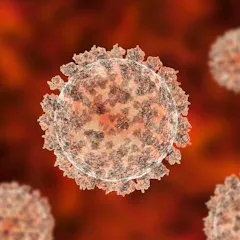
A recent preprint suggesting SARS-CoV-2 came from a lab has reignited the fierce debate over the origins of the virus.
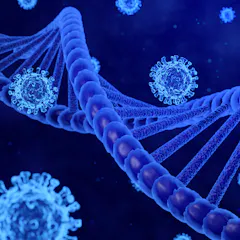
New research adds to scientists’ understanding of how invading pathogens can change the way our genes switch on and off.
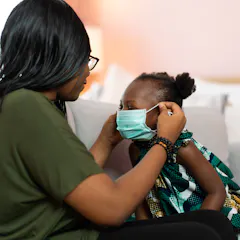
At times when COVID numbers are increasing, allowing infectious people to mingle freely at work and socially will create epidemic growth and make the crisis even worse.
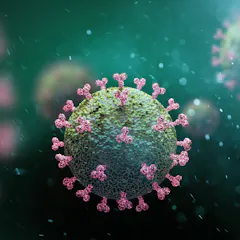
BA.4.6 seems to be even better at evading our immune response than BA.5.

A new study finds that misdirected immune responses can persist for months in those who are suffering from long COVID-19.
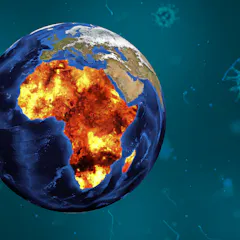
Combining several layers of response to COVID-19 was effective. Decentralisation, innovation and building on existing systems were key.

For the lab leak theory to be true, SARS-CoV-2 must have been present in the Wuhan Institute of Virology before the pandemic started. But there’s not a single piece of data suggesting this.

Animal reservoirs and people who experience chronic COVID infections could potentially see the emergence of new variants. But these variants aren’t necessarily cause for concern.

Data suggests most of the time infection results in either no symptoms or very mild disease for cats and dogs. And the duration of their symptoms, if they get them, may be very short.
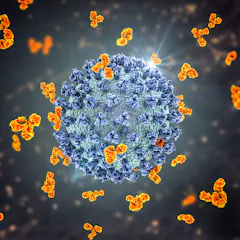
A new COVID variant, BA.2.75, has been detected in the UK and several other countries. But the data we have at the moment doesn’t suggest there’s any reason to panic.
Top contributors
-

Professor of Medicine, University of Virginia
-
Associate Professor, Epidemiology, Deakin University
-
Research associate, Warren Alpert Medical School, Brown University, Brown University
-
Associate Professor and Research Leader in Virology and Infectious Disease, Griffith University
-
Vice-Chancellor's Research Fellow, School of Health and Biomedical Sciences, RMIT University
-
Professor of Global Biosecurity, NHMRC L3 Research Fellow, Head, Biosecurity Program, Kirby Institute, UNSW
-
Dean Faculty of Health Sciences and Professor of Vaccinology at University of the Witwatersrand; and Director of the SAMRC Vaccines and Infectious Diseases Analytics Research Unit, University of the Witwatersrand
-
Instructor of Human Immunology, Emory University
-
Professor Emerita, Nursing, School of Nursing and Midwifery, Griffith University
-
Professor of Pathology, Microbiology and Immunology, University of South Carolina
-
Professor of Pathology, Microbiology and Immunology, University of South Carolina
-
Scientific Officer in Biomedical Sciences, University of Leeds
-
Postdoctoral Fellow in Virology and Immunology, University of Colorado Boulder
-
Professor of Molecular, Cellular and Developmental Biology, University of Colorado Boulder
-
Lecturer in Virology, Queen's University Belfast