

Detecting infectious agents in sewage is only the first step. Researchers are working on developing reliable ways to translate surveillance measurements to case numbers and infection predictions.
Articles on SARS-CoV-2
Displaying 21 - 40 of 605 articles
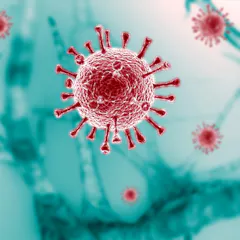
The so-called ‘FLiRT’ variants are dominant in the US and appear to be gaining traction in Australia. Here’s the information we have so far.

Research shows that rapid antigen tests are performing as well at detecting the most recent dominant variants as they did with the earliest strains in the COVID-19 pandemic.

Two new high-profile studies add to the increasingly worrisome picture of how even mild cases of COVID-19 can have detrimental effects on brain health.
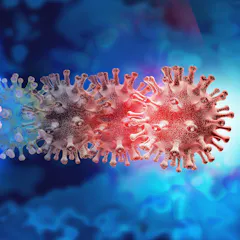
The JN.1 variant has become dominant in Australia and around the world, causing large waves of infections. Here’s what we know about it so far – and why it’s so important.
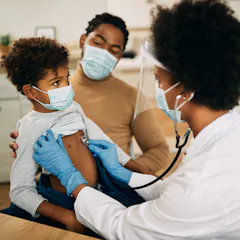
The current triple epidemic of respiratory viruses is affecting all age groups, prompting comparisons with the pre-COVID-19 era.

As the virus continues to mutate, COVID vaccines are updated. This brings us to the latest announcement about the new ‘monovalent’ vaccines.

This is expected to be the smallest Omicron wave so far. But eligible older and vulnerable people are still recommended to have a booster.
This is an era of exciting advances in medical science. But Africa is in danger of being at the back of the queue once again. What should we be doing to make sure this doesn’t happen?
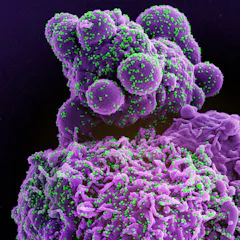
COVID-19 remains a global public health threat despite its current non-pandemic status.
Australia seems to be focusing on boosters for people aged 75 and over, with its latest recommendations. But that may change.
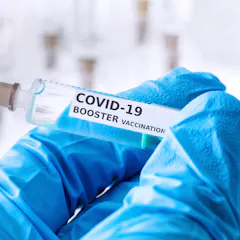
Only time and data will tell whether the CDC-recommended reformulated shots can stand their ground against the ever-changing SARS-CoV-2 variants.

Researchers still don’t know how well BA.2.86 will evade immunity or whether it will cause more severe disease than its predecessors.

How are people with long COVID faring two years after their initial infection? Many have recovered. Some still struggle with symptoms – this is more likely for those who were initially hospitalised.
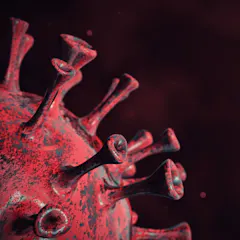
As COVID finds its equilibrium, infection rates will rise and fall, influenced by seasons, school holidays and new subvariants. Managing the risk is complex and needs to be cost effective.

The World Health Organization has classified the EG.5 family of Omicron variants, including Eris, as ‘variants of interest’. What does that mean? And how does Eris differ to other Omicron variants?

Health workers who picked their noses were more likely to contract COVID, according to a new study. But here’s what the study means for the rest of us.

A new study published in Nature suggests a particular gene mutation could help explain why some people are asymptomatic. A virologist explains.

We studied 16 bat species in the UK to learn about the viruses they carry and understand the risk to humans.

There’s pretty much no one left in the US who hasn’t been exposed to the coronavirus, whether by vaccination, infection or both.
Top contributors
-

Professor of Medicine, University of Virginia
-
Associate Professor, Epidemiology, Deakin University
-
Research associate, Warren Alpert Medical School, Brown University, Brown University
-
Associate Professor and Research Leader in Virology and Infectious Disease, Griffith University
-
Vice-Chancellor's Research Fellow, School of Health and Biomedical Sciences, RMIT University
-
Professor of Global Biosecurity, NHMRC L3 Research Fellow, Head, Biosecurity Program, Kirby Institute, UNSW
-
Dean Faculty of Health Sciences and Professor of Vaccinology at University of the Witwatersrand; and Director of the SAMRC Vaccines and Infectious Diseases Analytics Research Unit, University of the Witwatersrand
-
Instructor of Human Immunology, Emory University
-
Professor Emerita, Nursing, School of Nursing and Midwifery, Griffith University
-
Professor of Pathology, Microbiology and Immunology, University of South Carolina
-
Professor of Pathology, Microbiology and Immunology, University of South Carolina
-
Scientific Officer in Biomedical Sciences, University of Leeds
-
Postdoctoral Fellow in Virology and Immunology, University of Colorado Boulder
-
Professor of Molecular, Cellular and Developmental Biology, University of Colorado Boulder
-
Lecturer in Virology, Queen's University Belfast