
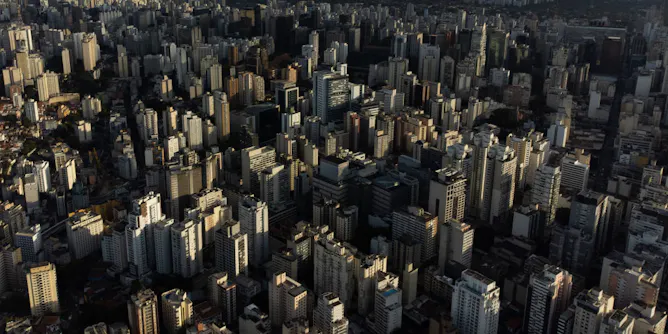
Johannesburg in South Africa and São Paulo in Brazil offer useful insights into how cities in the global south should be managed.
Articles on São Paulo
Displaying all articles
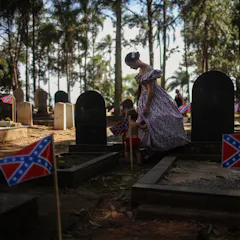
‘Ours is the only city in Brazil where the Confederate flag flies,’ said a city council member in Santa Bárbara d’Oeste. A new law there bans ‘symbols that promote racist and segregationist ideas.’

Armed police interventions are unconstitutional and incapable of addressing housing and safety in the inner city.
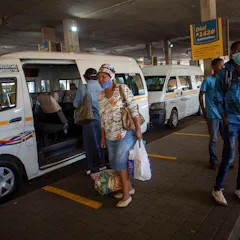
The role of government should be to improve and reorganise this sector to address the needs of users. The proposed national operational subsidy is an opportunity to do precisely that.
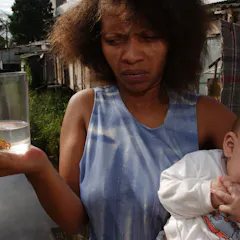
Brazil’s scorpion infestation, which is terrorizing residents of São Paulo and other major cities, is a classic ‘wicked problem.’ That means officials must think outside-the-box to fix it.
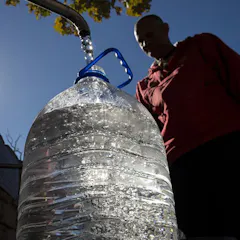
In South Africa, Cape Town fears “Day Zero”, when the city will have to ration water drastically. The phenomenon threatens other cities as well but solutions exist.
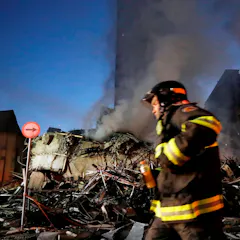
Hundreds of squatters were living in a vacant police station in São Paulo when fire broke out on May 1, killing up to four people. The residents were part of Brazil’s nationwide homeless movement.
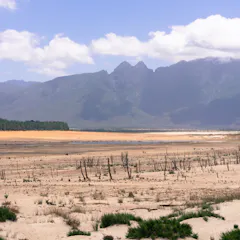
Cape Town is testing new strategies to nudge domestic users into reducing their water use.
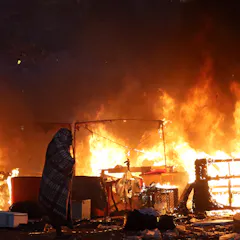
Luz, a once-elegant 19th-century neighbourhood in downtown São Paulo, is prime real estate. But redevelopment means clearing out a homeless encampment known as “Crackland”.

A public health programme respected locally, lauded globally, and based on the best science for helping homeless crack users, is at risk of falling victim to Brazil’s partisan politics.

Natural hair has become a political rallying point for women across the African diaspora. For these women, wearing natural hair is way to resist Eurocentric norms and “post-racial” political thought.
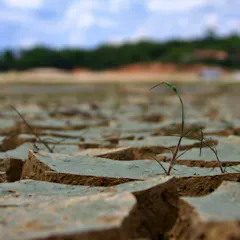
The same persistent weather pattern bringing hot, dry conditions to California is likely connected to a punishing drought in the Sao Paulo area in Brazil.
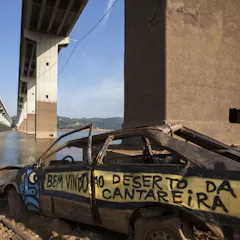
Growth can be predicted and droughts can be planned for. So why did Brazil’s largest water utility get caught out?
Top contributors
-

Professor of Architecture and Urban Planning, Pontifícia Universidade Católica de Campinas (PUC-Campinas)
-
Professor of Meteorology and Climatology, University of California, Santa Barbara
-
Professor in Organisation & Sustainability, University of Exeter
-
Professor in the School of Economics, University of Cape Town
-
Professor of Psychiatry, Universidade Estadual de Campinas (Unicamp)
-
Lecturer in Administration and Organization Studies, Universidade Federal do Rio Grande do Sul (UFRGS)
-
Associate Professor, IRES, Institute for Gender, Race, Sexuality and Social Justice, University of British Columbia
-
Professor, University of British Columbia
-
Hydrologue, directeur de l’unité de recherche HYCAR, ingénieur général des ponts, eaux & forêts, Inrae
-
Lecturer in the School of Geography, Archaeology and Environmental Studies, University of the Witwatersrand
-
Senior Lecturer, Anthropology, University of the Witwatersrand, University of the Witwatersrand
-
Lecturer in Spatial Planning, Cardiff University
-
Researcher in Complex Social Problems, Universidade de São Paulo (USP)
-
Professor of Architecture and SARChI: DST/NRF/SACN Research Chair in Spatial Transformation (Positive Change in the Built Environment), Tshwane University of Technology
-
Visiting senior lecturer, University of the Witwatersrand