
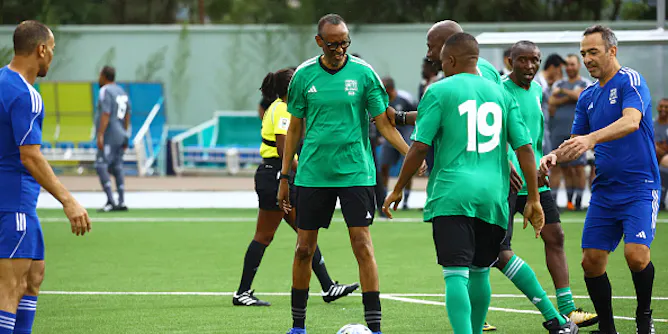
With Africa’s solid support and his pro-west military and policy adventures, Kagame is able to take on critics.
Articles on Rwanda genocide
Displaying 21 - 40 of 54 articles
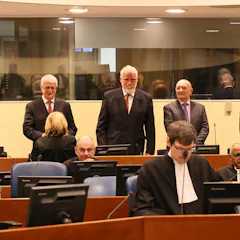
The International Criminal Tribunals for Rwanda (ICTR) and for the former Yugoslavia (ICTY) have tried dozens of individuals. An investigation looks at how the accused experienced these trials.
There isn’t one, clear-cut way to prevent genocide. But there are effective methods of prevention that governments can take.
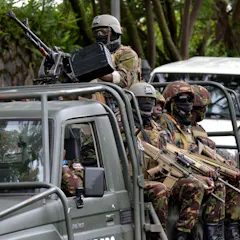
Consolidating peace efforts across the vast territory has proved difficult for close to three decades. Scholars explain why.

Rwanda has rebuffed international pressure to release Paul Rusesabagina, a man made famous by Hollywood.
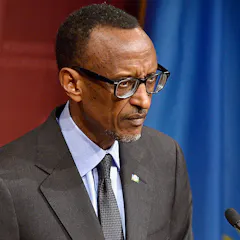
The US has become one of Rwanda’s staunchest defenders.

When a patriarchal society is combined with a history of colonialism, women in that country are at heightened risk of gender-based violence.

All terrorism in the region has domestic origins but is linked to regional and international events.
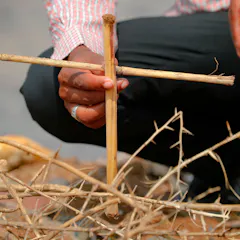
Domestic and geopolitical factors mean that the Ethiopian conflict has enough fuel to burn for some time.
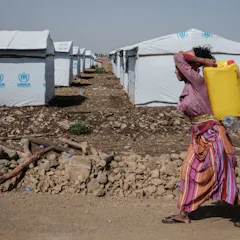
Africa needs to embrace a new approach that focuses on what countries in an embattled region – as a ‘community’ of regional states – can do to intervene.

It will take time for Rwandans, especially those who suffered or witnessed the genocide, to trust France again.

Former fighters described Ongwen as a model fighter and an effective commander – but testimony in his trial detailed the former child soldier’s alleged personal role in the rape of underage women.

Kabuga’s arrest marks the beginning of a long legal process in which the prosecution faces numerous challenges.
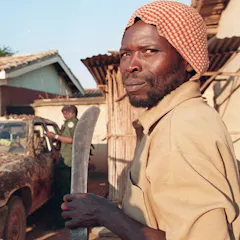
Between 1992 and 1994, the former regime is said to have imported 581 tonnes of machetes into Rwanda. This figure appears to establish that the genocide was planned. But is this number accurate?
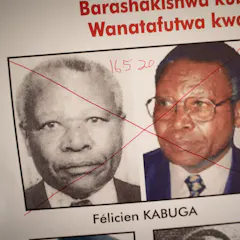
Given the contested success of transitional justice in Rwanda, the arrest showcases the mixed record of international justice.
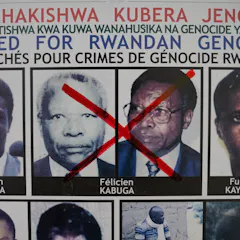
Though genocide survivors would ideally want Kabuga to be prosecuted in Rwanda, it won’t be possible, for legal or political reasons.
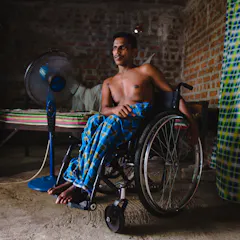
This spring marks the 25th anniversary of the Rwandan genocide and the 10th year since the Tamil genocide in Sri Lanka. The world knows what happened in Rwanda. What about Sri Lanka?
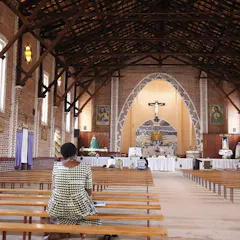
Stories about the 1994 genocide in Rwanda have been evolving as descent narratives telling about journeys through hell.
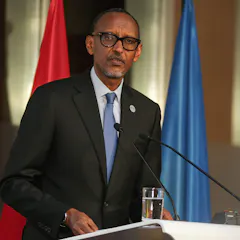
Rwanda is a paradox – a ‘development miracle’ and an authoritarian state.
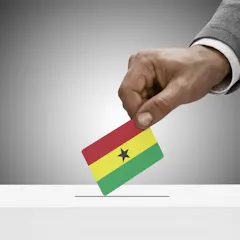
A dictionary of African politics reveals the witty and insightful political terminology that people in different African countries use.
Top contributors
-

Postdoctoral Research Associate, King's College London
-
Professeur des universités, Université Paris 1 Panthéon-Sorbonne
-
Lecturer, University of KwaZulu-Natal
-
Professor/Senior Research Fellow, Centre for Advancement of Scholarship, University of Pretoria
-
Emeritus professor of Political Science, University of Florida
-
Research Associate, International State Crime Initiative, Queen Mary University of London
-
Lecturer, Political Science Department, University of Ghana
-
Professor of Anthropology, University of the Western Cape
-
Emeritus Professor of Law and Politics Institute of Development Policy (IOB), University of Antwerp
-
Professor of International Politics and Director of the Coral Bell School of Asia Pacific Affairs, Australian National University
-
Associate Professor in the Department of Political Sciences and Director of the Centre for Mediation in Africa, University of Pretoria
-
Assistant Professor, Journalism and Director of Graduate Studies, Richard T. Robertson School of Media and Culture, University of Oregon
-
Associate Professor, University of Windsor
-
Guest Lecturer, Berlin School of Economics and Law
-
Visiting Adjunct Professor at Wits Business School, University of the Witwatersrand