
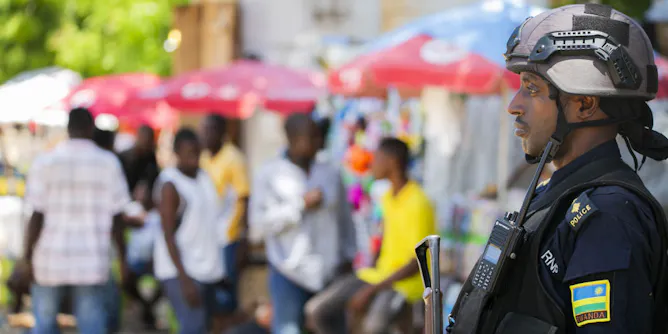
Kigali wants to be seen as a reliable security provider at home and abroad.
Articles on Rwanda
Displaying 61 - 80 of 321 articles

Countries could face major legal consequences if they send people to countries where they could suffer harm.
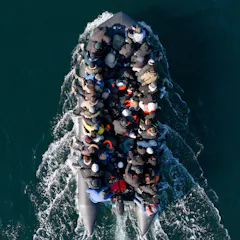
Leaving the ECHR would not free the UK of the obligation not to send people to a place of harm.
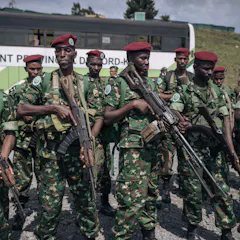
The RED-Tabara armed group operates out of the DRC’s volatile eastern region, which shares a porous 243km border with Burundi.
Many believe that the international community could have acted earlier, to prevent the genocide before it started.
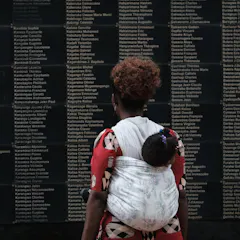
Rwanda is touted as one of the leading nations when it comes to strides toward gender equality. But the role of female ‘rescuers’ in the 1994 genocide is being downplayed.

The 1994 Rwanda genocide has left lasting scars. Children born of sexual violence and mothers have shown immense strength in overcoming their histories of violence.
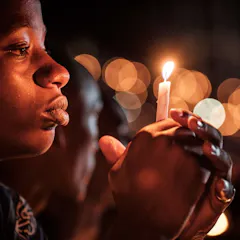
Young people have little desire to bring up their parents’ divisions, but older Rwandans remain fearful of a resurgence of tensions.

Important factors, such as conflict, are central to understanding a country’s degree of press freedom, development and democratisation.
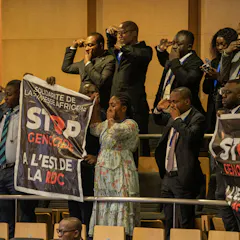
Protests in Kinshasa are an indictment of the lack of attention to the Congolese crisis.
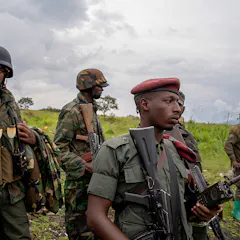
The new intervention force must be sizeable, and have proper air cover as well as transport and air elements. None are guaranteed.

Regional rivalries have functioned as oxygen, allowing the rebel group to survive and grow.

Rwandan forces have been able to keep civilian casualties low in Cabo Delgado despite carrying out a counterterrorism operation.
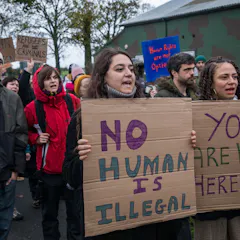
The government of Rwanda must commit to eliminating the forced return of refugees and asylum seekers.
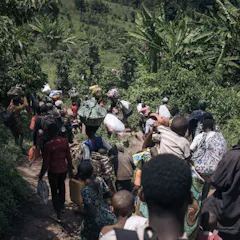
The international effort to address three decades of violence in eastern DRC has drawn in the UN, east African troops and now a southern African force.

Leaving the European convention on human rights would not automatically make the Rwanda plan lawful or easier to implement.
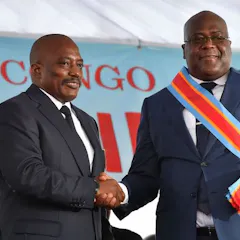
Laurent Kabila and his son Joseph were the Democratic Republic of Congo’s third and fourth presidents.
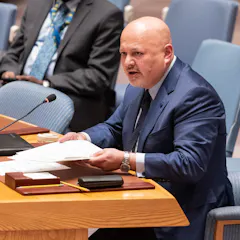
The push for national trials reflects a disappointment with the slow pace and high costs of international justice.

The international community has also failed to protect civilians in Syria, South Sudan, the Democratic Republic of Congo, Yemen, Myanmar and Ethiopia, a genocide expert writes.

Central to the DRC’s politics is a broken relationship between the seat of government in Kinshasa and underrepresented groups in the eastern region.
Top contributors
-

Postdoctoral Research Associate, King's College London
-
Associate Professor of International Studies, University of Nottingham
-
Vice Chancellor, University of Global Health Equity
-
Lecturer in Political Science, Binghamton University, State University of New York
-
Senior Researcher at the Feinstein International Center, Tufts University, and Research Associate at the Refugee Studies Centre, University of Oxford
-
Visiting Researcher, University of Leeds
-
Reader in Politics, Governance and Development, Global Development Institute, University of Manchester
-
Professor in International Development, University of Antwerp
-
Lecturer, UMass Boston
-
Honorary Professor of International Relations, University of the Witwatersrand
-
Professor of International Politics, SOAS, University of London
-
Associate Professor, University of Antwerp
-
Postdoctoral fellow, Johns Hopkins University
-
Professeur des universités, Université Paris 1 Panthéon-Sorbonne
-
Research Affiliate, University of Pretoria