
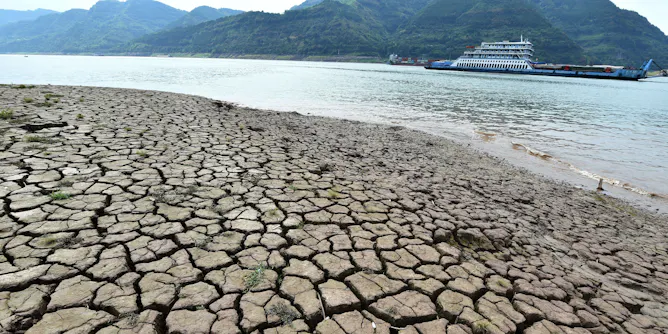
Rivers support billions of people but are among the least protected parts of nature. A major review shows what needs to be done as climate change accelerates.
Articles on river health
Displaying all articles
The river’s health has been suffering, with a number of harrowing mass fish deaths events taking place in recent years.

Reversing damage to waterways requires sustained effort over time. Storytelling that emphasises inter-generational goals cultivates patience and resilience within communities.

Monitoring methods based on environmental DNA are faster, more comprehensive and cheaper than traditional ecological surveys. They help fill gaps in New Zealand’s data on river health.
The river wasn’t merely a physical entity – it was a symbol of spiritual and cultural significance, serving as the life force which flows through Country.
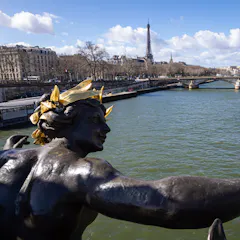
The Seine will be used for Olympic events in 2024 and remain open for public swimming, ending a century-long ban. It’s part of a global movement to make city rivers healthy and swimmable again.

Many of our rivers are overloaded with nutrients from fertiliser run off and wastewater. Algal blooms, fish kills and poor water follow. One solution? Nutrient offsetting.
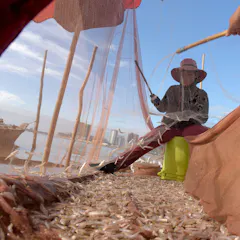
Putting a dollar value on nature has staunch opponents who say it’s morally wrong, but without it, building dams and other infrastructure can run roughshod over vital ecosystems.
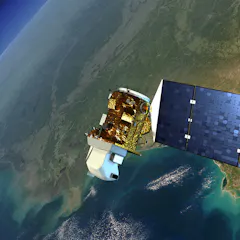
When Indigenous peoples lose their river flow to dams, satellite programs like Landsat – which is celebrating its 50th anniversary – can help them fight for their resources.
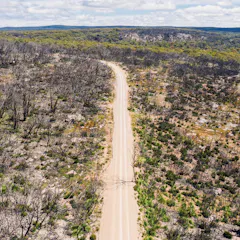
New research shows nature started its long road to recovery in 2020 – especially in NSW and Victoria. But overall conditions across large swathes of the country remain poor.
Top contributors
-

Associate Professor of Sport History, Queensland Centre for Olympic and Paralympic Studies, The University of Queensland
-
Research Scientist in River Ecosystems, University of Nevada, Reno
-
Research Assistant, Fenner School of Environment & Society, Australian National University
-
Honarary Professor in Environmental Genomics, University of Otago
-
Graduate Research Assistant, University of Washington
-
Professor, Water and Landscape Dynamics, Fenner School of Environment & Society, Australian National University
-
Senior Lecturer in History, Federation University Australia
-
Graduate Research Assistant in Computational Hydrology, University of Washington
-
Director, Bushfire Research Centre of Excellence, Australian National University
-
Professor of Environmental Genomics, Curtin University
-
Graduate Research Assistant, University of Washington
-
Professor - Australian Rivers Institute, and Dean - Research Infrastructure, Griffith University
-
Project Officer Wadawurrung Traditional Owners Aboriginal Corporation, Indigenous Knowledge
-
Vice Chancellor's Senior Research Fellow, RMIT University
-
Professor of Hydrology, University of Washington