
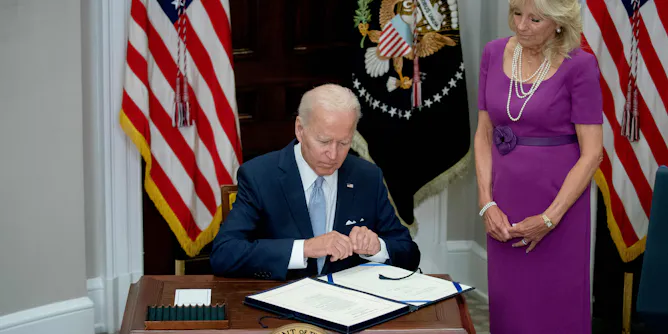
After years of gridlock, Congress passed significant gun control legislation for the first time in the last 30 years.
Articles on Risk assessment
Displaying 21 - 40 of 50 articles
People want a simple answer. Is this action safe? But despite Anthony Fauci bouncing responsibility for COVID-19 risk assessment to individuals, your risk can’t be boiled down to one probability.
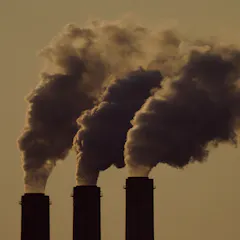
Policymakers, industry regulators and investors must team up to mandate that corporations provide CEOs with financial compensation for reducing carbon footprints.
Non-invasive prenatal testing can assess risk for genetic anomalies in a fetus. But interpreting risk levels is highly personal, as a study on Reddit discussions shows.
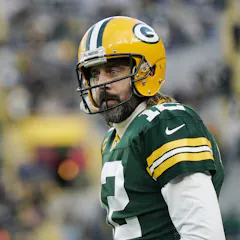
Critical thinking means seeking out new information – especially facts that might run contrary to what you believe – and being willing to change your mind. And it’s a teachable skill.
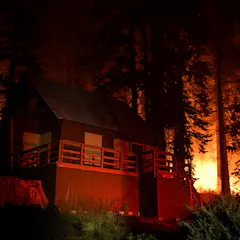
Private companies rate all kinds of investments, from stocks to used cars. Now, they’re starting to analyze climate risks to local real estate – but how reliable are their findings?
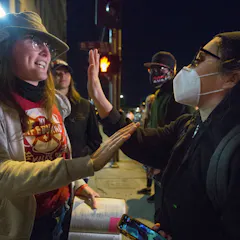
How you respond to a risk depends on how you weigh the costs and benefits of an action. The problem is you’re not just a logical computer, and emotions bias your interpretation of the facts.
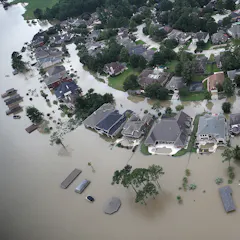
Flood plain statistics can be confusing. There are better ways to think about the risk of severe weather than 100-year storm or flood.
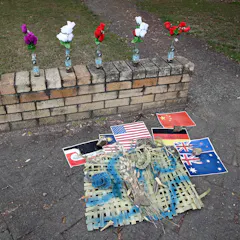
One of the lessons we must take from the Whakaari tragedy is the cumulative nature of risk. Repeated visits to the volcanic island by tour guides placed them near unacceptable risk limits.

A sustainable private health insurance system requires enough young, healthy people paying premiums and not making claims. But government policies haven’t achieved this. Here’s what to try instead.

In the absence of serious efforts by mental health centres, shelters and youth group homes to prevent people from running away from their facilities in the first place, police involvement is necessary.

Release of GM mosquitoes in Florida is imminent. But a multidisciplinary team of scientists believe that more studies are needed first. They encourage a publicly accessible registry for GM organisms.
The danger of treating COVID-19 as an astronomically rare and improbable event is that we will treat it as such and fail to prepare for the next pandemic. And there will be another pandemic.
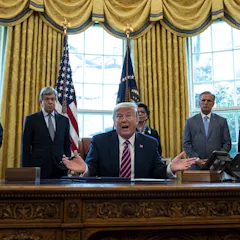
Human beings have difficulty assessing distant threats.

The tragedy at Whakaari/White Island highlights the need for consent forms to ensure tourists are fully informed when choosing to visit dangerous locations.
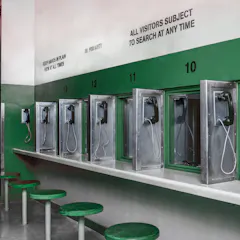
Putting more people in prison is not the answer to reducing crime. New fair and bias free assessment tools may help.
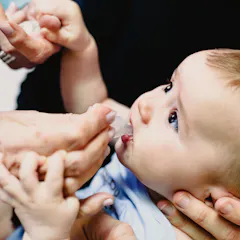
An economics risk analysis offers some insight into the modern anti-vaxx movement.
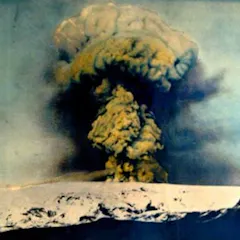
We can’t say that Katla in Iceland is ‘due’ to erupt, no matter what you have read.
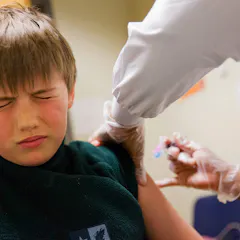
People have to make countless decisions on a daily basis that involve some degree of risk, from boarding a plane to crossing the street. The trouble is most of us don’t weigh risk well.

In response to mudslides that have killed at least 20 people in Southern California, a geologist calls for more resources to study and map landslide hazards so residents can understand the risks.
Top contributors
-

Professor, Disaster & Emergency Management, Faculty of Liberal Arts & Professional Studies & Director, CIFAL York, York University, Canada
-
Psychologist and Faculty Member, Toronto Metropolitan University
-
Professor, Department of Psychology, MacEwan University
-
Head of the Centre for Water, Environment, Sustainability and Public Health, University of Strathclyde
-
Associate Director (International) - Melbourne Centre for Cities, The University of Melbourne
-
Geoscientist, University of Exeter
-
Professor of Ocean Leadership, University of Tromsø
-
Senior Manager, Descriptive Epidemiology, Cancer Council Queensland
-
Tomas Remenyi is a Friend of The Conversation.
Climate Research Fellow, Climate Futures Programme, University of Tasmania
-
Winton Professor of the Public Understanding of Risk, University of Cambridge
-
Public health doctor and Wellcome Trust Clinical Research Fellow, London School of Hygiene & Tropical Medicine
-
Associate Professor, Social Innovation, CQUniversity Australia
-
Associate Professor at the Implementation Science & Practice Advances Research Center, UMass Chan Medical School
-
Professor of Advanced Technology Transitions, Arizona State University
-
Associate Professor in Human Factors, Heriot-Watt University