
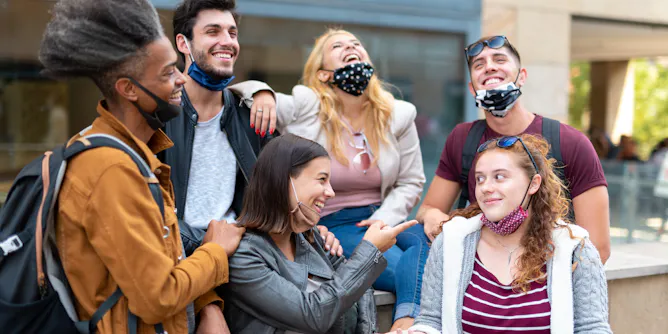
Good communication and factoring in human behaviours can prevent people from dismissing the risk of the coronavirus.
Articles on Risk
Displaying 81 - 100 of 274 articles
The outdoors is less risky than an enclosed room, but it isn’t a COVID-19-free zone. Here’s what you need to know.

With their different but equally conservative income tax policies, both Labour and National ask voters to consider their own appetite for risk.
Many great innovators have personality traits in common. Comfort with uncertainty is critical, but passion, curiosity and a number of other learnable skills can prime you for an innovate idea.

How climate change and other human actions have combined to create conditions for explosive wildfires in California, Oregon and Washington state.
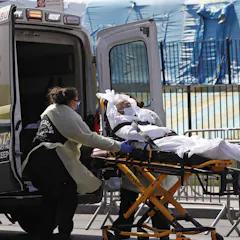
Using random testing, researchers in Indiana were able to calculate death rates by age, race, and sex and found sharp increases in risk of death among older and non-white state residents.

Challenge trials – purposefully exposing volunteers to the coronavirus – could speed up the development of a vaccine. But there are serious ethical concerns with this approach.
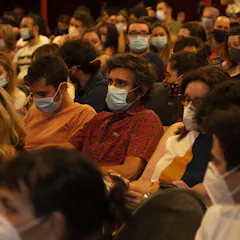
Policies meant to improve public health – like mandatory face masks during the coronavirus pandemic – need to take into account how people might adjust other behaviors in response.

With regular music festivals, people can more easily seek help or advice about drug and alcohol or mental health issues. But with drive-ins we need to be creative to minimise harms.
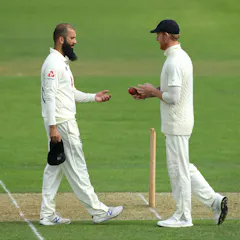
Boris Johnson has called cricket balls a ‘natural vector of disease’, but how would we find the evidence to know if he is correct?
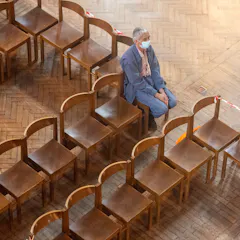
The government should be more honest about what it sees as an acceptable level of risk.
Was the government correct to think that adherence would fall over time? Perhaps.
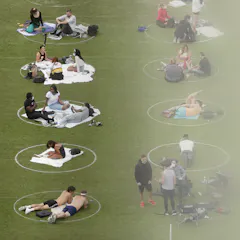
A global pandemic might be at the forefront of everyone’s minds. But we can’t assume that future threats will get the attention they deserve from people living in an information-saturated world.
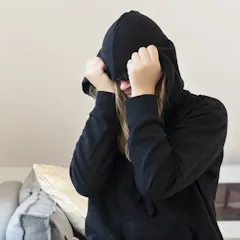
Together the social and emotional ‘jobs’ of adolescence – developing intimate friendships and achieving autonomy – make teens uniquely resistant to calls for social distancing.
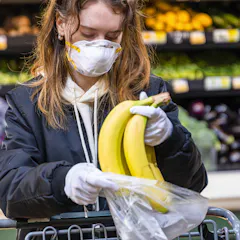
In these times of fear and uncertainty, many of us face daily decisions regarding the right thing to do. An ethicist offers guidance on how to think through them.
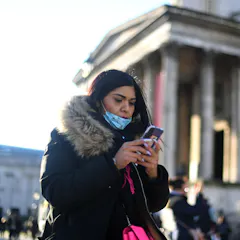
It might seem like the constant reminder of how much danger we are in would make us act responsibly, but research suggests the contrary is true.
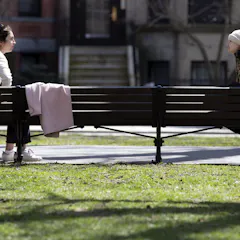
We’ve been social distancing for weeks now. Are seemingly low-risk social activities OK? The short answer is no.
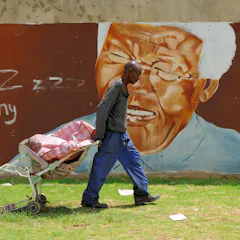
COVID-19 has brought to the fore the interdependency of business and society. It’s time for amendments to the social contract that underlies societal support for business.
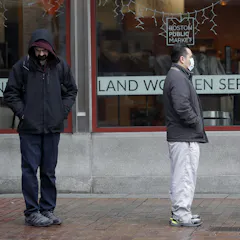
Using a survey taken from March 10 – March 16, social scientists tried to untangle the complicated connection between feelings of vulnerability and behavior change in response to the coronavirus.

Humans tend to downplay their own susceptibility to being harmed – an attitude of ‘it won’t happen to me’ that could be hindering the collective response to the pandemic.
Top contributors
-

Professor of Advanced Technology Transitions, Arizona State University
-
Associate Professor, Epidemiology, Deakin University
-
Professor of Risk Management, University of Bristol
-
Director, Columbia Center on Sustainable Investment, Columbia University
-
Professor - Risk governance, culture, remuneration, Macquarie University
-
Associate Professor of Economics, University of Miami
-
Associate Professor of Psychology, University of Oregon
-
Associate Professor of Geography, University of Alabama
-
Visiting Fellow, Macquarie University Applied Finance Centre, Macquarie University
-
Timothy J. Jorgensen is a Friend of The Conversation.
Director of the Health Physics and Radiation Protection Graduate Program and Professor of Radiation Medicine, Georgetown University
-
Professor, Finance, UTS Business School, University of Technology Sydney
-
Professor of Cognitive Psychology and Director of the Institute for Climate Risk and Response, UNSW
-
Associate Professor of Business, Boston University
-
Associate Professor of Economics, HEC Paris Business School
-
Professeur, philosophe et politologue, École normale supérieure (ENS) – PSL