
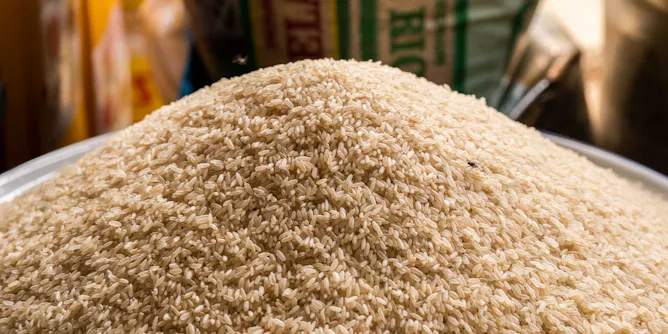
Nigeria can produce more rice to feed its burgeoning population by harnessing its wastewater.
Articles on Rice
Displaying 21 - 40 of 57 articles

Some people swear by it, while others don’t bother. But what does the evidence say about washing rice, and when should you do it?

From cancer immunotherapy and antibiotics to GMO crops and pandemic surveillance, gain of function is a cornerstone of basic research.
Growing legumes could at once provide African farmers with fertilisers and food crops. However, researchers warn this is not a one-size-fits-all solution.
In spite of policies aimed at tackling food inflation, food prices in Nigeria have continued to rise.

A rice dish’s debut on a cooking competition show reflects the growing acceptance of ethnic foods.
Smallholder rice farmers in Ghana should be supported by the government to access finance needed to adopt modern technologies for greater productivity.

There are so many milk alternatives these days, but it can be difficult to tell how beneficial they might be for our health. So we asked a dietitian to run through the main options.

By studying the DNA of people who lived in East Asia thousands of years ago, scientists are starting to untangle how the region was populated.
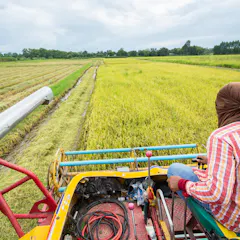
The Nigerian ministry of agriculture and rural development needs to focus on the adoption of modern rice processing techniques.

A new study shows high-fibre brown rice also contains more arsenic than white rice – so which is better for you?
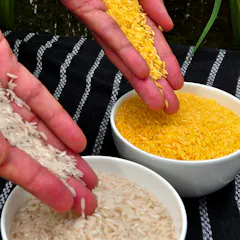
Golden Rice – a controversial genetically modified product designed to combat malnutrition – has been approved as safe in the Philippines. But key questions remain unanswered.
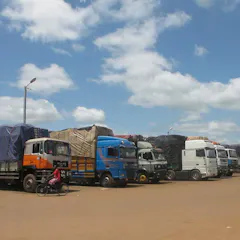
Efforts to increase trade within the continent are being undermined from the start
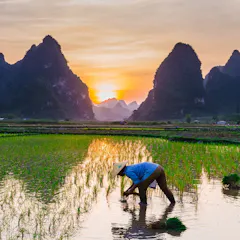
A new IPCC report has called for radical changes in food production to avoid catastrophic climate change. Rice-fish farming and mixed crops could help.

The endangered Australasian bittern offers a way past the ‘farmers vs environmentalist’ debate in the Murray-Darling basin.
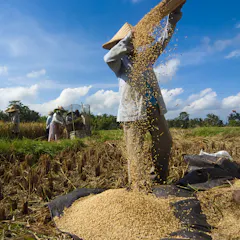
Even though almost impossible to achieve, the goal of national rice self-sufficiency remains deeply ingrained in Indonesia’s national psyche.

Crises in the Darling River have raised questions about cotton and rice farming in the Murray Darling Basin.
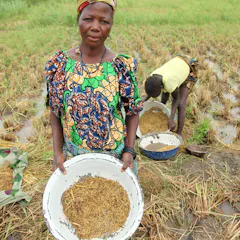
Nigeria’s agricultural sector simply isn’t equipped to produce the amount of rice to meet demand.

Many of the crop plants that feed us waste 20 percent of their energy, especially in hot weather. Plant geneticists prove that capturing this energy could boost crop yields by up to 40 percent.
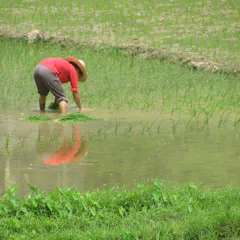
As atmospheric carbon dioxide levels rise, rice plants produce fewer vitamins and other key nutrients. This could worsen hunger, malnutrition, child stunting and other diet-related health problems.
Top contributors
-

Research Fellow in Environmental Economics, University of Bath
-
Soil Scientist, Australian Centre for International Agricultural Research
-
Professor of Plant and Soil Sciences, Queen's University Belfast
-
Associate Professor in Biogeography and Biodiversity, University of Oxford
-
Research Fellow in Human Geography, University of Southampton
-
Lecturer, University of Essex
-
Research Assistant in Conservation Science, University of Oxford
-
Assistant Professor at the Division of Environmental Science & Engineering, Pohang University of Science and Technology
-
Professor of Data, Systems, and Society and Atmospheric Chemistry, Massachusetts Institute of Technology (MIT)
-
Professor of Analytical Chemistry, UMass Amherst
-
Reader, Dept. of Agricultural Economics and Farm Management,College of Agricultural Management and Rural Dev, Federal University of Agriculture, Abeokuta
-
Head of the Department of Water Resources, Can Tho University
-
Associate Professor in Sociology, UCL
-
Lecturer, University of Sydney
-
Research Fellow, Australian Centre for Plant Functional Genomics