

Homer and Aeschylus turned to the divine to write their happy endings. But no gods are conspiring above the US, ready to swoop down and save humankind from itself.
Articles on Restorative justice
Displaying 21 - 40 of 47 articles
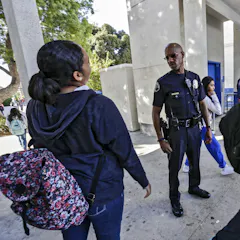
A former deputy chancellor of New York City schools explains why the police don’t need to patrol the nation’s public schools.

Criminal trials may hold offenders to account but they are far from perfect. The Victorian Law Reform Commission is looking at how restorative justice could be used for sexual offences.
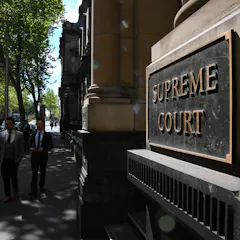
Coronavirus has dealt a blow to the already overburdened Victorian criminal court system, meaning hundreds — if not more — face extensive delays for their day in court.

Young people often swallow any drugs they have on them when they encounter police, risking overdose to avoid a drug possession charge.
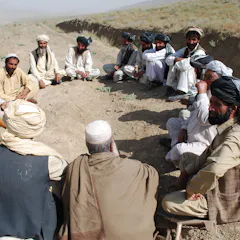
In countries where people access different justice providers, a hybrid model could pull them together and ensure better oversight and human rights.
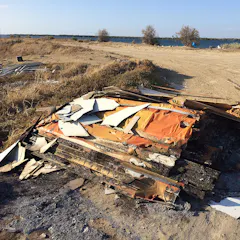
Evidence shows restorative justice can help fix environmental crime – so why isn’t Australia using it more?
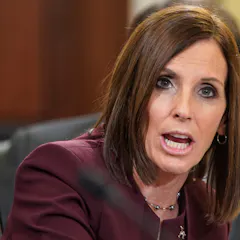
Sen. Martha McSally has broken gender barriers right and left. Despite the power she amassed over a career of firsts, she felt ‘powerless’ when raped. She’s not the only woman to feel that way.

In a pilot program, older prisoners sentenced to life mentor younger prisoners who have a chance to lead productive, lawful lives when they get out. The focus is on healing trauma.
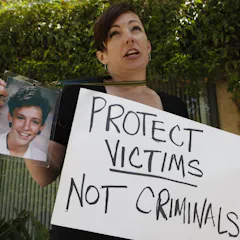
The Catholic survivor movement in the United States was founded by two women: Jeanne Miller and Marilyn Steffel, in the late 1980s. It has taken close to 30 years for the Vatican to take action.

Although new evidence shows mixed results for “restorative justice” practices, that’s no reason for schools to stop looking for alternatives to school suspensions, a school safety scholar argues.

The ‘Monster of Worcester’ would have been released 24 years ago in Norway - would that have been better for everyone?

Restorative justice allows us to uphold justice while respecting the human rights of offenders.

Ex-offenders should be given a fair chance to redeem themselves after serving their time.
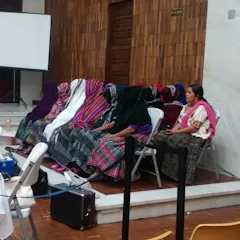
After colonisation, dispossession and decades of military violence, indigenous women in Guatemala are closing in on justice at last.

In historic cases the potential for a sentence to rehabilitate, incapacitate or deter the offender is largely insignificant – leaving the focus solely on retribution.

Restorative justice has worked for other offenders and their victims. New research has looked at whether it is suitable for organised crime.
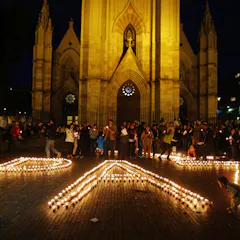
What can Colombia can learn from other nations’ transitions, both successful and unsuccessful, from war to peace?

The rooibos industry has been accompanied by dispossession and adversity stretching back over centuries.
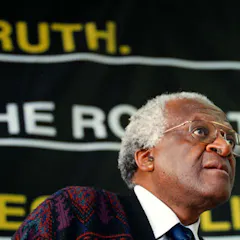
If violent contexts aren’t taken into account, restorative justice does not serve broader society. Instead it serves as a peacemaking process within a paradigm stacked against the poor and vulnerable.
Top contributors
-

Associate Professor of Educational Leadership and Policy, University of Florida
-
Professor and DSTI/NRF SARChI Bio-economy Research Chair, University of Cape Town
-
Independent conflict and social justice practitioner/researcher. Currently Senior Staff Associate in the Faculty of Law, University of Cape Town
-
Professor of Cognitive Psychology, School of Education, La Trobe University
-
Pro Vice-Chancellor, Learning and Teaching and Professor of Social Work, Western Sydney University
-
Senior Lecturer in Criminology and Social Policy, School of Sociological Studies, Politics and International Relations, University of Sheffield
-
Doctoral Researcher, Centre on Conflict, Development and Peacebuilding, Graduate Institute – Institut de hautes études internationales et du développement (IHEID)
-
Professor of Criminology, University of Tasmania
-
Researcher
-
Senior lecturer in sociology, Lancaster University
-
Professor of Constitutional Law & Human Rights, Universidad de Palermo
-
Assistant Professor of Sociology, The Ohio State University
-
Doctoral Researcher, University of Sheffield
-
Political Science Profesor, Torcuato di Tella University
-
Professor in Law, Griffith University