

Restorative justice isn’t appropriate in every case of intimate partner violence. But it could bring justice to some survivors if it adheres to six important principles.
Articles on Restorative justice
Displaying 1 - 20 of 46 articles

African news media have continued many of the damaging norms of how western media report on the continent. It’s time for a rethink.

While some opposition is to be expected, indications are that the general Zimbabwean public will take the government’s lead on abolition.
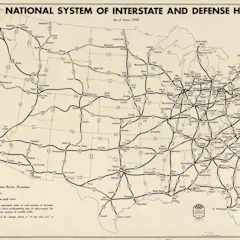
Black activists have long used maps to help illustrate their communities’ history and to document historical injustices.

Opponents of the U.K. government’s Northern Ireland Troubles Act argue it violates the Good Friday Agreement by denying victims their right to justice.

A shift towards more punitive responses to youth crime by the next government could reverse the progress New Zealand has made in reducing offending and addressing its root causes.

Debates about school discipline have become polarized between proponents of restorative justice and those who believe a get-tough approach is required.

A contributing factor to a rise in violence in Ontario schools is underfunding of education and the social service sector. Using trauma-informed responses is part of the solution.

The failure to hold the perpetrators of the Darfur genocide accountable has led to further instability in Sudan.

By addressing the root causes of violence, we can reimagine systems to allow for more supportive, safe and accountable sport communities.

There are growing calls for a judicial inquiry to investigate abuse in Canadian sport. We argue that there are better alternatives to address the problem.

The culture of impunity that has lingered since the presidency of Jacob Zuma has to give way to a new era of integrity and accountability.

Even incomplete or insincere apologies have restorative value.

Though difficult to pinpoint, white educators often put forth stereotypes when they discuss Black students among themselves, new research has found.

Victims of violence are often retraumatized by a legal process that puts prosecuting the accused ahead of supporting the victim.

A scholar explains why schools can’t focus only on closing pandemic-related learning gaps.

Two-eared listening is based on the idea of learning and understanding, a willingness to be suspend judgement and the desire to communicate respectfully.

Patient safety incidents were already a leading cause of death in Canada. With that crisis converging with the demands of the COVID-19 pandemic, health care is being pushed to a breaking point.
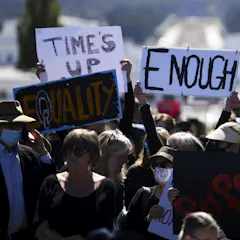
Victim-survivors want to have their experiences heard and the wrong against them acknowledged — sadly, the opposite often occurs.

Homer and Aeschylus turned to the divine to write their happy endings. But no gods are conspiring above the US, ready to swoop down and save humankind from itself.
Top contributors
-

Associate Professor of Educational Leadership and Policy, University of Florida
-
Professor and DSTI/NRF SARChI Bio-economy Research Chair, University of Cape Town
-
Independent conflict and social justice practitioner/researcher. Currently Senior Staff Associate in the Faculty of Law, University of Cape Town
-
Professor of Cognitive Psychology, School of Education, La Trobe University
-
Pro Vice-Chancellor, Learning and Teaching and Professor of Social Work, Western Sydney University
-
Senior Lecturer in Criminology and Social Policy, School of Sociological Studies, Politics and International Relations, University of Sheffield
-
Doctoral Researcher, Centre on Conflict, Development and Peacebuilding, Graduate Institute – Institut de hautes études internationales et du développement (IHEID)
-
Professor of Criminology, University of Tasmania
-
Researcher
-
Senior lecturer in sociology, Lancaster University
-
Professor of Constitutional Law & Human Rights, Universidad de Palermo
-
Assistant Professor of Sociology, The Ohio State University
-
Doctoral Researcher, University of Sheffield
-
Political Science Profesor, Torcuato di Tella University
-
Professor in Law, Griffith University