
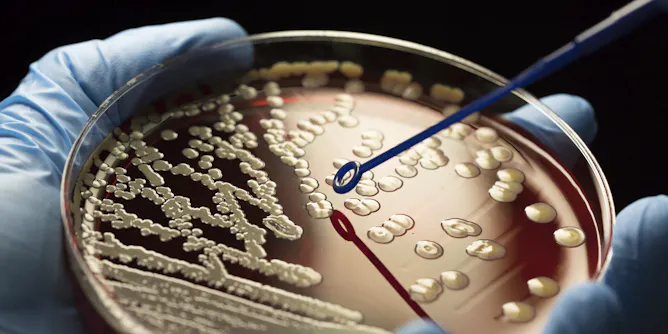
If no action is taken to address antibiotic resistance, infections from multidrug-resistant bacteria could cause 10 million deaths each year by 2050.
Articles on Research incentives
Displaying all articles

Money always seems tight for university scientists. A sociologist conducted hundreds of interviews to see how they think about funding sources and profit motives for basic and applied research.

If there’s a general sense that academic publication is about knowledge dissemination rather than meeting performance targets, academics and universities become less vulnerable to predatory journals.

South Africa’s National Research Foundation will dramatically scale back “incentive” funding to rated researchers, both those who already have a rating and those who will be rated in the future.

More must be done to develop mechanisms based on intrinsic motivations of committed, quality academics. It’s important to limit the harms currently being caused by rent seeking.

Scientists need funding to do their work. But a new study finds turning to industry partners taints perceptions of university research, and including other kinds of partners doesn’t really help.

People have always known science would advance faster with various incentives and rewards. As modern experimental science took off, these took the form of gifts and favors to and from wealthy elites.

Embracing more rigorous scientific methods would mean getting science right more often than we currently do. But the way we value and reward scientists makes this a challenge.

Financial incentives alone won’t increase research collaboration between universities and business. Academics say they need time, support and an environment encouraging of engagement.

Scientists often prioritize deep goals over broad ones. But today’s “wicked” problems demand an interdisciplinary approach. A new study shows how they can tweak work styles to alter their deep/broad ratio.
Top contributors
-

Professor of Sociology, Michigan State University
-
Associate Professor of History, University of Oregon
-
Associate Professor in Marketing, Adelaide University
-
Professor of Public Relations, Michigan State University
-
Associate Professor of Higher Education, Georgia State University
-
Emeritus Professor of Biomedical Engineering, Department of Human Biology, University of Cape Town
-
Previous Vice President of the Academy of Science of South Africa and DSI-NRF SARChI chair in Fungal Genomics, Professor in Genetics, University of Pretoria, University of Pretoria
-
Assistant Professor of Cognitive and Information Sciences, University of California, Merced
-
Professor Emeritus of Organizational Behavior, University of Virginia
-
Professor of Higher Education, Rhodes University, South Africa, Rhodes University
-
Assistant Professor of the History of Science and Technology, Durham University
-
PhD Student in Media and Information Studies, Michigan State University
-
Senior Research Associate, University of Johannesburg
-
Dean of Research, Adelaide University
-
Professor in Lyman Briggs College, Fisheries & Wildlife, and Philosophy, Michigan State University