

Like all people, the way scientists see the world is shaped by biases and expectations, which can affect how they record and report. Rigorous research methods can minimize this effect.
Articles on Research bias
Displaying all articles

Financial links between corporations and health research invariably lead to conflicts of interest.

Translation involves more than just transferring words from one language to another. Better translations of study materials can improve both the diversity of study participants and research results.

Potential inaccuracies in CDC high school surveys may have created an exaggerated perception that LGBQ youth engage in risky behaviors, new research shows.

A survey of nearly 900 politicians in Germany, Switzerland, Belgium and Canada reveals that they systematically overestimate their electorate’s conservatism on a range of issues.

Psychology is in crisis and this new revelation only adds to the problem.
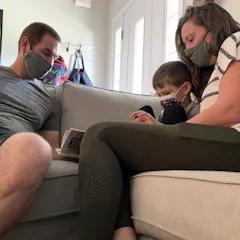
Federal, state and local efforts to help students recover learning they missed or lost during the pandemic are underway. But those projects don’t include the youngest students.

Nature’s recent efforts to redefine the ethical responsibilities of scientists leave a lot to be desired.

Architect Christopher Alexander’s work will continue to be important not only for designing buildings but also in light of contemporary debates about how data always comes from specific settings.
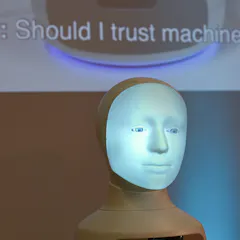
Inclusivity and diversity also need to be at the level of identifying values and defining frameworks of what counts as ethical AI in the first place.

Climate change science dominated by knowledge produced in the global North cannot address the particular challenges faced by those living in the global South.
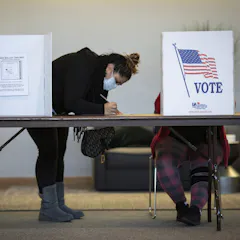
When the scientific establishment gets involved in partisan politics, surveys suggest, there are unintended consequences – especially for conservatives.

Hopefully, Joe Biden’s presidency will mark the end of using cherry-picked science to suit a political agenda. As Trump’s successor, however, he’s placed in a difficult position.

Money always seems tight for university scientists. A sociologist conducted hundreds of interviews to see how they think about funding sources and profit motives for basic and applied research.

Science isn’t cold, hard facts uncovered by emotionless robots. Acknowledging how and where values play a role promotes a more realistic view and can advance science’s reputation for reliability.

Most psychology research that forms the basis of parenting advice might not apply to you. So, how do you know whether to trust it?

Scientists need funding to do their work. But a new study finds turning to industry partners taints perceptions of university research, and including other kinds of partners doesn’t really help.

Food, drug and other companies often sponsor research in the hope it might produce results favourable to their products. How can we ensure such research remains independent?
Top contributors
-

Professor in Lyman Briggs College, Fisheries & Wildlife, and Philosophy, Michigan State University
-
Professor of Public Relations, Michigan State University
-
Associate Professor, School of Psychology, The University of Queensland
-
Assistant Professor of the History of Science and Technology, Durham University
-
Professor and Associate Head of Psychology, University of Tennessee
-
PhD Student in Media and Information Studies, Michigan State University
-
Professor of Sociology, Michigan State University
-
Barnett Family Professor, Stanford University
-
Professor in the Institute for Life Course Health Research, Department of Global Health, Stellenbosch University
-
Senior research scientist, University of KwaZulu-Natal
-
Associate Professor of Higher Education, Georgia State University
-
Associate Professor in Development Studies , University of KwaZulu-Natal
-
Science Officer in the Durban office of the Intergovernmental Panel on Climate Change Working Group II Technical Support Unit, University of KwaZulu-Natal
-
Assistant Professor, Peter Guo-hua Fu School of Architecture, McGill University
-
Professor of Medicine and Public Health, University of Colorado Anschutz