

The lack of dedicated funding and support for research commercialisation, on top of the other obstacles academics face, means Australia’s poor performance is no mystery.
Articles on Research
Displaying 341 - 360 of 945 articles

African identity needs a revision to move beyond current understanding of its relationship with China

CC BY-NC-ND10.7 MB (download)
It is crucial to improve research training in Africa. This can help solve complex issues on the continent.

Just 5% of Australian businesses have collaborated with university researchers, and the smaller the company, the less likely collaboration.
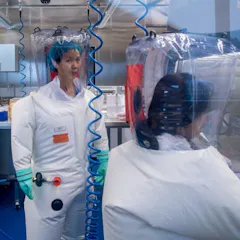
The lab accident theory of the origins of Covid-19 has gained traction in recent months. We need a proper investigation to find out what really happened.

Diversity in STEM fields means higher quality research and innovation. To ensure that Canada can compete globally, marginalized students must be supported through STEM education and careers.

African governments should prioritise investment in high speed internet connectivity because it can have spillover benefits for education systems, as well as economic and social growth.

Many governments, including the US, already collect and make public population statistics that could help them prepare for the next pandemic.

The federal government is right to focus on improving Australian universities’ success rate in commercialising research, but can take specific steps itself to help achieve this.

Mergers and splits involving education and research ministries, like the recent one in Indonesia, have huge consequences. How do other countries govern their national education and science policies?
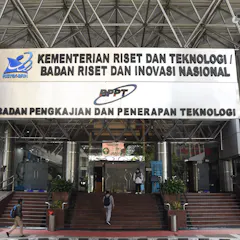
The institutional design of BRIN allows for political intervention, showing how the Indonesian government is unwilling to prioritise research and technology.

The pandemic has shifted how early stage, unreviewed scientific papers are used and viewed.

Research shows that the gaps in physical exercise have widened substantially between men and women, whites and non-whites, rich and poor and educated and less educated: especially during the pandemic.

Removing funding from research-led projects puts people in highly vulnerable situations.

The International Public Policy Observatory (IPPO) seeks to mitigate the social impacts of COVID-19.

Government incentives might boost the numbers of collaborative research projects, but academics also must work on their relationships with industry practitioners to ensure everyone contributes fully.
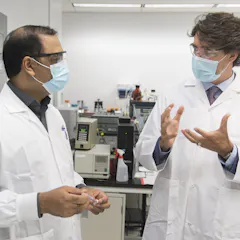
To continue the fast-paced collaborative research and innovation we have seen during the pandemic, here are five ways universities can support health research that responds to societal needs.

COVID-19 has highlighted the need to address the different cultures of academia and policymaking.

The period in which we are living is conducive to reflection in order to co-construct new knowledge systems and think research differently.

More than 90% of universities in the world have been built since 1949. The vast majority built large campuses outside city centres, and all for much the same reasons.
Top contributors
-

Professor of Marketing, The Ohio State University
-
Associate Professor (Law), Southern Cross University
-
Cornelia H. Dudley Professor of Psychology, Knox College
-
Professor of Psychology, San Diego State University
-
Professor of Psychology, Dickinson College
-
Associate Professor (hon) at the Centre for Public Awareness of Science, Australian National University
-
Associate Professor of Psychology, Michigan State University
-
Director, Melbourne Institute of Applied Economic and Social Research, The University of Melbourne
-
Professor of Health Services and Policy Research, University of British Columbia
-
Previous Vice President of the Academy of Science of South Africa and DSI-NRF SARChI chair in Fungal Genomics, Professor in Genetics, University of Pretoria, University of Pretoria
-
University Distinguished Professor of Astronomy, University of Arizona
-
Professor of Psychology, Michigan State University
-
Associate Professor of Communication, Michigan State University
-
Professorial Fellow, University of Canberra
-
Professor, Chemistry and Biochemistry, Laurentian University