
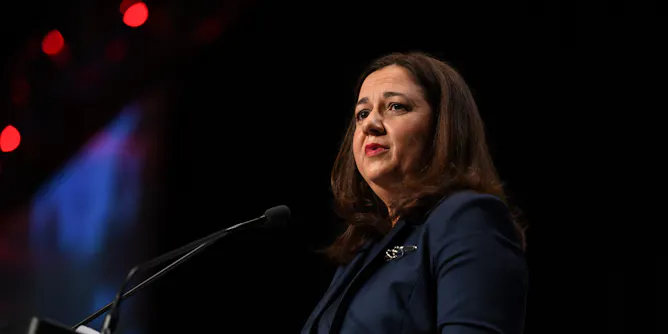
Witnessing violent media reporting about women politicians can deter women from entering politics at a time when we should be striving toward gender parity.
Articles on Reporting
Displaying 21 - 35 of 35 articles
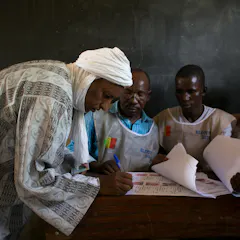
In Africa, biased media coverage is one of the reasons voters have little faith in credible elections.
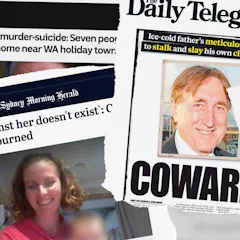
Despite several barriers, journalists are changing the way they report on violence against women for the better.
Research shows investors could have been misled just by the order of information in financial reports.
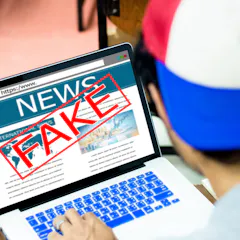
With the rise of fake news and its threat to the public good, the time has come to regulate journalists as we do doctors, dentists and lawyers.

Licensing journalists would be difficult to do, and the rules would be tough to enforce – and wouldn’t prevent anyone with a smart phone from disseminating false information online.
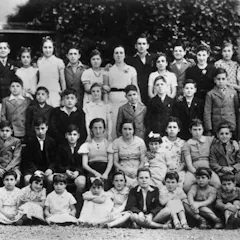
During the Spanish Civil War, 4,000 Basque child refugees arrived in Britain – here’s the story of the women who helped rescue them.
South Africa’s power utility Eskom wants regulatory reporting requirements waived. The country’s regulator faces possible court action if it agrees.

After the death of legendary New York Daily News columnist Jimmy Breslin, some have lamented the end of blue-collar journalism. But in today’s media environment, Breslin’s approach might not be enough.

With an explosion of media outlets that don’t adhere to mainstream journalistic standards, it’s became difficult for readers to know whether to trust reports based on unnamed sources and leaks.

When Gay Talese signed a confidentiality agreement with a motel-owning voyeur, he got access to the voyeur’s journals and secret viewing perch. But he also allowed the spying to continue for over a decade.

Alan Moorehead’s accounts of the second world war revealed his vital and gripping talent, but his peacetime novels were stilted and corny. A new biography delves into his life and language.
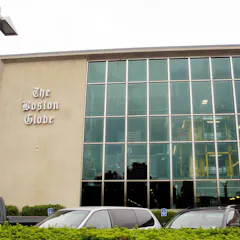
For a former Boston reporter, Spotlight evokes the thrill of hard-hitting, influential reporting.
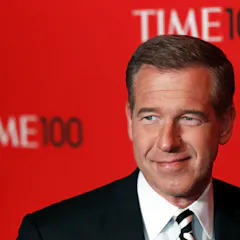
In the years after a traumatic news event, we’re prone to confuse things we saw on TV with what we witnessed in person.

Media reporting can not only create a perception of suicide clusters on university campuses, but it can affect the suicide rate in subtle ways.
Top contributors
-

Senior Lecturer in Accounting, Macquarie University
-
Assistant Professor, School of Medicine, Queen's University, Ontario
-
Associate Professor of Communications, Penn State
-
Professor, School of Journalism and Communication, Carleton University
-
Professor of Journalism, University of Florida
-
Consulting Economist; and Senior Research Fellow University of Johannesburg, University of Johannesburg
-
Associate Professor in the Media School, Indiana University
-
Professor of Journalism in the Department of Journalism, Film and Television, University of Johannesburg
-
Professor of Journalism, Boston University
-
Senior Lecturer in Journalism, City St George's, University of London
-
PhD Candidate, Melbourne Law School, The University of Melbourne
-
Professor Emeritus of Journalism, Boston University
-
Associate Professor of Communications, Penn State
-
Director, Center for International Media Law and Policy Studies, Indiana University
-
Clinical Associate Professor of Psychiatry, New York University