
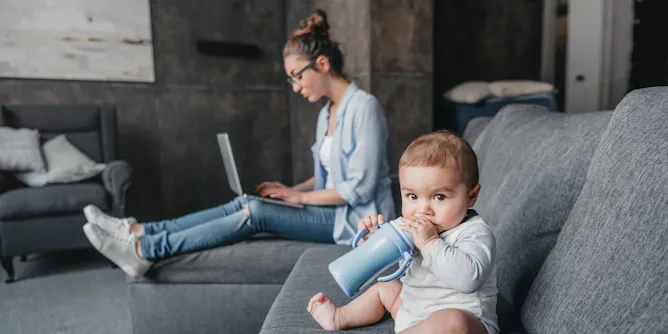
Working from home during the COVID-19 lockdown has caused a relaxation in traditional workplace rules, giving rise to a virtual workplace that is more flexible and humane.
Articles on Remote work
Displaying 101 - 117 of 117 articles
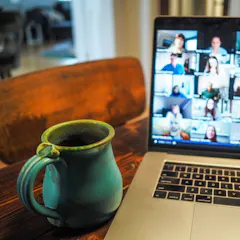
How are startup entrepreneurs getting through the COVID-19 pandemic? Talking to each other to offer tips, expertise and a sympathetic ear is helpful, according to an ongoing study.

We estimate 39% of all jobs in Australia can be done from home, with men more likely to have teleworkable jobs.

Even in the time of COVID-19, strong forces pull us back to the office.
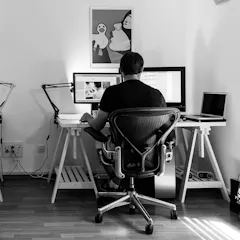
Some companies are moving permanently to remote work during and after the COVID-19 pandemic. But are they simply passing on costs to employees while invading their personal space?

Younger, unmarried or less educated workers are feeling the brunt of the economic effects of COVID-19. The fallout may deepen already existing inequalities.

As many offices have converted to work-from-home operations during the coronavirus pandemic, the human connection needed for successful work cultures has changed for the better.

The higher a person’s salary, the most likely they are to be able to work from home; it’s not an option for most low-income workers. Here’s what governments can do to help encourage more remote work.
Most attacks happen without a victim even realizing it. And you’re not ‘safe’ just because your device is in sleep mode or hibernation.

The skills, habits and new perspectives developed during the past and upcoming weeks as employees work from home may actually serve as a crash-course in effective management.

With so many people working from home on vulnerable networks and set-ups, cybersecurity is a growing concern.
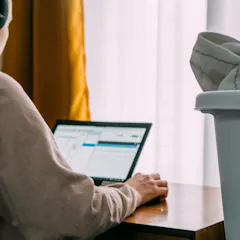
Working from home presents challenges that will take time to resolve, and misunderstandings are to be expected. So let’s be forgiving of one another and focus on establishing effective new work norms.
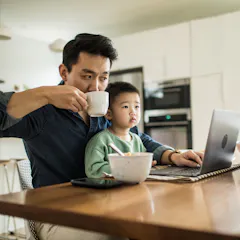
Companies can play an important role in keeping their workers both productive and mentally and physically healthy during the pandemic.

The coronavirus pandemic has forced employees and businesses to change the way they operate. Some of those changes may be permanent.

Participants of both virtual reality-based and Skype-based therapy sessions voted greatly in favour of using VR, reporting high levels of engagement and realism.
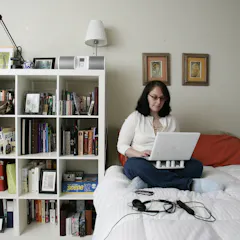
More workplaces are allowing employees to telecommute, but there are still barriers to more flexible arrangements.

As gig work transitions online, knowing how to protect yourself and your devices has never been more important.
Top contributors
-

PhD Candidate in Anthropology, UCL
-
Professor of Information Management and Business Analytics, Drake University
-
Management Professor, McGill University
-
Professor of Management and Organizational Leadership, Drake University
-
Assistant professor in leadership, IÉSEG School of Management
-
Professeur titulaire, Université du Québec à Montréal (UQAM)
-
Professeur au département d'études urbaines et touristiques, Université du Québec à Montréal (UQAM)
-
Assistant Professor, Smith School of Business, Queen's University, Ontario
-
Senior Lecturer, Organisational Behaviour & Management, Adelaide University
-
Postdoctoral Research Fellow, Muscle Physiology, Karolinska Institutet
-
Associate Professor of Organisational Behaviour, Bond Business School, Bond University
-
Professor of Economics, University of Nebraska Omaha
-
Associate Professor of Economics, Carleton University
-
Postdoctoral Research Fellow, Sustainable Urban Precincts Project, RMIT University
-
Research Associate in the School of Education, Communication and Society, King's College London