

From sails, to route optimisation and alternative fules, Daniel Precioso and Alice Larkin talk to The Conversation Weekly podcast about strategies to reduce emissions from global shipping.
Articles on Reducing carbon emissions
Displaying 1 - 20 of 25 articles

With the right leadership, Australia can turn green hydrogen’s stumbles into a global triumph for heavy industry.

The greenhouse gas emissions from concrete production are hard to cut but a new low-carbon cement facility is scaling up production of a far more sustainable alternative.

To fight global warming we will soon have to try to remove carbon dioxide from the skies or find ways to reflect the Sun’s heat. Such radical paths must be examined, but risky experiments avoided.

The most comprehensive Australian carbon budget assessment completed to date shows the nation flip-flops from source to sink of carbon emissions, depending on the prevailing conditions.

Africans need to re-envision what climate resilient development means within unique African city contexts.

For developing countries, such as Kenya, there is no template for moving to a low-carbon future while accelerating economic growth and development.
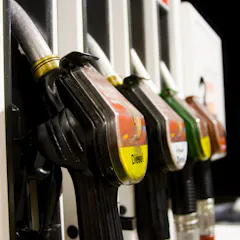
Ad Net Zero is a new initiative aimed at reducing the advertising industry’s carbon footprint. But agencies have yet to take the next and most difficult step.

Shipping companies have billions invested in fleets that were built to last decades. Now, the US is calling for zero emissions by 2050, and the EU is raising the cost of fossil fuel use.
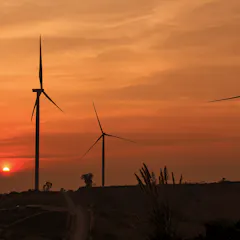
The cost of sustainability is no longer a deal breaker for some business owners, but more can be done to encourage decarbonisation efforts.

Already lacking the means to decarbonise their industry or turn to greener alternatives, poor countries could also be deprived of revenues from exports to Europe.
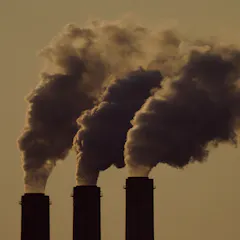
Policymakers, industry regulators and investors must team up to mandate that corporations provide CEOs with financial compensation for reducing carbon footprints.

Governments may be forced to put back deadlines to shift away from petrol and diesel.

A period of high fossil fuel prices has mixed implications.

The Australian government may have announced its net zero plan, but it has yet to factor in the health sector or the health of its people.
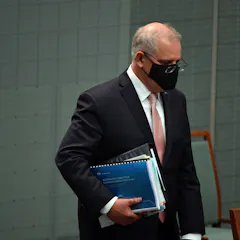
Scott Morrison’s plan relies on many “heroic” assumptions which may or may not turn out to be reasonable.

Heat pumps are the technology of choice for heating and cooling buildings more efficiently and with fewer carbon emissions than furnaces and air conditioning.

Even if they can’t save us from climate change, society still depends on forests.

Training neural networks burns through a lot of energy. As the AI field grows, it’s working to keep its carbon foot print from growing with it.
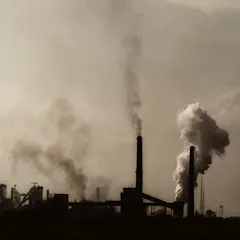
The coronavirus pandemic caused the UN’s annual climate conference to be postponed by a year, but it was also responsible for a drop in carbon emissions. Is it enough and will it last?
Top contributors
-

Programme Leader, Energy and Climate Change, Stockholm Environment Institute
-
PhD Candidate in climate change and sustainability, The University of Melbourne
-
Chief Research Scientist, CSIRO Environment; Executive Director, Global Carbon Project, CSIRO
-
Professor of Climate Change Mitigation and Inequality, University of Cape Town
-
Honorary Fellow, Australian Museum
-
Head of Atmospheric, Oceanic and Planetary Physics, University of Oxford
-
Director of Research, Hawkesbury Institute for the Environment, Western Sydney University
-
Chercheur en économie environnementale, Agence Française de Développement (AFD)
-
Économiste-modélisateur, Agence Française de Développement (AFD)
-
Professorial Fellow, University of Canberra
-
Lecturer in Advertising and Brand Creativity, Auckland University of Technology
-
Adjunct professor, Monash University
-
Director: Climate Change, Energy & Resilience, ICLEI Africa, ICLEI - Local Governments for Sustainability
-
Senior Lecturer in Operations and Supply Chain Management, Anglia Ruskin University
-
Professor of Chemistry, University of Oxford