
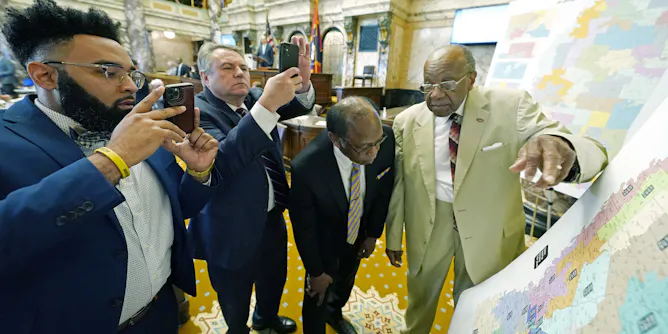
A ruling by the US Supreme Court to allow unlawful maps to be used in the midterm elections will affect who gets elected to the House of Representatives and may determine control of Congress.
Articles on Redistricting
Displaying 21 - 40 of 42 articles

Alabama will be allowed to keep a congressional map that critics say disadvantages Black voters. That does not bode well for 2022 midterms, argues a law scholar.

The results of the latest round of redistricting have advanced the anti-democratic trend where elected leaders choose their voters, undermining representative government.
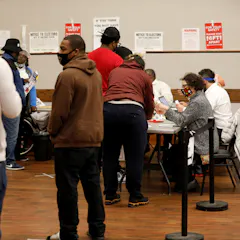
As states devise new electoral district maps, some have adopted independent commissions to ensure fairness in that process. Do they deliver?

Cracking down on gerrymandering isn’t enough to make elections more competitive.
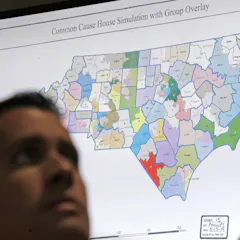
Most methods of determining whether electoral maps are fair require a lot of math and some tough computation. But there is an easier way.

State legislatures, which will draw congressional districts that last through 2030, are dominated by the GOP.
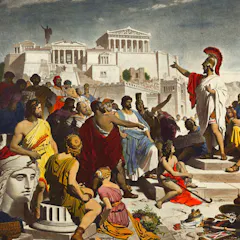
To overhaul an election redistricting process tainted by gerrymandering, Michigan has adopted a governance mechanism prominent 2,500 years ago in ancient Athens, the birthplace of democracy.
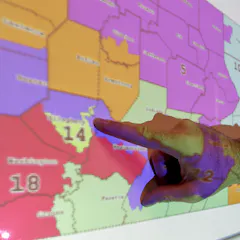
When voters in November pick among the candidates for state legislatures, they are choosing the people who will make the new electoral maps for congressional elections.

The 2020 census and congressional apportionment have dominated the headlines in recent months. What could it all mean for the average American voter?
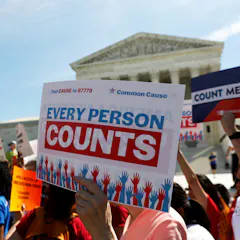
The political implications of the citizenship question made this case politically volatile and controversial – even for the Supreme Court.
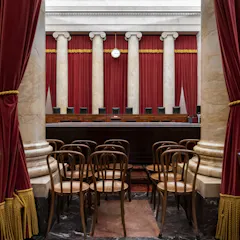
The Supreme Court has issued what’s likely to be its final word on partisan gerrymandering, saying it’s a political issue, not a legal one. That means reform lies in the hands of voters.
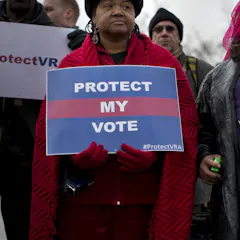
When no one in Mississippi wins a majority of votes in an election, the legislature chooses the winner. This has led to white men winning over and over.
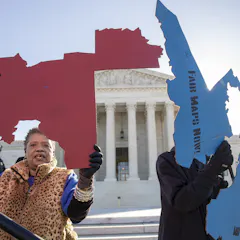
Supreme Court justices have previously called statistical methods of measuring partisan gerrymandering ‘sociological gobbledygook’ and ‘a bunch of baloney.’

The majority of US state legislatures are controlled by Republicans because legislative districts are drawn to favor them. Voters are catching on, but change will be slow.
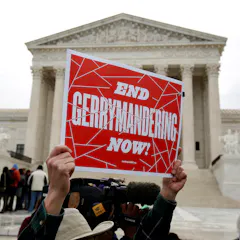
Many states are arguing over how to draw district lines. But drawing legislative district lines is an exercise in tradeoffs.
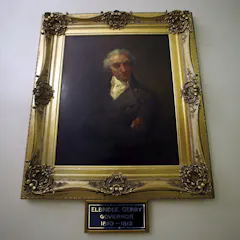
Judges in North Carolina just threw out the state’s congressional district map. The decision could have major implications for the future of partisan gerrymandering across the US.
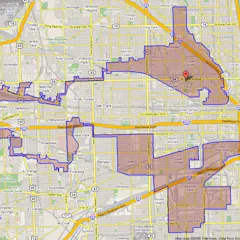
Gerrymandered districts are under fire across the US. But a weird district shape isn’t necessarily a bad one.

Gerrymandering is being hotly debated around the US. Can math help us figure out how to divide the country up fairly?
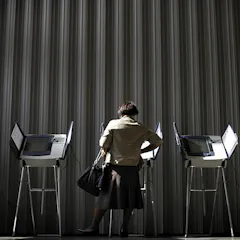
In an upcoming case about Wisconsin’s voting districts, the Supreme Court will tackle legal questions that have long gone unanswered.
Top contributors
-

Professor of Law, University of Richmond
-
Assistant professor of politics and policy, Simmons University
-
Professor of Economics, Michigan State University
-
Associate Professor of Political Science, Boise State University
-
Professor of Political Science and Public Administration, Kutztown University of Pennsylvania
-
Associate Professor of Political Science, Binghamton University, State University of New York
-
Professor of Law, Wayne State University
-
Professor of Political Science, University of California, Irvine
-
Tisch College Associate Dean for Academic Affairs and Lincoln Filene Professor, Tufts University; Institute for Humane Studies
-
Managing Director of the McCourtney Institute of Democracy, Associate Research Professor, Political Science, Co-host of Democracy Works Podcast, Penn State
-
Postdoctoral Associate, Yale University
-
Assistant Professor of Public Policy, Harvard Kennedy School
-
Associate Professor of Political Science, University of Connecticut
-
Professor of Political Science, University of Tennessee
-
Professor of Political Science and Chair of the Department of Political Science, Clemson University; Institute for Humane Studies