
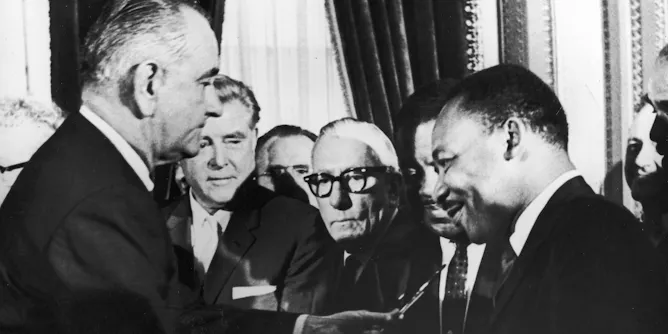
The conservative majority at the US Supreme Court has issued a ruling in a gerrymandering case that one liberal justice called the ‘now-completed demolition of the Voting Rights Act.’
Articles on Congressional districts
Displaying all articles
With a new, mid-cycle redistricting war raging in state after state, the media and politicians focus on which party is winning or losing seats. But are citizens winning or losing in this conflict?
With partisan advantage, clashing perceptions of reality and revolutionary readings of the Constitution all in play, the Supreme Court’s cases this year reach far into American politics and culture.
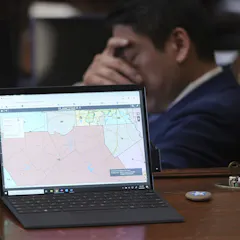
Gerrymandering has existed since the United States’ earliest days, but now technology and political trends are supercharging it.

Historically, federal courts prioritized voting rights and legal congressional districts for upcoming elections above all other concerns. But the Supreme Court changed that in 2022.

Electoral redistricting is a high-stakes political game, so Democrats and Republicans have a hard time playing fair. When they’re made to work together, a more representative result is possible.

As a powerful branch of government, the Supreme Court has enormous power over public policy only if defendants comply with its rulings.
What makes an effective lawmaker? Two scholars have studied 50 years of congressional legislating, and they’ve got a scorecard and a plan.
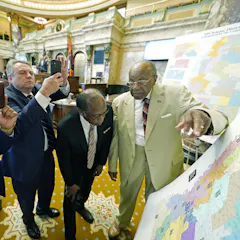
A ruling by the US Supreme Court to allow unlawful maps to be used in the midterm elections will affect who gets elected to the House of Representatives and may determine control of Congress.
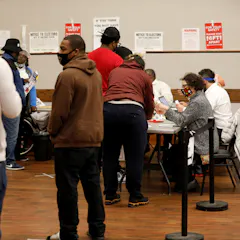
As states devise new electoral district maps, some have adopted independent commissions to ensure fairness in that process. Do they deliver?
Top contributors
-

Assistant professor of politics and policy, Simmons University
-
Assistant Professor of Political Science, Boston University
-
Cornelius Vanderbilt Professor of Political Economy, Professor of Political Science and Law, Vanderbilt University
-
Professor of Public Policy and Politics, University of Virginia
-
Professor of Economics, Michigan State University
-
Postdoctoral Associate, Yale University
-
Assistant Professor of Political Science, Yale University
-
Professor of Political Science, University of Tennessee
-
Assistant Professor of Public Policy, Harvard Kennedy School
-
Professor of Constitutional Studies, Political Science and Law, University of Notre Dame
-
Professor of Law, University of Richmond
-
Professor of Law and Adjunct Professor of Political Science, Wayne State University
-
Professor of Political Science & Public Affairs, Western Carolina University
-
Professor of Political Science, Coastal Carolina University
-
Professor of American Civics, University of Tennessee