

It’ll now be a frugal Christmas in many Australian homes. But there is a glimmer of good news: if we do tighten our belts, rates could start to come down by as early as the middle of next year.
Articles on RBA
Displaying 61 - 80 of 248 articles
The governor’s remarks about the board “not hesitating” to raise rates further aren’t as clear cut as they seem.
Wednesday’s September-quarter figures, showing inflation is still uncomfortably high, set off speculation about whether the Reserve Bank will increase interest rates again

Inflation has slipped from 6% to 5.4%, but the price of petrol climbed 7.2% in the September quarter. Much depends on what the RBA thinks will happen from here on.
Petrol prices have pushed inflation up. At its next meeting, the Reserve Bank board is going to have to decide if that warrants an increase in interest rates.

30 years ago, Labor Prime Minister Paul Keating adopted an ambitious official target for Australian unemployment. The Albanese government just passed up a historic opportunity to go even further.

Monday’s white paper will define fuill employment more broadly than in the past as when “everyone who wants a job should be able to find one without searching for too long”.

Complaints that our recommendations would weaken the Reserve Bank governor ignore the fact that outsiders already control the board. We just want them do it better.
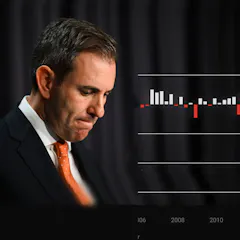
Six charts explain the Australian economy. Three of the most disturbing show living standards going backwards, productivity collapsing and household saving falling to a 15-year low.

Former Reserve Bank and Treasury chiefs have gone on to run Westpac, the National Australia Bank, the ANZ, and Macquarie Bank. It makes regulating those banks hard.
The Treasury and RBA believe Australia’s sustainable rate of unemployment is above 4%, but Australia’s leading economists think 3.75% is possible long-term, and have ideas about how to achieve it.
Inflation has slipped faster than the Reserve Bank thought it would, and the underlying rate is down to 5.4%. The bank is likely to tread cautiously from here on.
Even a week ago we couldn’t have predicted this. But after good news from the US, our Reserve Bank now has a chance to cement low unemployment while controlling inflation – without more rate rises.
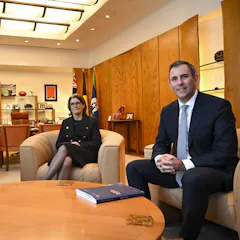
The government has announced who Philip Lowe's successor is, deputy governor Michele Bullock - She will be the first woman to hold the position.
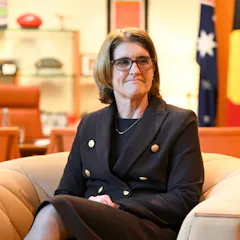
Although she has been with the bank four decades, the past two have been in areas remote from the setting of interest rates, meaning she won’t feel compelled to defend the mistakes of the past.
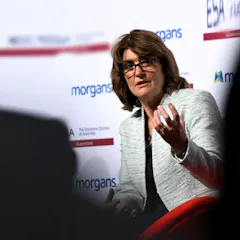
The government has appointed Michele Bullock the new governor of the Reserve Bank – the first woman to occupy the post. Bullock, currently deputy governor, replaces Philip Lowe, who has weathered strong…
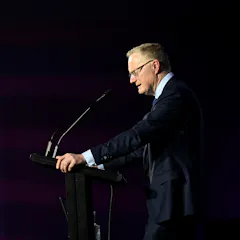
It is generally expected Lowe will be replaced, when Treasurer Jim Chalmers takes his recommendation to cabinet
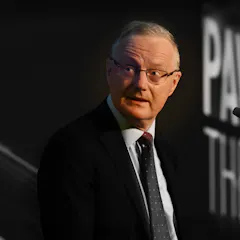
Australian home borrowers are experiencing much, much more interest rate pain than borrowers in New Zealand, Canada, the UK or US – for one simple reason.
Unless we boost productivity, wages growth could sink back to 2-3%. The Productivity Commission has some good solutions – and we’d argue redesigning the Stage 3 tax cuts should be on the list too.

Of all the things we can do to boost productivity, working harder is one of the least likely to make a difference.
Top contributors
-

Visiting Fellow, Crawford School of Public Policy, Australian National University
-
Scientia Professor of Economics, UNSW
-
Professorial Fellow, University of Canberra
-
Lecturer in Economics, Monash University
-
Senior lecturer, Canberra School of Government, University of Canberra
-
Associate Professor, School of Economics, University of Sydney
-
Associate Professor, Research School of Economics, and Research Associate, Centre for Applied Macroeconomic Analysis, Australian National University
-
Emeritus Professor of Finance, The University of Melbourne
-
Adjunct Professor, Swinburne University of Technology
-
Industry Professor, University of Technology Sydney
-
Emeritus Professor of Economics (Griffith University) and Teaching Associate (University of Queensland), Griffith University
-
Visiting Fellow, Macquarie University Applied Finance Centre, Macquarie University
-
Honorary Associate Professor in the School of History, Research School of Social Sciences, Australian National University
-
Program Director, Trade and Investment, United States Studies Centre, University of Sydney
-
Dean of Business School, University of Southern Queensland