

Australian households are taking on much bigger mortgages than they were 15 years ago. And our incomes haven’t kept up, either.
Articles on Cash rate
Displaying 1 - 20 of 56 articles
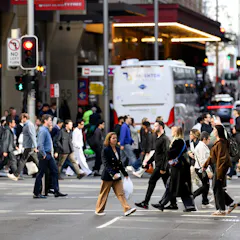
The jobless rate hasn’t been this high since November 2021. But this is why it’s unlikely to stop the Reserve Bank from lifting interest rates next Tuesday.

The government has finally passed long-delayed reforms to the way the Reserve Bank operates. Here’s what the changes will mean for our central bank.
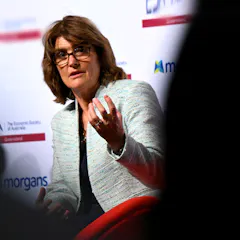
Figures out on Wednesday are likely to show inflation extraordinarily low. They will add to the pressure on the governor to cut.

Interest rates and inflation are lower than expected this time last year. The next set of predictions is likely to be brighter still.
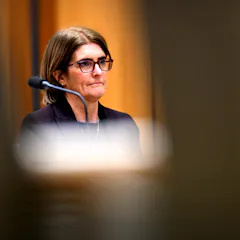
It’ll now be a frugal Christmas in many Australian homes. But there is a glimmer of good news: if we do tighten our belts, rates could start to come down by as early as the middle of next year.

Inflation has slipped from 6% to 5.4%, but the price of petrol climbed 7.2% in the September quarter. Much depends on what the RBA thinks will happen from here on.
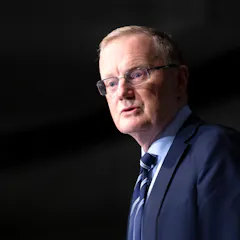
The Reserve Bank governor has only three months left in the job and he isn’t yet sure inflation is on the way down.

More than one million borrowers are set to come off ultra-low fixed mortgage rates this year and next, meaning the full effect of the ten rate rises to date is yet to be felt.

The Reserve Bank’s statement indicates there aren’t too many rate rises left. History suggests those hikes could come to an end by early spring.
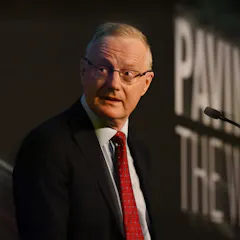
The Reserve Bank has signalled it will keep pushing up rates until it has reigned in inflation – even if this means weaker economic growth, with income per person barely growing for years to come.

The Conversation’s 29-member panel expects very weak economic growth and recessions in much of the rest of the world, but there’s good news down the track for Australians’ buying power.

The full effects of the eight consecutive increases in the Reserve Bank’s cash rate are yet to become apparent, and there are signs inflation is on the way down.

Never, in the three decades the Reserve Bank has been targeting inflation, has it been tested by prices rising in unison like this.

The review will examine the bank’s Act, its inflation target, its management and recruitment process and the composition of its board.
Looking back at the Reserve Bank’s performance in setting interest rates over the past generation, we’d grade it an A for earlier years – but a fail for the years just before the pandemic. Here’s why.
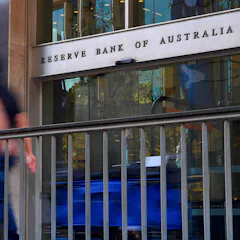
Critics ought to acknowledge that on average over time Australia’s Reserve Bank has met its inflation target, but it is worthwhile examining the way it is run.

For the past 30 years or so, the RBA has targeted an inflation rate of 2-3%. But the rationale for a rate that low was always weak, and has since broken down.

The best way to manage the economy is though an array of tools. Interest rates are just one.
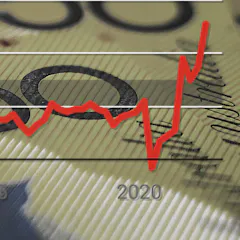
Inflation is well outside the Reserve Bank’s target band and higher than it has been for two decades.
Top contributors
-

Visiting Fellow, Crawford School of Public Policy, Australian National University
-
Scientia Professor of Economics, UNSW
-
Associate Professor, Research School of Economics, and Research Associate, Centre for Applied Macroeconomic Analysis, Australian National University
-
Senior lecturer, Canberra School of Government, University of Canberra
-
Professor, Warwick Business School, University of Warwick
-
Professorial Fellow, University of Canberra
-
Vice-Chancellor’s Fellow, University of Tasmania
-
Lecturer in Economics, Monash University
-
Professor, School of Economics, The University of Queensland
-
Emeritus Professor of Finance, The University of Melbourne
-
Honorary Associate Professor in the School of History, Research School of Social Sciences, Australian National University
-
Professor of Macroeconomics, University of Sydney
-
Visiting Fellow, Macquarie University Applied Finance Centre, Macquarie University
-
Industry Professor, University of Technology Sydney
-
Director, Bankwest Curtin Economics Centre (BCEC) and John Curtin Distinguished Professor at Curtin Business School, Curtin University