

African countries face unfair trade rules, delayed decisions and weak support, leaving them exporting raw goods and losing out economically.
Articles on Raw materials
Displaying 1 - 20 of 28 articles
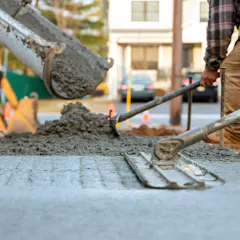
Cement is responsible for about 8% of global greenhouse gas emissions, and demand is growing. Alternatives like geopolymers can help lower the impact.

The EU energy label for these devices now includes scores aimed at drawing consumers to products that are easier to fix.
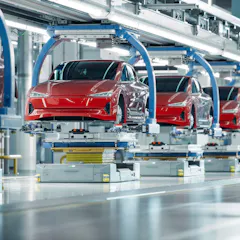
The EU’s Critical Raw Materials Act came into force on 23 May, marking the bloc’s largest attempt to secure its own source of materials needed for the green transition.
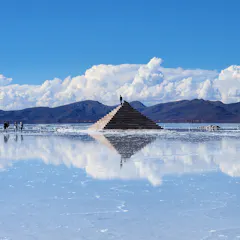
Lithium extraction in Bolivia poses more than environmental questions: It illustrates how notions about ‘raw materials’ can be at odds with Indigenous relations with the land.

For relations with the DRC to truly improve, the Belgian state must acknowledge its historical responsibility more strongly.
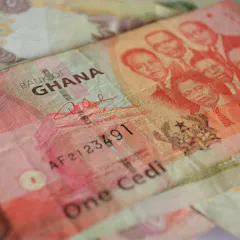
The Ghanaian currency is facing structural hurdles.

Europe imports the majority of its lithium, an essential material for the energy transition, yet is home to significant deposits.
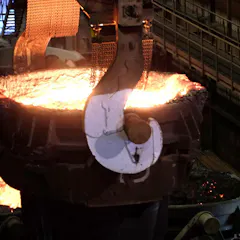
Europe recycles 70% of its steel, but much is exported, turning what should be a circular process into a linear one. Instead, materials need to be circularity-ready the moment they’re manufactured.

African economies could benefit more from backward linkages to the mining industry than from beneficiation.

Trump’s plan to slap $200 billion more in tariffs on Chinese goods is premised on yesterday’s waste-fueled economy. Tomorrow’s economy is ‘circular.’

Richer countries import products but not the emissions used to make them.

On March 1, Donald Trump imposed a series of steel and aluminum tariffs. To understand their potential impact, it’s instructive to look at what happened after George W. Bush enacted similar measures in 2002.

With an ever-increasing cost to extract dwindling raw materials, it’s time to look at cities as urban mines. We’re developing the tools to do that.

The continent needs investment – and China has long been providing it.

There will be huge environmental impact if we keep using raw materials as we did in the 20th century.

New lithium stores in Cornwall could give the UK a valuable domestic supply of the expensive commodity.
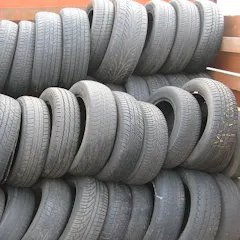
The world’s landfills are growing, which has prompted the search for new industrial processes that can use everyday waste items in some surprising ways.

Britain lucked out with its coal deposits – but other nations have developed without coal.
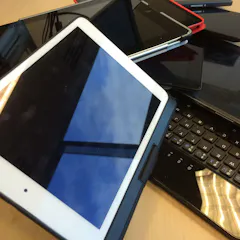
Researchers calculate whether we’re using less materials, or whether we’re just shipping it in from abroad.
Top contributors
-

Research Fellow in Sustainable Consumption, University of Leeds
-
Économiste, Directeur de recherche CNRS, Conseiller scientifique au CEPII, Membre associé, Paris School of Economics – École d'économie de Paris
-
Postdoctoral Researcher and Lecturer, Université Libre de Bruxelles (ULB)
-
Directeur, CEPII - Institut français d'économie (IFE)
-
Senior Science Leader, CSIRO
-
Assistant Professor, Metropolitan University Prague
-
Professor of Sustainable Resource Use, Alpen-Adria University Klagenfurt
-
Researcher in Sustainability and Resource Efficiency, University of Cambridge
-
Postdoctoral research associate, Arizona State University
-
Professor of Engineering, Swinburne University of Technology
-
Researcher at BRGM and associated researcher at ISTO, BRGM
-
Senior Expert on Energy, Materials supply chains, and strategic autonomy, Joint Research Centre (JRC)
-
Chair in Sustainable Global Resources, UCL
-
Visiting Researcher, Australian Centre for Astrobiology, UNSW
-
Associate Professor in Construction and Environmental Performance, The University of Melbourne