
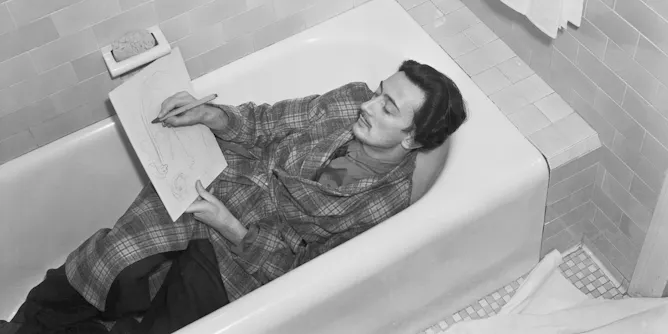
A century ago, the French writer and poet André Breton penned his ‘Manifesto of Surrealism,’ launching an art movement known for creating bizarre hybrids of words and images.
Articles on Randomness
Displaying all articles
If the presidential election ends in a tie, then what? The winner might not even be 1 of the 2 people who tied for the most votes.
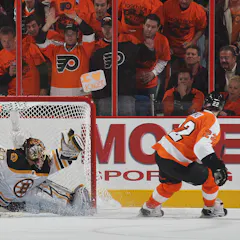
With low-scoring games and a preponderance of deflected shots, randomness is much more likely to color NHL teams’ records than those of squads in the other four major US pro sports leagues.
It’s not entirely accurate to say that you’re more likely to die in a car accident than in a plane crash. Chances are, you’re not the average person.
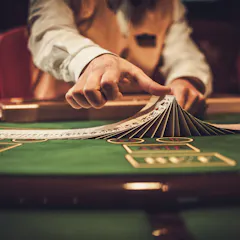
Monte Carlo simulations can predict different potential outcomes because they provide for the presence of random variables or elements.

Part of the 2021 Nobel Prize in Physics was awarded for work modeling Earth’s climate using its chaotic, complex weather. To scientists, chaos lies in the gray zone between randomness and predictability.

Is everything predetermined, or is it all random? Or is there something in between that we call free will that defies our attempts to explain it?

If it’s impossible to accurately predict the future then there may be limits to how smart artificial intelligence can become.
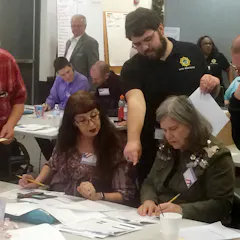
The best way to protect elections is to plan and prepare for an audit of the results after the votes are cast.

More and more evidence shows evolution isn’t as random as often thought.

For 30 years, sports fans have been told to forget about streaks because the ‘hot hand’ is a fallacy. But a reanalysis says not so fast: Statistics show players really are in the zone sometimes.
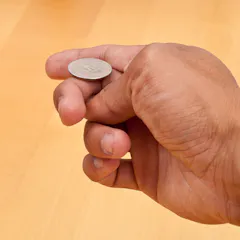
A new way to generate random numbers can improve mathematics, cybersecurity and even predictions about the future. How does it work, and what does it mean for us?

It’s 30 years since the release of Ferris Bueller’s Day Off. Here’s why he got away with it.
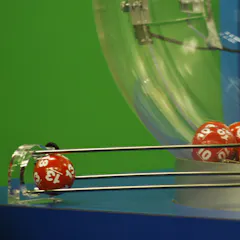
The math behind all the probabilities being discussed for tonight’s Powerball drawing assumes each number is equally likely to be chosen. Is that what really happens?
Top contributors
-

Professor of Social Welfare, Washington University in St. Louis
-
Professor of Economics, The University of Melbourne
-
Senior lecturer, School of Biological Sciences, University of Bristol, University of Bristol
-
Space Plasma Physicist, Imperial College London
-
Associate Professor, Department of Biostatistics, University at Buffalo
-
Reader, University of Huddersfield
-
Assistant Professor of Economics, Universidad de Alicante
-
Postdoctoral Researcher in Mathematics, Institute for Advanced Study
-
Professor of Computer Science, The University of Texas at Austin
-
Research Assistant Professor of Biology, University of New Mexico
-
Associate Professor of Mathematics, Gonzaga University
-
Assistant Professor of Computer Science and Computer Engineering, Vanderbilt University
-
Professor, University of the Western Cape
-
Professor of Mathematics, Director of Institute for Mathematics and Democracy, Wellesley College
-
Professor, Australian National University